How Does a 24V long distance transmission encoder Work?
Key Features of a 24V long distance transmission encoder
Industrial Applications of a 24V long distance transmission encoder
Benefits of Using a 24V long distance transmission encoder
How to Choose the Right 24V long distance transmission encoder
Installation and Maintenance Tips
Sensyorcoder Industrial Encoder Solutions
Frequently Asked Questions
Conclusion
What Is a 24V long distance transmission encoder?
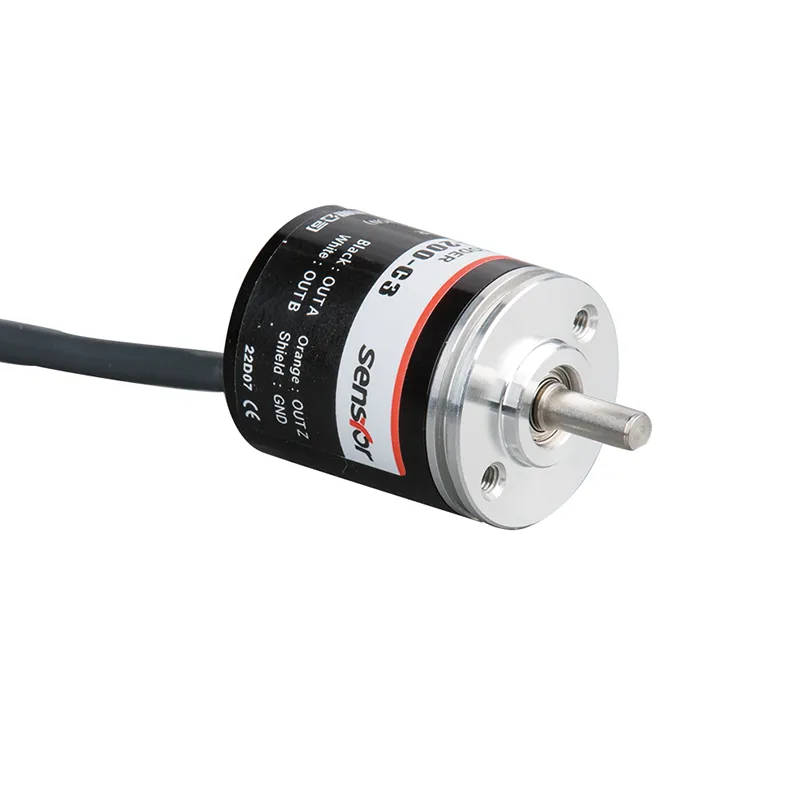
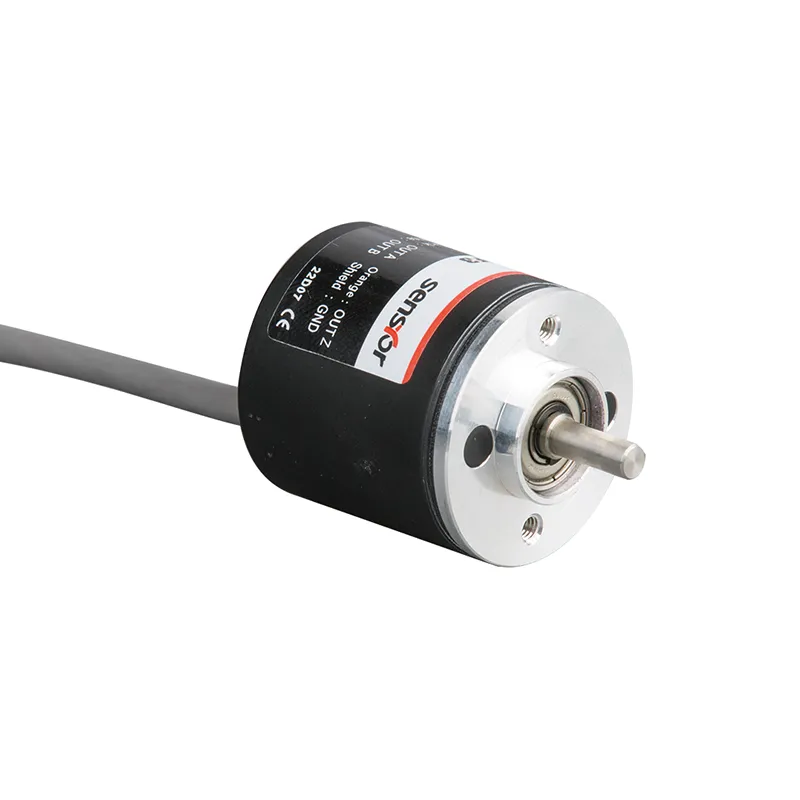
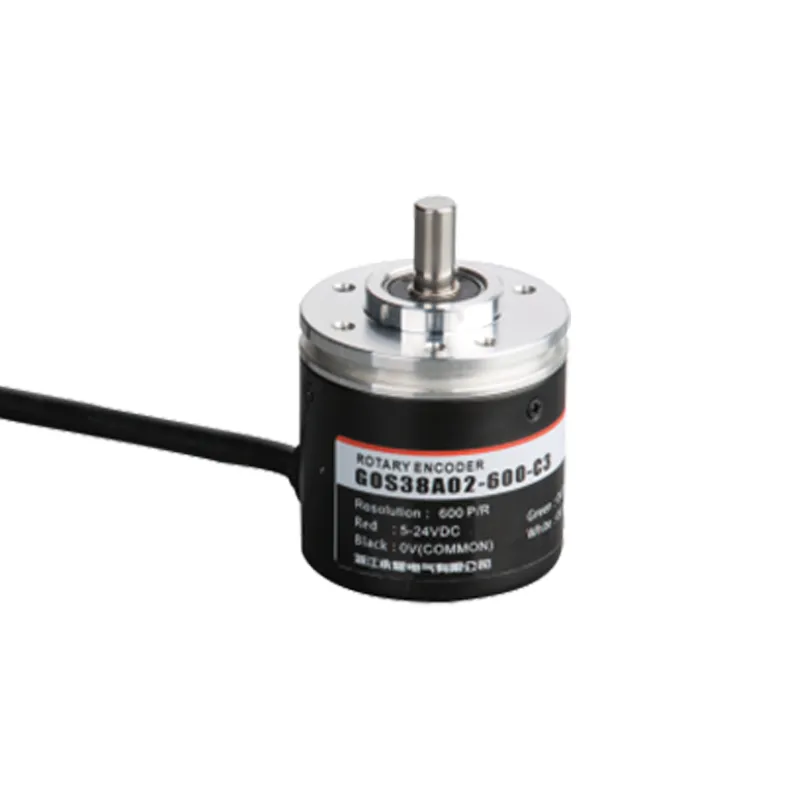
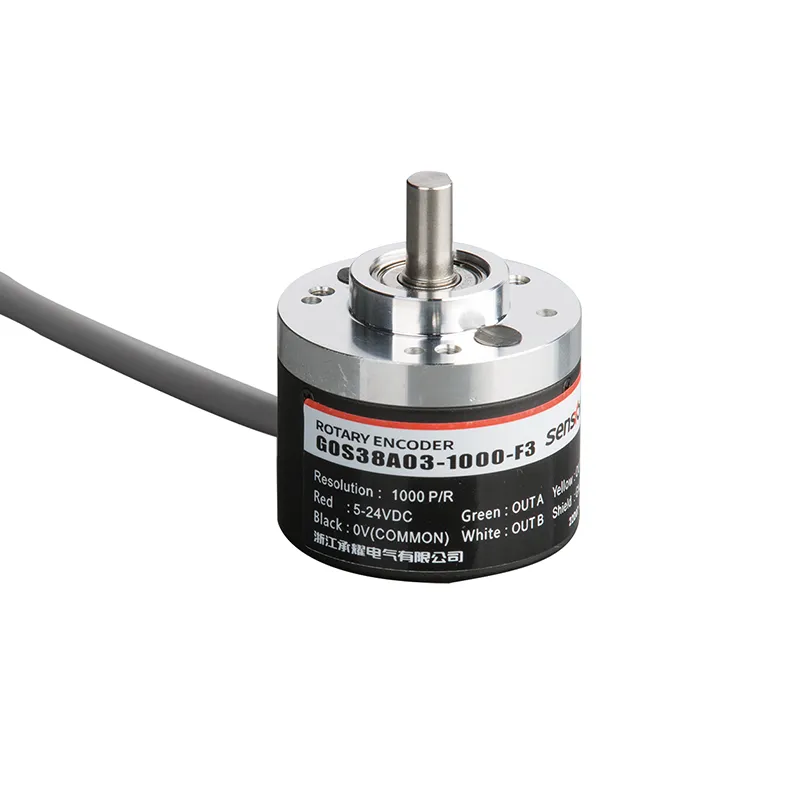
A 24V long distance transmission encoder is a specialized industrial sensing device designed to provide accurate motion feedback while maintaining stable signal transmission over extended cable distances.
In modern automation systems, machines often require precise information about position, speed, and rotation. However, when sensors are installed far away from control cabinets or PLC systems, traditional encoder signals may experience interference, signal loss, or reduced accuracy.
A 24V long distance transmission encoder solves these challenges by combining a reliable 24V power supply design with optimized signal transmission technology. It is widely used in factories, manufacturing lines, robotics, logistics systems, and heavy industrial equipment.
For professional industrial encoder solutions, you can explore Sensyorcoder’s product range:
The PLC or motion controller processes the feedback data.
The machine adjusts movement based on the received information.
Depending on the application, encoders may use optical or magnetic sensing technology.
Optical and Magnetic Encoder Technology
Optical Encoder Technology
Optical encoders use light sources and coded discs to detect movement. They provide excellent accuracy and are suitable for applications requiring precise positioning.
Magnetic Encoder Technology
Magnetic encoders use magnetic fields to detect rotation. They are highly resistant to dust, vibration, and harsh environments.
For industrial automation systems exposed to challenging conditions, magnetic technology is often preferred.
Key Features of a 24V long distance transmission encoder
1. Stable Long-Distance Signal Transmission
The main advantage of a 24V long distance transmission encoder is its ability to maintain signal quality over longer cable distances.
Industrial environments often include:
Electric motors
Frequency converters
Welding equipment
High-power machinery
These devices can create electrical noise that affects sensor signals. A high-quality encoder design helps minimize interference and ensures reliable communication.
2. Compatible 24V Industrial Power Supply
Most industrial automation systems use 24V DC power because it provides:
Safe operation
Easy integration
High reliability
Compatibility with PLC systems
A 24V encoder can easily integrate into existing industrial control architectures.
3. High Accuracy Motion Feedback
Precision is critical in automation.
A reliable 24V long distance transmission encoder provides accurate feedback for:
Position monitoring
Speed measurement
Rotation control
Synchronization
This improves production quality and reduces machine errors.
4. Strong Resistance to Industrial Environments
Industrial equipment often operates in difficult conditions.
A durable encoder can withstand:
Dust
Oil
Moisture
Vibration
Temperature changes
Selecting an encoder with suitable protection ratings improves equipment reliability.
Industrial Applications of a 24V long distance transmission encoder
24V long distance transmission encoder in Manufacturing Automation
Manufacturing plants require accurate feedback systems to control production processes.
Common applications include:
Conveyor systems
Assembly lines
Packaging machines
CNC equipment
The encoder helps machines maintain accurate positioning and improve production efficiency.
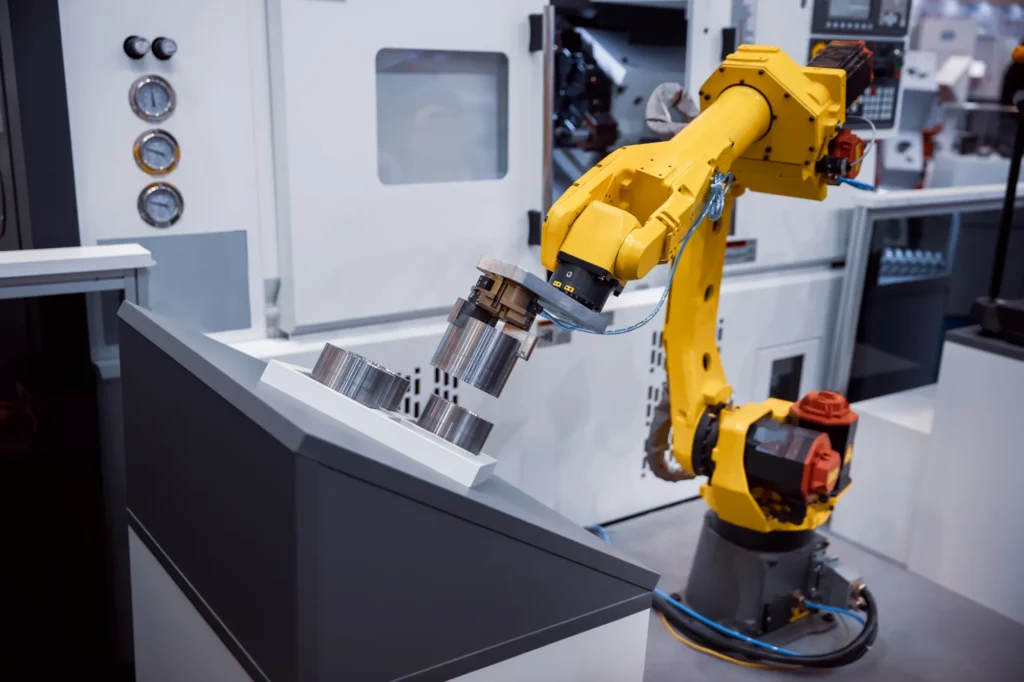
24V long distance transmission encoder in Robotics
Robotic systems depend on precise movement control.
A high-performance encoder provides real-time feedback for:
Robot arm positioning
Servo motor control
Automated inspection systems
Accurate feedback allows robots to perform repetitive tasks with consistent results.
24V long distance transmission encoder in Logistics Equipment
Modern warehouses use automated transportation systems that require reliable sensors.
Applications include:
Automated storage systems
Sorting equipment
Conveyor networks
Long-distance signal capability makes these encoders suitable for large facilities.
Benefits of Using a 24V long distance transmission encoder
Improved System Reliability
A stable feedback signal reduces unexpected machine errors and improves automation performance.
Reduced Maintenance Requirements
High-quality industrial encoders are designed for long service life, helping companies reduce downtime and maintenance costs.
Better Production Efficiency
Accurate motion feedback allows machines to operate faster and more precisely.
Flexible Installation Options
Because the encoder supports longer transmission distances, engineers have greater flexibility when designing equipment layouts.
How to Choose the Right 24V long distance transmission encoder
Choosing the correct encoder requires considering several important factors.
Check Signal Output Requirements
Different automation systems may require different output types:
Incremental output
Absolute output
HTL signal
TTL signal
Industrial communication protocols
The encoder must match the controller specifications.
Consider Cable Distance
Before selecting a 24V long distance transmission encoder, evaluate:
Required transmission distance
Cable quality
Electrical environment
Signal protection requirements
Longer cable distances require better signal stability.
Evaluate Environmental Conditions
Consider:
Operating temperature
Dust exposure
Moisture level
Mechanical vibration
Choosing the right protection level ensures reliable operation.
Installation and Maintenance Tips
Proper Installation Practices
To maximize encoder performance:
Align the shaft correctly
Avoid excessive mechanical force
Separate signal cables from power cables
Use proper grounding methods
Maintenance Recommendations
Regular inspections should include:
Checking cable connections
Inspecting mechanical mounting
Monitoring abnormal signals
Cleaning external surfaces
Preventive maintenance can significantly extend encoder lifespan.
Sensyorcoder Industrial Encoder Solutions
Sensyorcoder provides industrial encoder solutions designed for automation applications requiring accuracy, durability, and reliable signal transmission.
Our products support various industrial applications, including:
1. What is a 24V long distance transmission encoder used for?
A 24V long distance transmission encoder is used for measuring position, speed, and rotation in industrial automation systems where reliable signal transmission is required over longer distances.
2. Why use 24V power for industrial encoders?
24V DC power is widely used in industrial environments because it is safe, reliable, and compatible with PLC-based control systems.
3. Can a 24V long distance transmission encoder reduce signal interference?
Yes. Industrial-grade designs help improve signal stability and reduce interference caused by motors and electrical equipment.
4. What industries use long-distance transmission encoders?
They are commonly used in manufacturing, robotics, logistics, packaging, CNC machinery, and automated production systems.
5. How far can an industrial encoder transmit signals?
The transmission distance depends on encoder type, output signal, cable quality, and environmental conditions.
6. Where can I find industrial encoder products?
You can view Sensyorcoder’s industrial encoder solutions here:
A 24V long distance transmission encoder is an essential component for modern industrial automation systems that require accurate feedback and dependable communication.
With advantages such as stable signal transmission, strong industrial compatibility, and reliable performance, this type of encoder helps businesses improve automation efficiency and reduce operational risks.
As factories continue moving toward smarter manufacturing, selecting a reliable encoder partner becomes increasingly important. Sensyorcoder provides professional encoder solutions designed to meet demanding industrial requirements.
📊 Comprehensive Outline for “motion control sensor” Heading Level Topic H1 Motion Control Sensor: 15 Powerful Insights You Must Know Today H2 Introduction to Motion Control Sensor H3 What is a Motion Control Sensor? H3 Importance in Modern Technology H2 How Motion Control Sensors Work H3 Basic Operating Principles H4 Signal Detection and Processing H2 […]
In industrial automation and motion control, knowing exactly how far something has turned—or how fast it’s moving—can be the difference between smooth precision and costly errors. That’s where incremental shaft encoder come in. These small but powerful devices play a critical role in modern machinery, offering real-time position and speed feedback that keeps manufacturing lines, robotics, and […]
We use cookies to enhance your browsing experience, serve personalised ads or content, and analyse our traffic. By clicking "Accept All", you consent to our use of cookies.