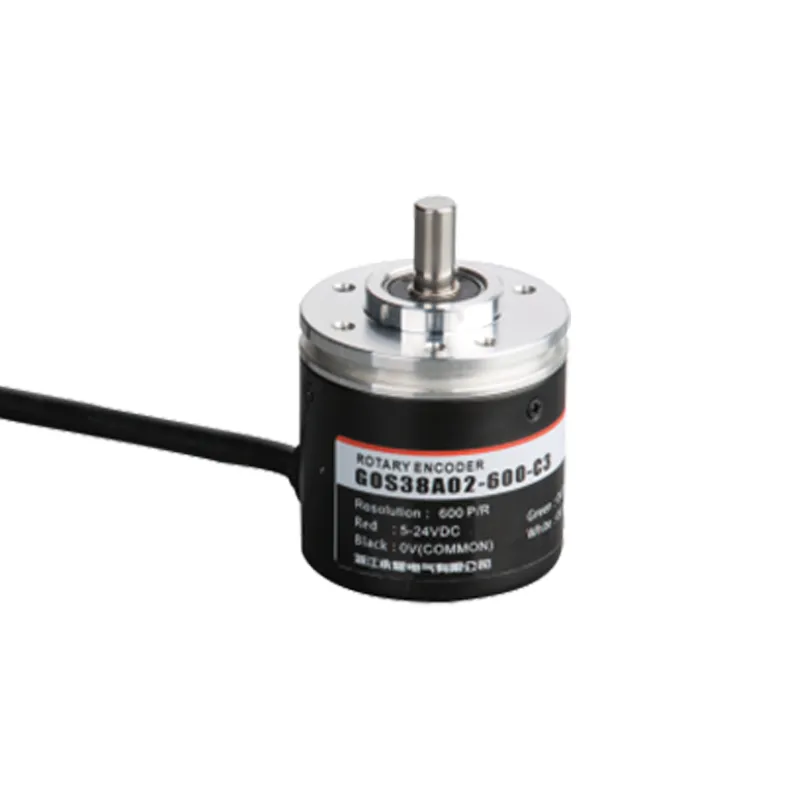
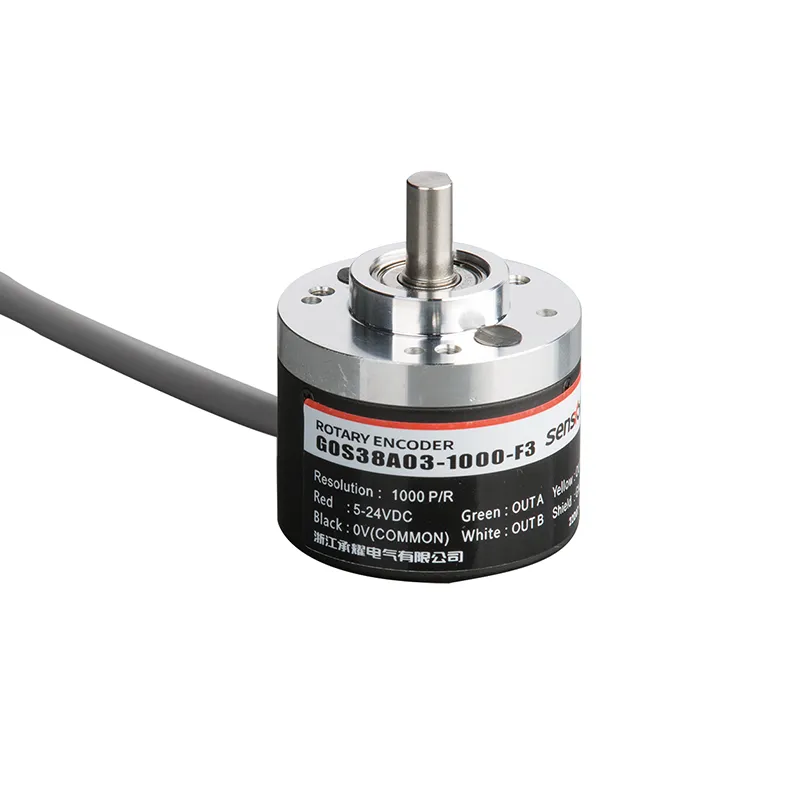
A 38mm rotary encoder is one of the most popular motion feedback devices used in industrial automation, robotics, CNC machinery, packaging equipment, and conveyor systems. Its compact size, reliable performance, and precise signal output make it an excellent choice for applications that require accurate position, speed, or direction monitoring.
Whether you are designing new automation equipment or upgrading an existing production line, selecting the right 38 mm rotary encoder can improve machine efficiency, reduce downtime, and increase production accuracy. This guide explains how these encoders work, their advantages, common applications, and the key factors to consider before purchasing one.
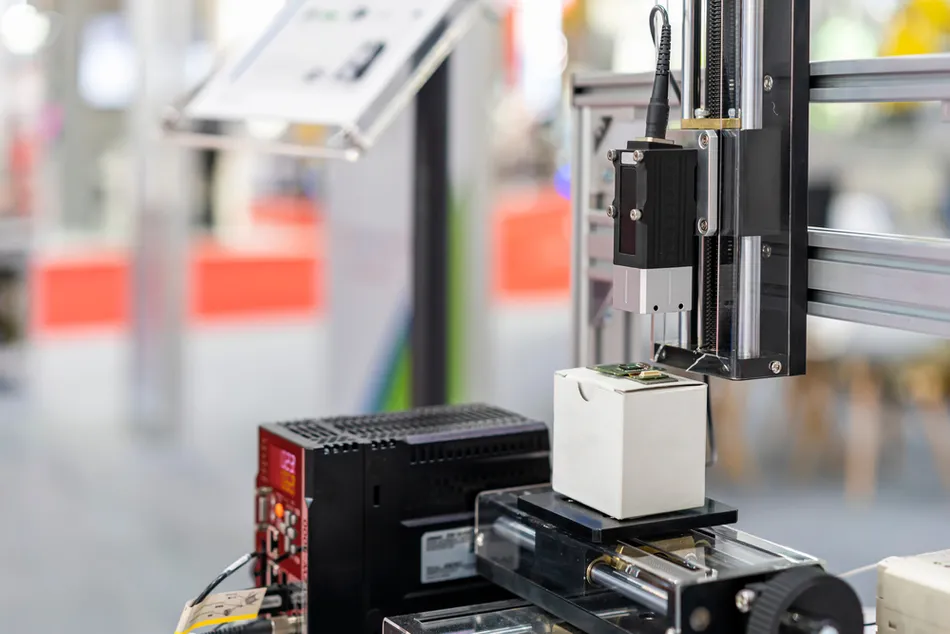
A 38mm rotary encoder provides accurate motion feedback for industrial automation systems.
What Is a 38mm Rotary Encoder?
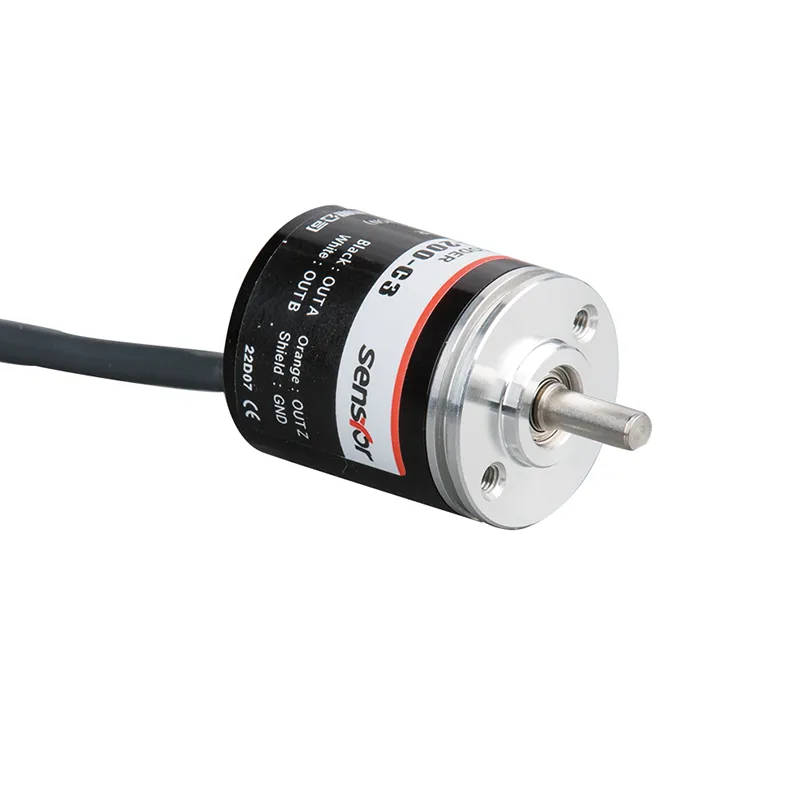
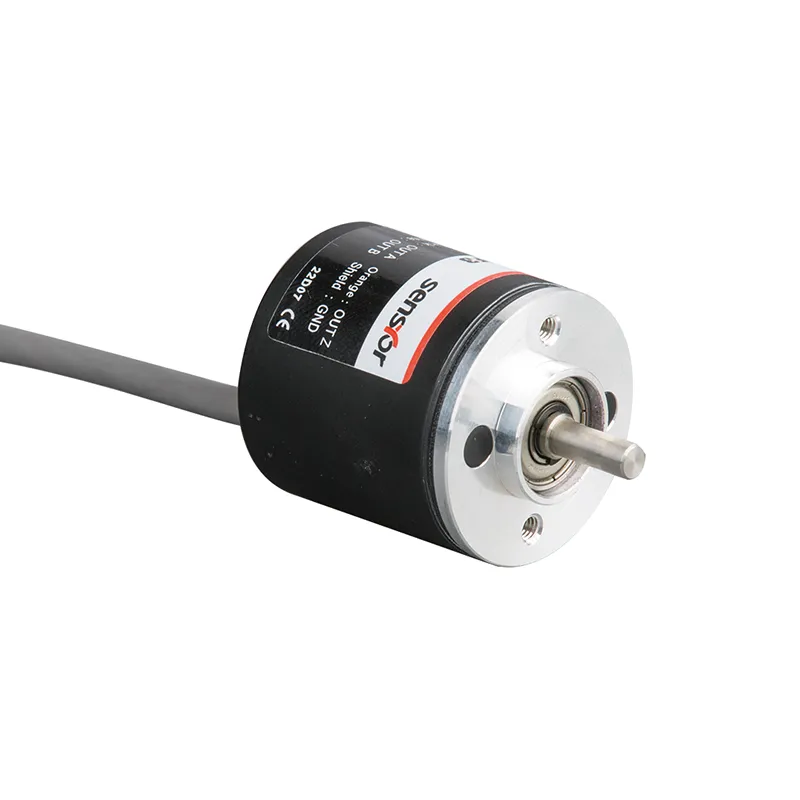
A 38mm rotary encoder is an electromechanical sensor that converts rotational movement into electrical signals. These signals are processed by PLCs, servo drives, or controllers to determine shaft position, speed, or rotational direction.
Compared with larger encoder models, a compact rotary encoder offers a space-saving solution while maintaining high measurement accuracy.
Typical output types include:
Incremental signals
Quadrature outputs
Pulse output
Direction feedback
Key Features of a 38mm Incremental Encoder
A 38mm incremental encoder offers several advantages for modern industrial systems.
Compact Design for Limited Installation Space
The 38 mm housing allows installation inside compact motors and equipment where larger encoders cannot fit.
High Measurement Accuracy
Modern industrial encoder technology delivers stable pulse output for accurate motion control.
Excellent Durability
Many models feature:
Aluminum housing
Stainless steel shaft
IP65 or IP67 protection
Long mechanical life
These features help ensure reliable performance even in harsh industrial environments.
How a 38mm Shaft Encoder Works
A 38mm shaft encoder detects shaft rotation using an optical or magnetic sensing mechanism.
When the shaft rotates:
The sensing disk rotates.
Optical or magnetic sensors detect movement.
Electrical pulses are generated.
The controller calculates speed and position.
This process provides real-time motion feedback for automated equipment.
Main Applications of a 38mm Industrial Rotary Encoder
The 38mm industrial rotary encoder is widely used across many industries.
Industrial Automation
Automation systems rely on encoder feedback for precise positioning and machine synchronization.
CNC Machines
Machine tools use rotary encoders to monitor spindle rotation and axis positioning.
Robotics
Robotic arms require accurate position encoder feedback for smooth and repeatable movement.
Packaging Equipment
Packaging lines use incremental rotary encoders to synchronize conveyors, labeling machines, and filling systems.
Printing Machinery
Printing presses depend on encoder signals to maintain accurate registration and paper feeding.
Material Handling Systems
Conveyors and automated storage systems monitor motor speed using compact rotary encoders.
Advantages of Choosing a Compact Rotary Encoder
Selecting a compact rotary encoder offers multiple benefits.
Space Saving
Small housing dimensions make installation easier.
Reliable Performance
High-quality bearings and precision manufacturing provide stable operation.
Easy Integration
Most models support common industrial interfaces, making installation straightforward.
Low Maintenance
Modern encoder designs require minimal maintenance over their service life.
How to Choose the Right 38mm Rotary Encoder
Choosing the correct encoder depends on several technical considerations.
Resolution
Select the required pulses per revolution (PPR) based on application accuracy.
Output Signal
Common options include:
NPN
PNP
Push-pull
Line driver
Operating Voltage
Typical voltages include:
5V DC
12V DC
24V DC
Environmental Protection
For dusty or wet environments, select models with IP65 or IP67 protection.
Mounting Style
Choose shaft diameter and flange type compatible with your equipment.
Maintenance Tips for Industrial Encoders
Proper maintenance extends encoder life.
Recommended practices include:
Keep the encoder clean.
Avoid excessive vibration.
Inspect cable connections regularly.
Prevent moisture intrusion.
Replace damaged couplings promptly.
Routine inspections help maintain consistent signal quality.
Why Choose Sensyor Rotary Encoders?
Sensyor offers reliable encoder solutions designed for demanding industrial environments.
Benefits include:
Precision manufacturing
Stable signal output
Wide product selection
Customization options
Professional technical support
Competitive pricing
Browse the complete rotary encoder collection here:
A 38mm rotary encoder delivers dependable motion feedback for industrial automation, robotics, CNC machinery, and material handling equipment. Its compact design, accurate signal output, and durable construction make it an excellent solution for modern motion control systems.
When selecting an encoder, consider resolution, output type, environmental protection, mounting style, and compatibility with your control system. Choosing a trusted supplier also ensures long-term reliability and technical support.
To learn more about high-quality rotary encoders and find the right model for your application, visit the Sensyor Rotary Encoder product page: https://sensyorcoder.net/rotary-encoder/
Table of Contents Introduction encoder for textile machinery is a critical component used to ensure precise motion control in modern textile production systems. The encoder for textile machinery helps monitor speed, position, and direction of rotating parts, enabling smooth and efficient fabric processing. With increasing automation in the textile industry, the encoder for textile machinery […]
Table What Is a 48mm through-hole servo motor encoder? A 48mm through-hole servo motor encoder is a precision feedback device designed for servo motor systems that require accurate position, speed, and motion control. The encoder uses a 48mm hollow through-hole structure, allowing it to be installed directly around a motor shaft without requiring additional coupling […]
What is a High Precision Encoder A high precision encoder is an advanced sensing device that converts motion into electrical signals with extremely high accuracy. It is widely used in automation systems where exact positioning and speed control are critical. From robotics to aerospace systems, the high precision encoder ensures machines operate with minimal error […]
We use cookies to enhance your browsing experience, serve personalised ads or content, and analyse our traffic. By clicking "Accept All", you consent to our use of cookies.