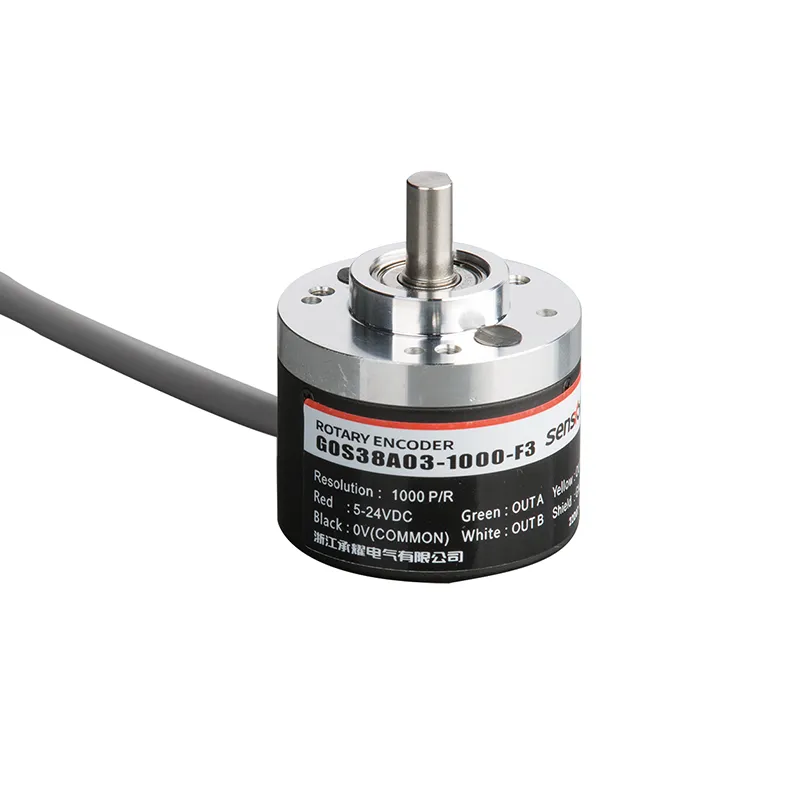
A 45mm encoder is one of the most widely used motion feedback devices in industrial automation, robotics, CNC machinery, packaging equipment, and conveyor systems. Designed to provide accurate position, speed, and rotational feedback, a 45mm encoder helps improve machine precision, productivity, and operational reliability.
Whether you’re upgrading an existing production line or designing a new automation system, understanding how a 45 mm rotary encoder works and how to choose the right model can significantly improve equipment performance while reducing maintenance costs.
If you’re looking for professional rotary encoder solutions, explore our complete product range:
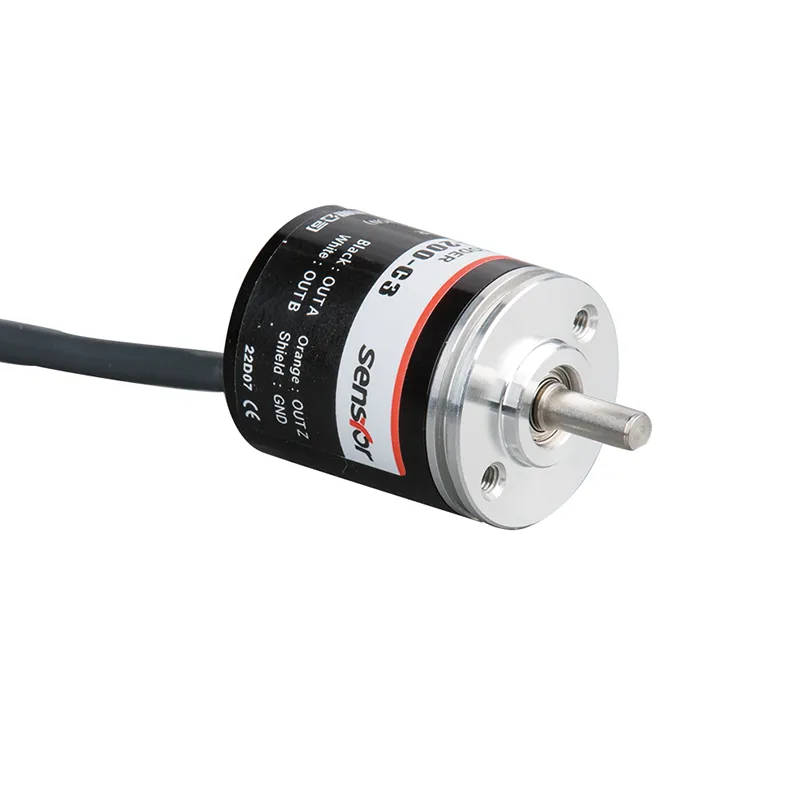
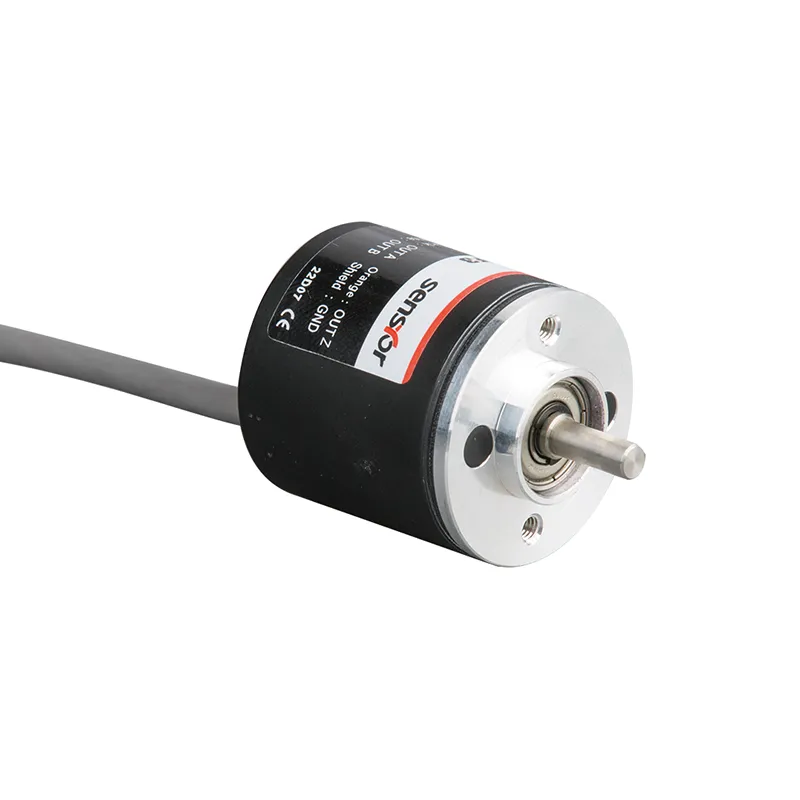
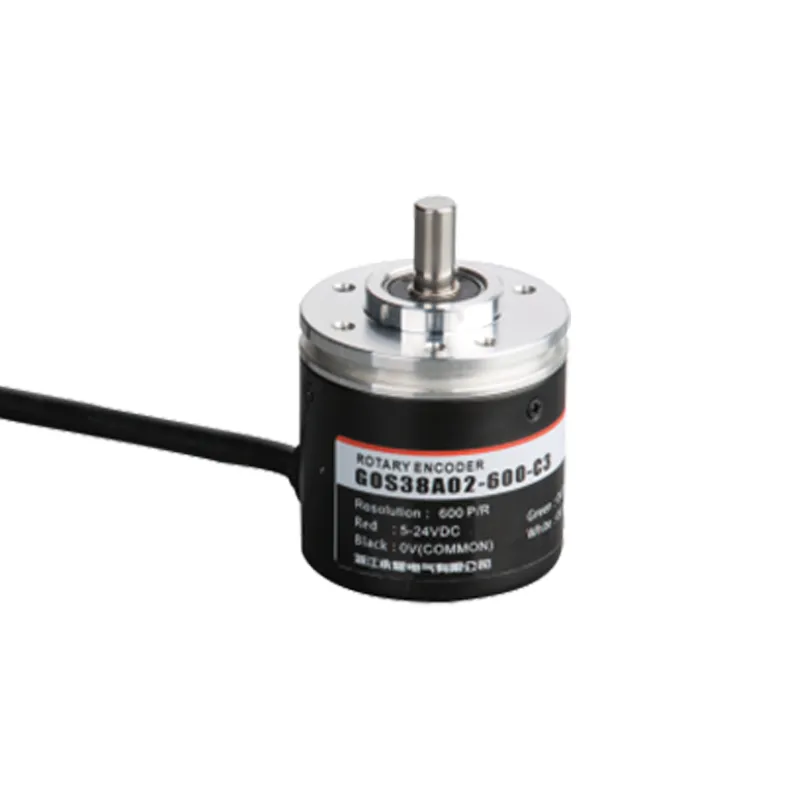
A 45mm encoder provides accurate motion and position feedback for industrial automation systems.
What Is a 45mm Encoder?
A 45mm encoder is a rotary sensing device with an outer diameter of approximately 45 mm. It converts mechanical shaft rotation into electrical signals that are interpreted by controllers such as PLCs, servo drives, motion controllers, or industrial computers.
Unlike ordinary sensors, rotary encoders continuously monitor shaft movement, enabling precise control over speed, direction, and angular position.
Common output signals include:
Incremental pulse signals
Absolute position data
Analog outputs
SSI
CANopen
Modbus
EtherCAT
How a 45 mm Rotary Encoder Works
A 45 mm rotary encoder detects shaft rotation using optical, magnetic, or capacitive sensing technology.
As the shaft rotates:
Internal sensing elements detect movement.
Electronic circuits convert movement into electrical signals.
The controller processes these signals.
The machine adjusts movement with high precision.
This closed-loop feedback allows equipment to maintain excellent positioning accuracy even during high-speed operation.
Main Types of 45mm Encoder
45mm Incremental Encoder
Incremental models generate pulse signals as the shaft rotates.
Advantages include:
Simple installation
Cost-effective
High-speed response
Excellent for motor speed control
Typical applications include:
Conveyor belts
Textile machines
Printing equipment
Packaging systems
45mm Absolute Encoder
Unlike incremental models, a 45mm absolute encoder remembers its exact position after power loss.
Benefits include:
No homing required
High positioning accuracy
Better system safety
Faster machine restart
These encoders are common in:
CNC machines
AGVs
Robotics
Elevator systems
Industrial Rotary Encoder Technologies
Today’s industrial encoder solutions mainly use:
Optical Encoders
Offer:
Highest resolution
Excellent repeatability
Fast response
Best suited for precision automation.
Magnetic Encoders
Provide:
Better resistance to dust
Waterproof operation
Vibration resistance
Ideal for harsh industrial environments.
Key Features of a 45mm Encoder
Modern industrial rotary encoders include many advanced features.
Feature
Benefit
Compact 45 mm housing
Easy installation
High resolution
Precise positioning
Durable bearings
Longer service life
Wide voltage range
Flexible integration
Multiple output options
Compatible with different controllers
High IP protection
Reliable in harsh environments
High rotational speed
Suitable for demanding automation
Applications of a 45mm Encoder
A rotary position encoder is used across numerous industries.
Manufacturing Automation
Machine builders use encoders to monitor:
Servo motors
Production lines
Assembly systems
CNC Machinery
Accurate feedback ensures:
Precise cutting
Stable machining
Improved product quality
Robotics
Robotic arms require continuous position feedback for:
Repeatability
Smooth movement
Accurate motion control
Packaging Equipment
Encoders synchronize:
Filling
Labeling
Wrapping
Sealing
Conveyor Systems
A shaft encoder monitors conveyor speed, reducing product errors and improving throughput.
Advantages of Using a 45mm Encoder
Choosing the right encoder offers several benefits.
For readers interested in learning more about industrial motion control and encoder technologies, these trusted external resources provide valuable technical information:
These organizations publish standards and best practices widely used in industrial automation.
Frequently Asked Questions
What is a 45mm encoder used for?
It provides precise speed and position feedback for motors, automation equipment, CNC machines, and robotics.
What is the difference between incremental and absolute encoders?
Incremental encoders output pulses during movement, while absolute encoders retain position information even after power loss.
Can a 45 mm rotary encoder work outdoors?
Yes. Models with IP65 or IP67 protection are suitable for outdoor and harsh industrial environments.
How do I select the correct encoder resolution?
Choose a resolution based on the required positioning accuracy and controller compatibility.
Which industries commonly use industrial rotary encoders?
Manufacturing, robotics, packaging, logistics, CNC machining, renewable energy, and automated warehouses all rely on rotary encoders.
How long does a quality encoder typically last?
With proper installation and maintenance, industrial encoders often provide many years of reliable operation.
Conclusion
A 45mm encoder is an essential component for modern motion control systems, delivering accurate position and speed feedback across a wide range of industrial applications. Whether you need an incremental model for cost-effective speed monitoring or an absolute encoder for high-precision positioning, selecting the appropriate solution can improve efficiency, reliability, and equipment lifespan.
To explore professional encoder solutions for your next automation project, visit the SensyorCoder Rotary Encoder product page:
Table of Contents Introduction to Incremental Rotary Encoder Incremental rotary encoder technology is widely used in modern industrial automation systems for accurate motion control and speed feedback. An incremental rotary encoder converts rotational movement into pulse signals that can be processed by controllers and PLC systems. The incremental rotary encoder is commonly found in CNC […]
📊 Comprehensive Outline for “45mm encoder” Heading Level Topic H1 45mm Encoder: 13 Powerful Insights for Motion Control H2 Introduction to 45mm Encoder H3 What is a 45mm Encoder H3 Why Size Matters in Encoders H2 Working Principle of Rotary Encoders H3 Signal Generation and Feedback H3 Resolution and Accuracy H2 Types of 45mm Encoder […]
Table of Contents Introduction Servo motor encoder is a critical component in modern motion control systems. A servo motor encoder provides precise feedback on position, speed, and direction, enabling accurate control of servo motors. The servo motor encoder is widely used in robotics, CNC machines, and automated production lines where precision is essential. What is […]
We use cookies to enhance your browsing experience, serve personalised ads or content, and analyse our traffic. By clicking "Accept All", you consent to our use of cookies.