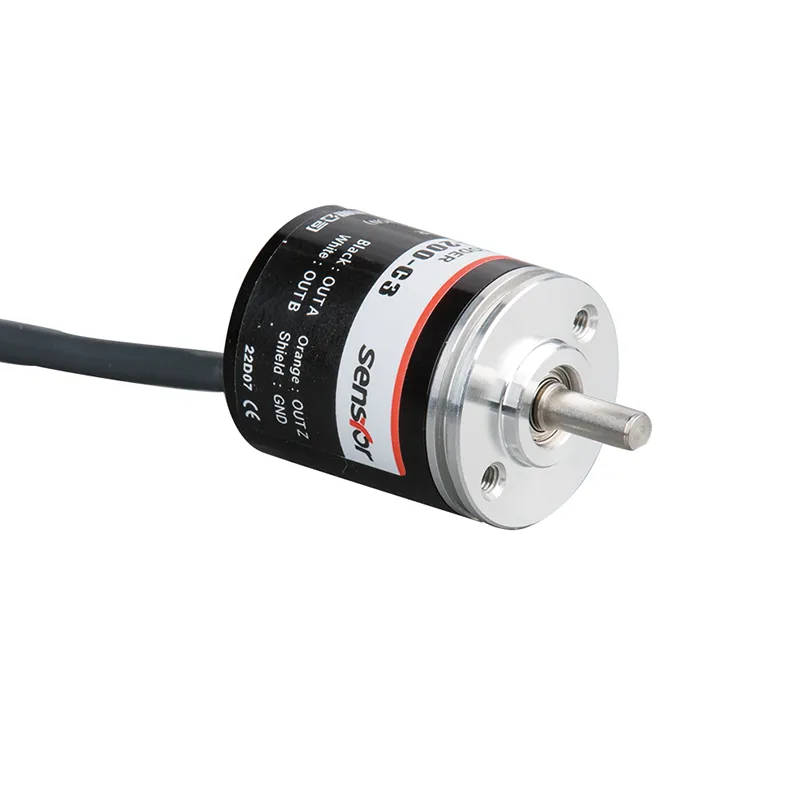
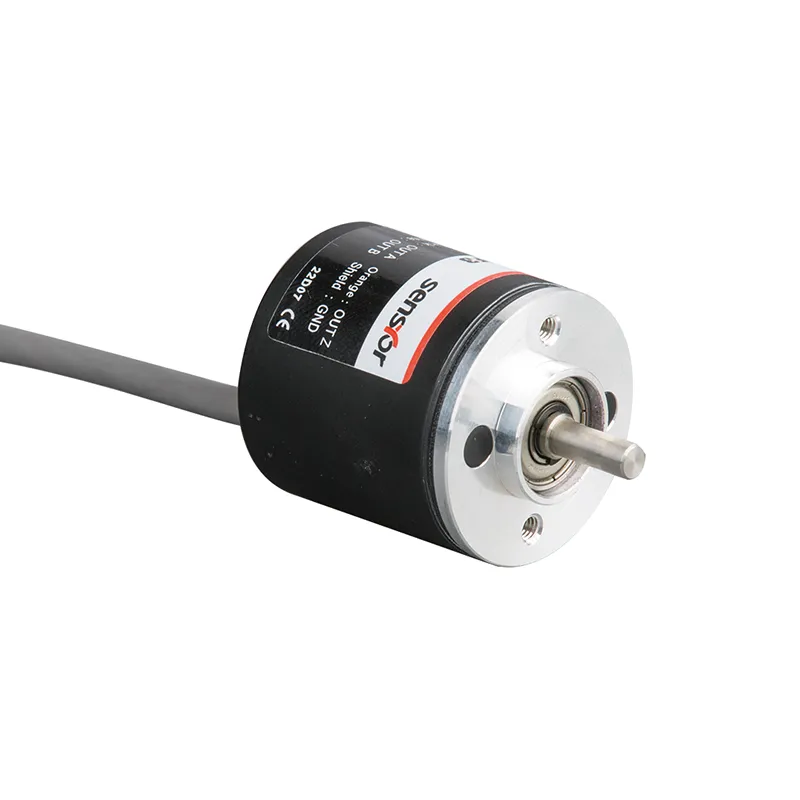
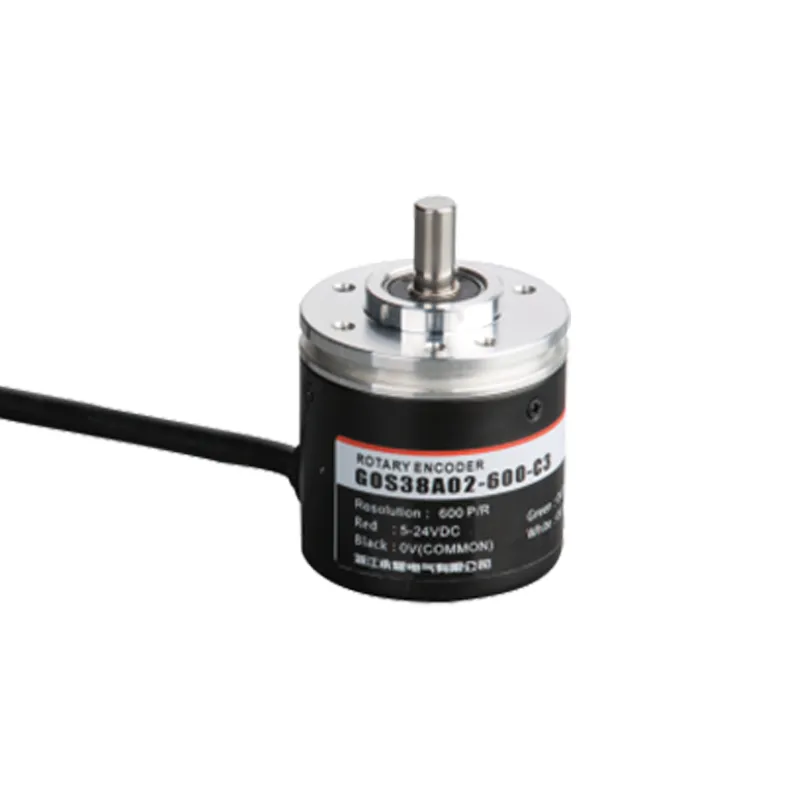
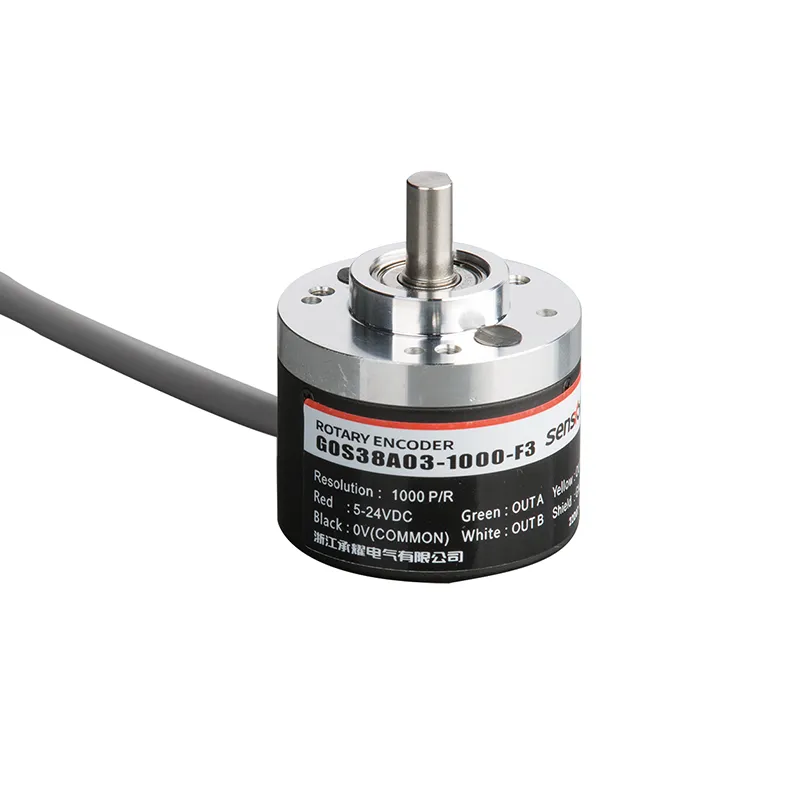
In today’s fast-paced industrial and automation landscape, incremental encoder are everywhere—hidden in robotics, conveyors, packaging lines, and even your favorite coffee machine. But, here’s something people often overlook: the real-world environment where these nifty gadgets operate. Does it matter? Absolutely.
Sure, incremental encoders are versatile and accurate, but environmental factors can make or break their performance and lifespan. Ask any engineer caught replacing failed sensors in a dusty steel plant—they’ll vouch for the importance of making the right choice.
Why Environment Matters for Incremental Encoder
Let’s kick things off with a simple truth: Not all incremental encoders are created equal, and neither are their applications. These devices thrive on precision—one wrong call about their surrounding working conditions, and your production line can screech to a halt.
Take a look at the following table showing how environmental considerations stack up against application needs:
Application Area
Key Environmental Factor
Encoder Feature to Check
Food & Beverage
Moisture/Humidity
IP Rating, Stainless Steel Body
Outdoor Construction
Temperature, Dust
Wide Temp Range, Sealed Housing
Machine Tools
Vibration, Metal Chips
Rugged Build, Isolated Signals
Clean Room (Semiconductor)
EMC, Cleanliness
Shielded Cable, Non-Contact
Notice something? Whether it’s avoiding water ingress at a dairy or handling brutal temperature swings outdoors, understanding these nuances is vital for both incremental encoder selection and long-term operation.
Temperature Considerations for Incremental Encoder
Temperature isn’t just a number. It’s a performance influencer. In factories, temperatures can exceed comfort limits quickly. Incremental encoders with standard specs may falter below freezing or above 70°C (158°F), impacting both their accuracy and output signal stability. Have you ever wondered how a small heater or cooling element can extend your encoder’s working life? It’s true: even something as simple as mounting position or providing shading can aid in temperature management.
Here’s a snapshot of how incremental encoder performance correlates with temperature exposure:
Temperature Range
Typical Use Case
Encoder Requirement
-20°C to +85°C
Standard Industrial
Basic Industrial Incremental Encoder
-40°C to +105°C
Outdoor / Harsh Environments
Extended Temp Range, Rugged Design
0°C to +60°C
Office Automation
General-Purpose Encoder
Always look for incremental encoders with a matching or higher temperature rating than your maximum expected operating temperature. Neighborhood near a furnace or cold storage? Choose appropriate housing or built-in heating options, and consider a pre-installed sensor calibration certificate to boost your buyer’s confidence.
Do you want your operation to run without interruption? You might want to send us an inquiry for application-specific advice.
Moisture, Dust, and Ingress Protection
You’d be surprised by how many operations fall apart due to tiny particles or droplets. If you’re sourcing incremental encoders for dairy, marine, or sawmills, pay attention! Water, oil splashes, and floating dust can sneak into the smallest gaps, corroding sensors, and causing intermittent faults.
Here’s what different IP (Ingress Protection) ratings mean for real-world applications:
IP Rating
Water Resistance
Dust/Insect Resistance
Where to Use
IP40
None
Basic against large items
Indoor, Clean Environments
IP54
Splash
Limited dust protection
Standard Industrial Machinery
IP65
Jet spray
Totally protected from dust
Outdoor, Dirty, or Splash-Prone
IP67
Temporary submersion
Dustproof
Food Processing, Washdown Areas
Let’s be honest, no one wants to replace an incremental encoder after a single washdown or cataclysmic dust storm. That’s why sealing and robust encoder housings go hand-in-hand with maintenance longevity. Even better—stainless steel bodies for food industries or plastic coatings for high-humidity zones can make all the difference.
If you’re tired of quick replacements or want to streamline your spare parts inventory, consider messaging us right away for a free consultation.
Vibration and Shock Resistance
Industrial incremental encoders are often exposed to harsh movement—think about conveyor lines, CNC machines, or heavy vibrating motors. These constant shudders, shocks, and sometimes even accidental impacts can prematurely age, or outright damage, an ordinary encoder.
Source of Vibration
Effect on Incremental Encoder
Protection Strategy
Motors
Signal Noise, Bearing Wear
Isolated Mounts, Shielded Wiring
Presses & Punchers
Sudden Shock
Ruggedized Encoder Design
Conveyors
Continuous Vibration
Secure Mounting, Robust Connector
Vibrations are notorious for causing incremental encoders to lose calibration or develop signal errors. If your setup is heavy on movement, opt for encoders tested for high shock and vibration environments—usually these models detail their maximum vibration (in Gs) and shock thresholds in the datasheet.
Customization is another trend. Some incremental encoders come with flexible mounts or enhanced PCB connectors designed specifically for such applications. Why not reach out with your exact machine details? We can provide encoders tailored for your needs, ensuring reliable counting and minimal downtime.
Electrical Interference (EMI & EMC Factors)
Have you ever observed unexplained fluctuations in encoder readings or occasional blips in performance? You might be dealing with electrical noise. Industrial environments are buzzing—literally—with variable speed drives, powerful motors, and high-frequency switching devices.
Interference Type
Common Source
Recommended Encoder Feature
Electromagnetic
Motors, RF devices
Shielded Cable, Metal Housing
Electrostatic
Nearby Welding/Metal Fabrication
Grounded Installation, Optical Isolation
Powerline Variations
Unstable Grids
Wide Voltage Input, Surge Protection
Proper shielding, twisted-pair signal cables, and optically isolated outputs are heroes in such hostile settings. Incremental encoders with robust EMC compliance ratings (often stated as EN 61000-6-2/4 or similar) operate like seasoned performers amid chaos.
This is also where cable management shines—shorter signal runs, away from sources of interference, can prevent most headaches. Want a wiring and install guide? Drop us a line, and let our engineering team assist with tailored solutions.
Mounting, Alignment, and Shaft Load
Even the best incremental encoder can suffer from improper installation. Alignment, shaft loading, and mounting position are critical. Tight mounting tolerances can stress the encoder’s bearings, reduce signal accuracy, or even cause premature failure.
Here’s a quick table to guide your installation planning:
Mounting Method
Potential Risk
Recommended Solution
Rigid Coupling
Shaft Stress, Misalignment
Use Flexible Couplers
Face Mounting
Loose Connections
Confirm Flatness & Bolt Torque
Hollow Shaft
Overload
Verify Max Shaft Load
Using a flexible coupler can mitigate minor misalignments—saving your incremental encoder from excessive wear. Don’t overlook regular calibration or periodic checks, especially in high-vibration or load-changing environments. Manufacturers provide shaft load limits and mounting kits—ask us to recommend compatible parts for hassle-free integration.
Specific Industry Scenarios
Let’s consider some real-world cases:
In the renewable energy sector—wind turbines or solar tracking systems—incremental encoders must withstand substantial temperature swings, moisture from rain, and possible lightning strikes.
Food processing lines demand devices that can survive aggressive washdowns, acidic detergents, as well as comply with food-safety standards.
Semiconductor clean rooms, on the other hand, need low-particulate encoders often using non-contact technologies to reduce any chance of contamination.
The following table gives an overview of common environments and their encoder demands:
Industry Sector
Unique Environmental Factor
Essential Encoder Quality
Renewable Energy
Lightning, Heat, Moisture
Dielectric Strength, IP66+
Food & Beverage Automation
Washdown, Corrosive Cleaners
Stainless Housing, IP67
Material Handling/Warehousing
Constant Loading, Dust
Shock-Resistant, IP65, Bore Shaft
Each scenario underlines the importance of understanding both the environmental exposure and operational cycles before zeroing in on an incremental encoder.
While you explore the best incremental encoder for your needs, don’t overlook popular related terms, like “optical incremental encoder,” “rotary incremental encoder,” “industrial incremental encoder,” and “incremental encoder with high IP rating.” These often represent what buyers actually search for.
If your application demands non-contact measurement, for example, specifying “non-contact optical incremental encoder” may yield more robust product options. Similarly, specifying temperature range, IP rating, and encoder output type in your search dramatically narrows down your choices, ensuring a faster purchase experience.
Selecting the right incremental encoder is more than just matching specs—it’s about understanding every environmental challenge your equipment will face. From freezing cold to searing heat, bone-dry dust clouds to relentless moisture, environmental factors can directly affect an encoder’s precision, service life, and your production line’s reliability.
Take your time to map out every possible hazard or demand in your operation. Cross-reference temperatures, IP ratings, vibration resistance, and EMC compliance—then choose the encoder best suited to your needs. If you have doubts or need tailored advice, don’t hesitate to reach out. Our friendly and experienced team is always ready to support you, whether you’re buying a single encoder or scaling up for an entire plant. Request an inquiry or quote today to save time, money, and unnecessary headaches!
FAQ
What ambient temperature range is ideal for incremental encoders?
Most standard incremental encoders operate from -20°C to +85°C. However, some rugged designs can handle -40°C to +105°C. Always check product datasheets for explicit specs.
How critical is the IP rating when selecting an encoder?
IP ratings indicate protection against dust and water. Applications exposed to cleaning, rain, or high dust need at least IP65/IP67. Choose higher ratings for maximum reliability.
Can electromagnetic interference affect incremental encoder signals?
Yes! EMI can disturb signal quality, leading to data errors. Opt for encoders with shielded cables, metal housings, and EMC-qualified designs.
What’s the difference between an optical and magnetic incremental encoder?
Optical encoders use light patterns and are extremely accurate but are more sensitive to contaminants. Magnetic encoders are more robust in dirty or oily environments but may offer slightly lower resolution.
How much maintenance do incremental encoders require?
Maintenance is minimal if you match the encoder to the environment. Proper mounting and regular inspection prolong life. Excessive cleaning (in food plants) or harsh vibration (in mining) may require scheduled checks.
Do you offer custom solutions for unique industrial needs?
Absolutely. Share your detailed requirements, and our engineers will recommend or design an incremental encoder specifically for your application. Request a quote or a free consultation today!
Introduction to 5000ppr Encoder A 5000ppr encoder is a high-resolution rotary feedback device designed to provide accurate position, speed, and motion information in industrial applications. With 5000 pulses generated per revolution, this type of encoder delivers excellent measurement precision for machines requiring detailed motion control. Modern automation systems depend heavily on accurate feedback signals. Whether […]
Table of Contents Introduction A 24V encoder is one of the most widely used sensing devices in industrial automation. It provides accurate feedback for position, speed, and direction control while operating with a standard 24-volt power supply commonly found in industrial systems. Manufacturers rely on encoder technology to improve machine efficiency, reduce downtime, and achieve […]
What is a High Precision Encoder A high precision encoder is an advanced sensing device that converts motion into electrical signals with extremely high accuracy. It is widely used in automation systems where exact positioning and speed control are critical. From robotics to aerospace systems, the high precision encoder ensures machines operate with minimal error […]
We use cookies to enhance your browsing experience, serve personalised ads or content, and analyse our traffic. By clicking "Accept All", you consent to our use of cookies.