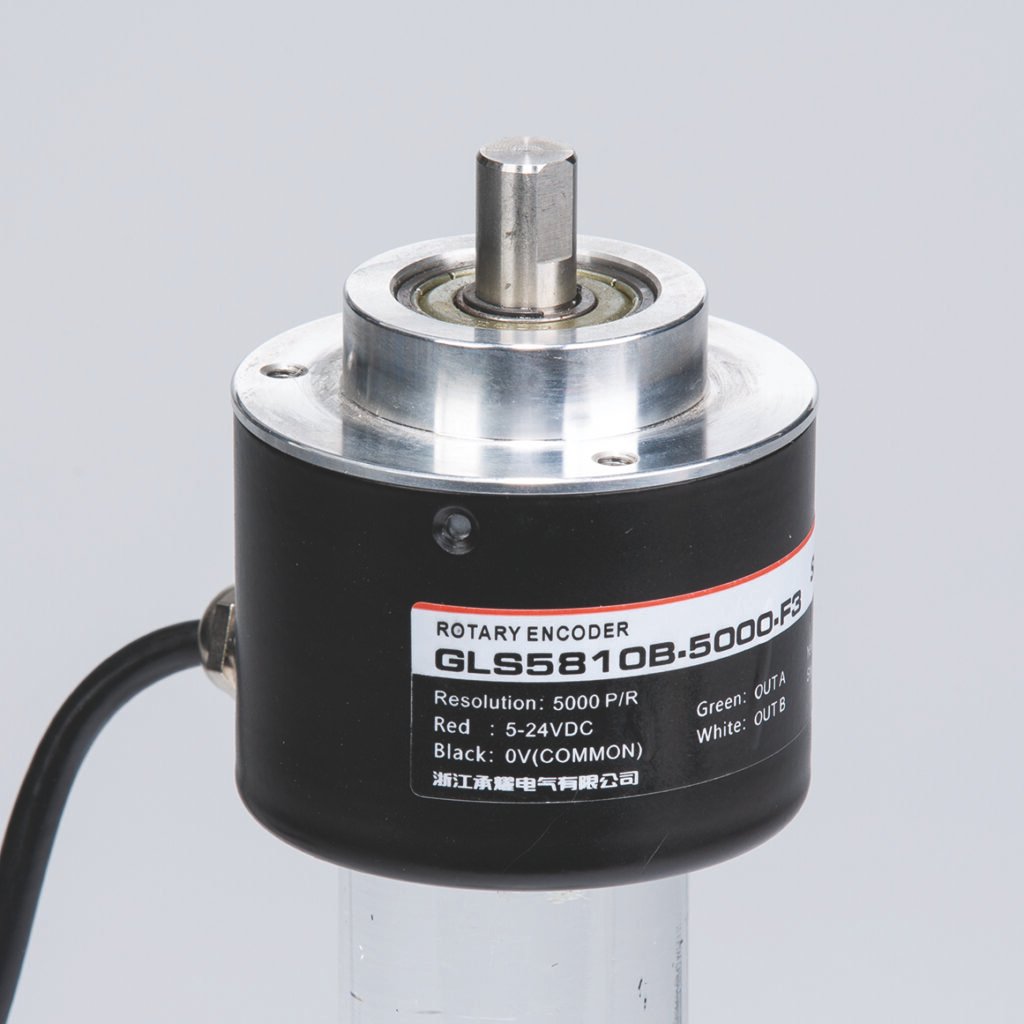
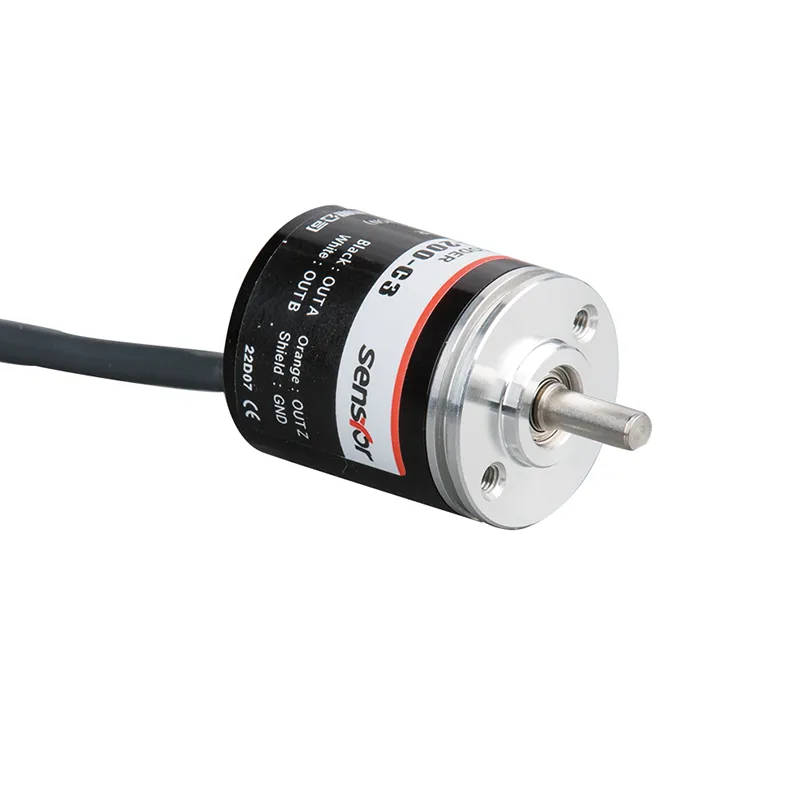
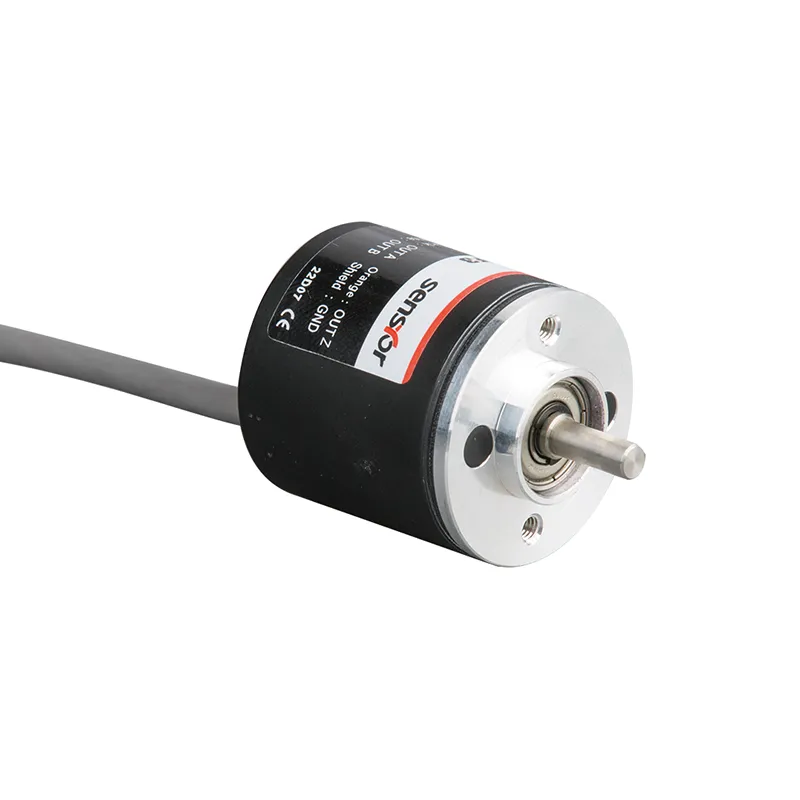
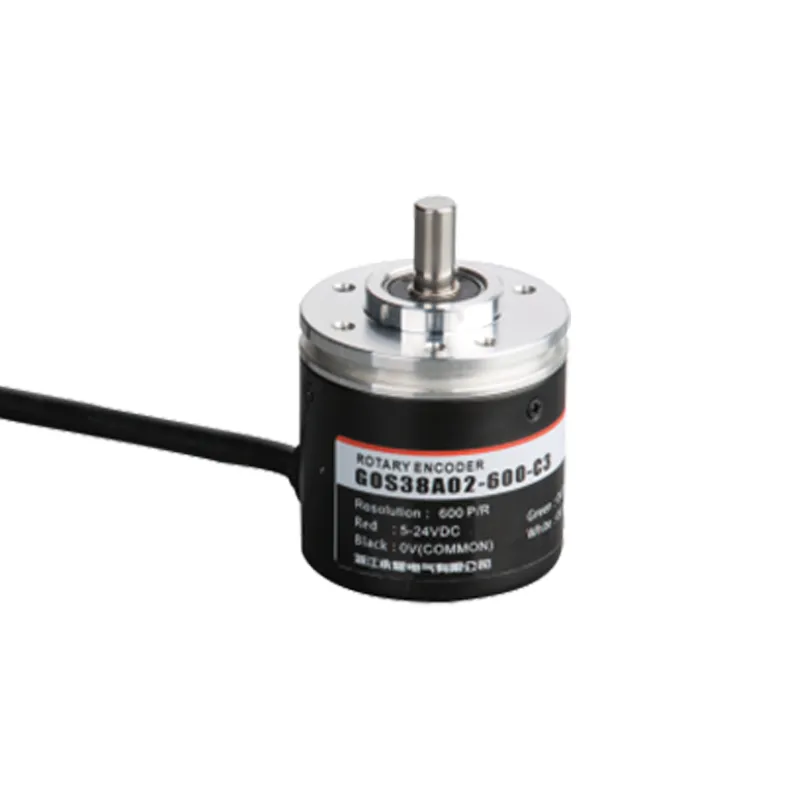
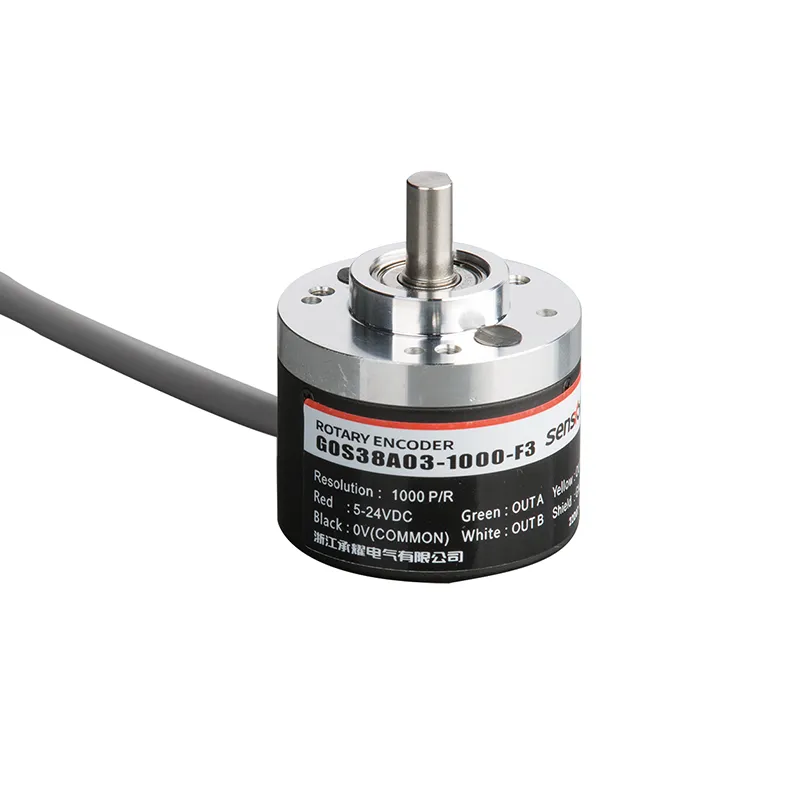
A hollow shaft rotary encoder is a rotary feedback device designed to mount directly onto a rotating shaft through a hollow or bore-style shaft configuration. Compared with some solid-shaft encoder installations, a hollow shaft design can simplify mechanical integration by allowing the encoder to fit over an existing machine shaft.
Hollow shaft rotary encoders can be considered for motors, conveyors, automation equipment, machine tools, packaging machinery, textile equipment, and other rotating industrial applications. The appropriate encoder depends on shaft dimensions, mounting method, resolution, output signal, maximum speed, environmental conditions, and controller compatibility.
A hollow shaft rotary encoder is an encoder with a central bore that allows the encoder to be mounted around a rotating machine shaft.
Instead of connecting the encoder to the machine through a separate external coupling in the same way as a typical solid-shaft configuration, a hollow shaft encoder can be mechanically integrated with the existing shaft, depending on its design.
Common terms used to describe related designs include:
Hollow shaft encoder
Hollow bore encoder
Through-bore encoder
Shaft-mounted encoder
Hollow bore rotary encoder
The exact mechanical configuration varies between encoder models.
The main purpose remains the same: convert rotational movement into electrical feedback that a control system can use to monitor motion.
How Does a Hollow Shaft Rotary Encoder Work?
The operating principle of a hollow shaft rotary encoder is similar to other rotary encoder technologies.
As the machine shaft rotates, the encoder detects rotational movement and generates electrical output signals.
Depending on the encoder type, the output can provide information about:
Rotational speed
Direction
Relative position
Absolute position
Pulse count
Motion timing
For an incremental hollow shaft encoder, the output commonly consists of pulses or phase-shifted signals.
For an absolute design, the encoder can provide a position value associated with shaft position.
The mechanical difference is mainly the way the encoder connects to the rotating shaft.
Hollow Shaft vs Solid Shaft Rotary Encoder
Understanding the mechanical difference can help engineers select the right encoder.
Feature
Hollow Shaft Rotary Encoder
Solid Shaft Rotary Encoder
Shaft configuration
Central bore
Protruding shaft
Typical installation
Mounts around machine shaft
Connects to machine through coupling
Mechanical integration
Can be compact depending on design
May require additional coupling
Shaft compatibility
Bore must match machine shaft
Coupling must match shaft
Installation considerations
Alignment and anti-rotation support
Coupling alignment
Application
Motors, machinery, rotating shafts
Motors and general rotary feedback
Neither design is universally better.
The correct choice depends on the machine’s shaft arrangement and available installation space.
9 Key Benefits of a Hollow Shaft Rotary Encoder
1. Direct Shaft Integration
One of the main reasons to consider a hollow shaft rotary encoder is its ability to mount around an existing shaft.
This can make the mechanical interface straightforward when the machine has a suitable shaft configuration.
2. Reduced Coupling Requirements
Depending on the installation, a hollow shaft encoder may reduce the need for a separate shaft coupling.
This can simplify the mechanical arrangement.
However, the exact installation method depends on the encoder’s mounting design.
3. Compact Mechanical Arrangement
A hollow shaft configuration can provide an efficient solution where the encoder needs to be positioned around an existing rotating shaft.
This can be particularly useful when installation space is limited.
4. Easy Access to the Machine Shaft
A hollow bore allows the machine shaft to pass through or into the encoder body, depending on the encoder configuration.
This can be convenient for certain machine designs.
、5. Flexible Installation
Different hollow shaft encoder designs can support different shaft and mounting configurations.
Before selecting a product, verify:
Bore diameter
Bore depth
Mounting dimensions
Anti-rotation mechanism
Shaft tolerance
Required accessories
6. Suitable for Industrial Automation
A hollow shaft rotary encoder can be integrated into many automation systems where rotational feedback is required.
The encoder’s electrical output must be compatible with the receiving controller.
7. Useful for Motor Feedback
Hollow shaft encoders can be considered for motor-related feedback applications when the motor shaft and encoder dimensions are compatible.
8. Available in Different Resolutions
Depending on the encoder model, different resolution options may be available.
For incremental encoders, resolution is commonly expressed in P/R.
The required resolution should be selected based on the machine’s actual feedback requirements.
9. Suitable for OEM Machine Designs
OEM machine builders may consider hollow shaft encoder configurations when designing compact mechanical assemblies.
For custom applications, the encoder should be evaluated together with the motor, shaft, mounting structure, and controller.
Applications of Hollow Shaft Rotary Encoders
A hollow shaft rotary encoder can be used in many industrial applications.
Industrial Automation
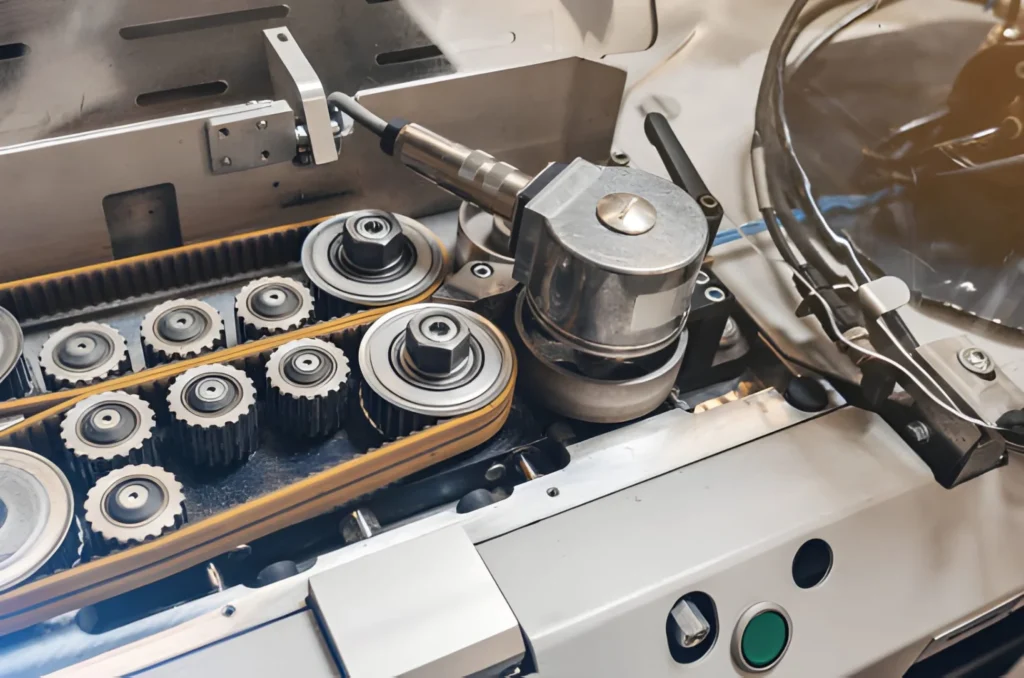
Automation equipment frequently uses rotary feedback to monitor motors, conveyors, rollers, and other rotating components.
A hollow shaft design may be useful when the encoder needs to mount directly around an existing shaft.
Servo systems can require feedback from a motor shaft.
A hollow shaft encoder may be considered when its bore and mounting configuration match the motor design.
The electrical interface must also be compatible with the servo drive.
CNC Machine Tools
CNC equipment can contain rotating spindles, motors, and other mechanisms that require feedback.
A hollow shaft rotary encoder can be considered when the mechanical structure allows direct shaft mounting.
The encoder’s resolution, speed, environmental protection, and output must be evaluated against the CNC control system.
Packaging Machinery
Packaging machines often use rotating shafts, rollers, feeders, and synchronized mechanisms.
A hollow shaft encoder can provide rotational feedback while fitting around an existing shaft.
Printing Machinery
Printing machines can contain multiple rotating rollers and shafts.
Encoder feedback can be used as part of the motion-control architecture.
Textile Machinery
Textile machines often contain rotating rollers and shafts operating continuously.
A hollow shaft rotary encoder may be suitable when its mechanical and environmental specifications match the application.
Conveyors
Conveyor systems can use encoders to monitor roller or drive movement.
A hollow bore configuration may simplify integration with some conveyor shaft arrangements.
Robotics and Motion Equipment
Robotic and motion-control equipment may have strict mechanical-space requirements.
A compact hollow shaft encoder can be considered when the shaft arrangement and feedback requirements are compatible.
How to Choose a Hollow Shaft Rotary Encoder
Choosing a hollow shaft rotary encoder requires both mechanical and electrical evaluation.
1. Check the Bore Diameter
The encoder’s hollow bore must be compatible with the machine shaft.
Check the exact:
Shaft diameter
Bore diameter
Shaft tolerance
Bore depth
Shaft length
Do not assume that a nominal shaft diameter guarantees compatibility.
2. Check the Mounting Method
A hollow shaft encoder normally requires an anti-rotation arrangement or another mechanical mounting method.
Check how the encoder is secured to the machine.
A correct mounting structure helps prevent unwanted encoder rotation relative to the machine body.
3. Select the Required Resolution
For incremental encoders, resolution is often specified in pulses per revolution.
A higher P/R value can provide more output pulses per revolution, but it also increases output frequency at a given rotational speed.
A simple calculation is:
Output frequency = P/R × RPM ÷ 60
For example, a 2,000 P/R encoder operating at 900 RPM produces:
2,000 × 900 ÷ 60 = 30,000 pulses per second
The controller must be capable of processing the resulting signal frequency.
4. Check the Output Signal
Make sure the encoder’s output is compatible with the receiving equipment.
Potential receiving devices include:
PLC
Servo drive
Motion controller
CNC controller
Counter module
The exact electrical interface should be confirmed from the encoder documentation.
5. Consider Maximum Speed
The encoder must be suitable for the machine’s maximum shaft speed.
Calculate the expected signal frequency and compare the operating speed with the encoder’s specified limits.
6. Evaluate Environmental Conditions
Consider the machine’s actual environment.
Important factors include:
Dust
Water
Oil
Humidity
Temperature
Vibration
Shock
An appropriate enclosure or protection rating should be selected according to the actual application requirements.
7. Check Shaft Loading
Mechanical loads on the encoder can affect performance.
Verify the manufacturer’s specifications for allowable radial and axial loads.
Avoid using the encoder as a structural support for loads beyond its specified limits.
8. Check Cable and Connector Requirements
Cable routing and connector placement should fit the machine.
For OEM equipment, it may also be useful to specify:
Cable length
Connector type
Connector orientation
Cable exit direction
9. Confirm Controller Compatibility
The final step is to verify that the complete encoder configuration works with the machine’s controller.
This includes both electrical compatibility and software or parameter configuration where applicable.
Hollow Shaft Rotary Encoder Installation Guide
Correct installation is essential for reliable encoder feedback.
Step 1: Verify the Shaft
Measure the machine shaft and compare it with the encoder bore specification.
Step 2: Clean the Mounting Area
Remove dirt, oil, and debris that could interfere with mechanical installation.
Step 3: Install the Encoder
Slide the hollow shaft rotary encoder onto the machine shaft according to the manufacturer’s instructions.
Avoid forcing the encoder onto a shaft that is outside the specified tolerance.
Step 4: Secure the Encoder
Use the specified clamping arrangement, mounting hardware, or anti-rotation mechanism.
Step 5: Check Alignment
Make sure the encoder is not subjected to excessive mechanical stress.
Step 6: Connect the Wiring
Follow the correct wiring diagram and pin assignment.
Step 7: Test the Signals
Rotate the shaft manually or at a controlled speed and verify the output.
Step 8: Test at Operating Speed
Run the machine under normal operating conditions and monitor the encoder feedback.
Common Hollow Shaft Encoder Problems
Bore Does Not Fit the Shaft
The first thing to check is the shaft and bore dimensions.
Never force an encoder onto an incompatible shaft.
Encoder Rotates With the Shaft
Check the anti-rotation mechanism and mounting arrangement.
The encoder body should remain mechanically fixed relative to the machine according to the manufacturer’s installation method.
Unstable Output
Possible causes include:
Loose wiring
Incorrect grounding
Electrical interference
Mechanical vibration
Incorrect signal configuration
Improper installation
The exact cause should be determined through systematic testing.
Incorrect Pulse Count
Check:
Encoder resolution
Controller counting mode
Wiring
Signal configuration
Encoder settings
The controller may process encoder signals differently depending on its configuration.
Hollow Shaft Rotary Encoder vs Through-Bore Encoder
The terms hollow shaft encoder and through-bore encoder are sometimes used to describe similar mechanical concepts, but product terminology varies between manufacturers.
A through-bore design generally emphasizes a bore that allows a shaft to pass through the encoder.
A hollow shaft design may use a bore that accommodates a shaft without necessarily allowing the shaft to pass completely through the encoder.
Therefore, buyers should always check the actual mechanical drawing instead of relying only on terminology.
Important dimensions include:
Bore diameter
Maximum shaft insertion depth
Housing dimensions
Mounting dimensions
Clearance
Cable position
How to Select a Hollow Shaft Encoder Supplier
When sourcing a hollow shaft rotary encoder, evaluate the supplier based on both technical and commercial factors.
Important questions include:
Does the supplier provide detailed specifications?
Are mechanical drawings available?
Can samples be provided?
Are different resolutions available?
Are customized configurations supported?
Can the supplier support OEM requirements?
Is technical assistance available?
Can the supplier provide consistent production?
Are cable and connector options available?
Does the supplier understand industrial encoder applications?
For OEM projects, technical communication can be especially important.
A supplier should be able to understand the machine’s mechanical and electrical requirements before recommending a suitable encoder.
Why Consider Sensyor Rotary Encoder Products?
When selecting a hollow shaft rotary encoder, the product should be evaluated against the actual machine requirements.
Sensyor provides rotary encoder products for industrial applications.
For an industrial or OEM inquiry, prepare the following information:
Application
Encoder type
Bore diameter
Shaft dimensions
Required P/R
Maximum RPM
Output signal
Supply voltage
Mounting configuration
Environmental conditions
Cable and connector requirements
Quantity
Providing these specifications can help the supplier determine which encoder configuration is appropriate for the application.
FAQs About Hollow Shaft Rotary Encoders
What is a hollow shaft rotary encoder?
A hollow shaft rotary encoder is a rotary feedback device with a central bore designed to mount around a rotating machine shaft. It converts shaft rotation into electrical feedback signals.
What is the difference between a hollow shaft and solid shaft encoder?
A hollow shaft encoder mounts around or onto a machine shaft through its central bore, while a solid shaft encoder has an external shaft that normally connects to the machine through a coupling or similar mechanical interface.
What are the benefits of a hollow shaft rotary encoder?
Potential benefits include direct shaft integration, a compact mechanical arrangement, reduced coupling requirements in some installations, and convenient integration with suitable machine shafts.
How do I choose the bore size of a hollow shaft encoder?
The bore size should match the machine shaft according to the manufacturer’s specified dimensions and tolerances. Check the actual shaft diameter and encoder mechanical drawing before ordering.
Can a hollow shaft rotary encoder be used with a motor?
Yes, a hollow shaft encoder can be used with suitable motor applications when its bore, mounting configuration, speed rating, output, and other specifications match the motor and control system.
Can hollow shaft encoders be used with PLCs?
Yes. The encoder’s output must be compatible with the PLC input or an appropriate interface module, and the PLC must be able to process the encoder signal.
Can a hollow shaft rotary encoder measure speed?
Yes. Incremental hollow shaft encoders can provide pulses that a control system can use to calculate rotational speed.
What is P/R in a hollow shaft encoder?
P/R means pulses per revolution. It is commonly used to specify the resolution of incremental rotary encoders.
What applications use hollow shaft rotary encoders?
Potential applications include industrial automation, servo systems, CNC equipment, conveyors, packaging machinery, printing equipment, textile machinery, and other systems requiring rotational feedback.
How should a hollow shaft rotary encoder be installed?
The encoder should be mounted according to the manufacturer’s mechanical specifications. Check the shaft diameter, bore tolerance, mounting structure, anti-rotation mechanism, wiring, and allowable mechanical loads before commissioning.
Where can I find industrial rotary encoder products?
A hollow shaft rotary encoder provides rotational feedback while using a central bore to integrate with a machine shaft. This mechanical arrangement can be useful for industrial equipment where direct shaft mounting, compact installation, or reduced coupling requirements are desirable.
However, selecting the right hollow shaft encoder requires more than checking the bore diameter.
Engineers should evaluate resolution, output signal, maximum RPM, shaft dimensions, mounting method, environmental conditions, electrical interface, shaft loading, cable configuration, and controller compatibility.
For OEM machine builders, sample testing and mechanical drawing approval can also help verify compatibility before production.
Whether the encoder is being used for industrial automation, servo systems, CNC machine tools, packaging machinery, textile equipment, conveyors, or robotics, the complete machine requirements should determine the final encoder selection.
If you are sourcing a hollow shaft rotary encoder for an industrial application, you can explore the Sensyor rotary encoder product range and compare the available configurations with your machine requirements.
Table of Contents Position Sensor Introduction Position sensor technology is essential in modern industrial automation systems. A position sensor detects the movement, displacement, or angular position of mechanical components and converts this data into electrical signals for monitoring and control. A high-quality position sensor improves accuracy, efficiency, and machine reliability in manufacturing, robotics, CNC equipment, […]
Table of Contents Introduction encoder for printing machinery is a critical component used to ensure precision, synchronization, and consistent output in modern printing systems. The encoder for printing machinery helps monitor speed, position, and direction, allowing printing equipment to maintain alignment and avoid errors. In high-speed printing environments, even a small misalignment can cause defects. […]
📊 Comprehensive Outline for “position sensor” Heading Level Topic H1 Position Sensor: 15 Essential Insights for Accurate Motion Detection H2 Introduction to Position Sensor H3 What is a Position Sensor H3 Why Position Sensors Matter H2 How a Position Sensor Works H3 Signal Detection Principles H3 Output Types of Position Sensor H2 Types of Position […]
We use cookies to enhance your browsing experience, serve personalised ads or content, and analyse our traffic. By clicking "Accept All", you consent to our use of cookies.