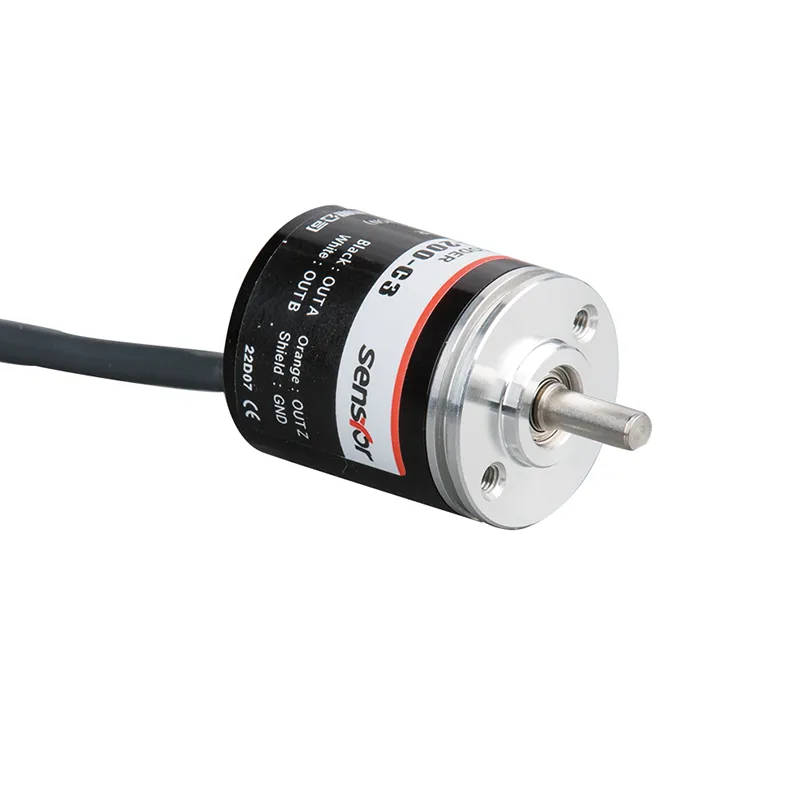
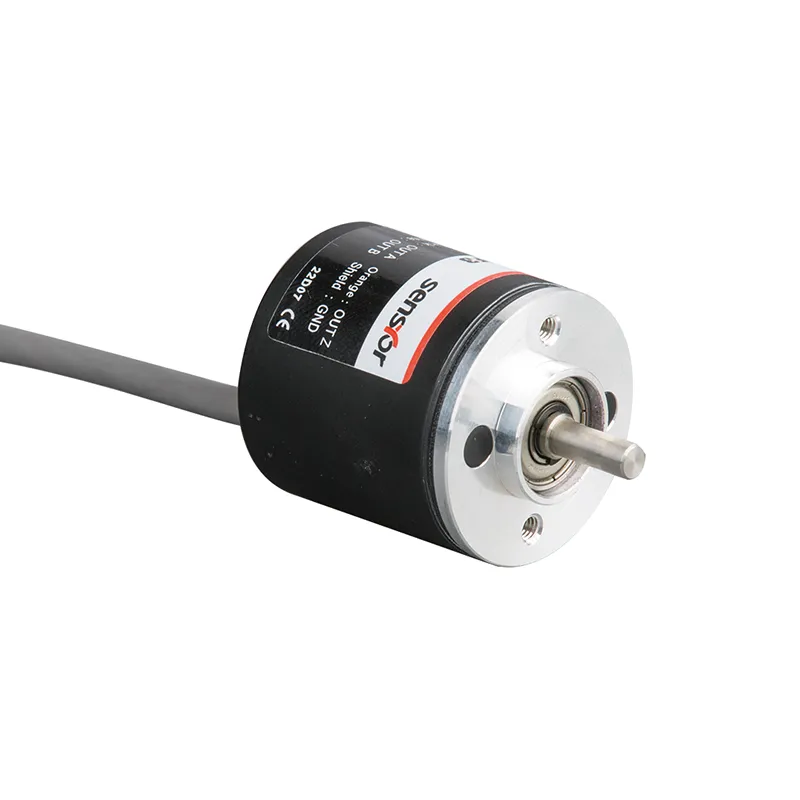
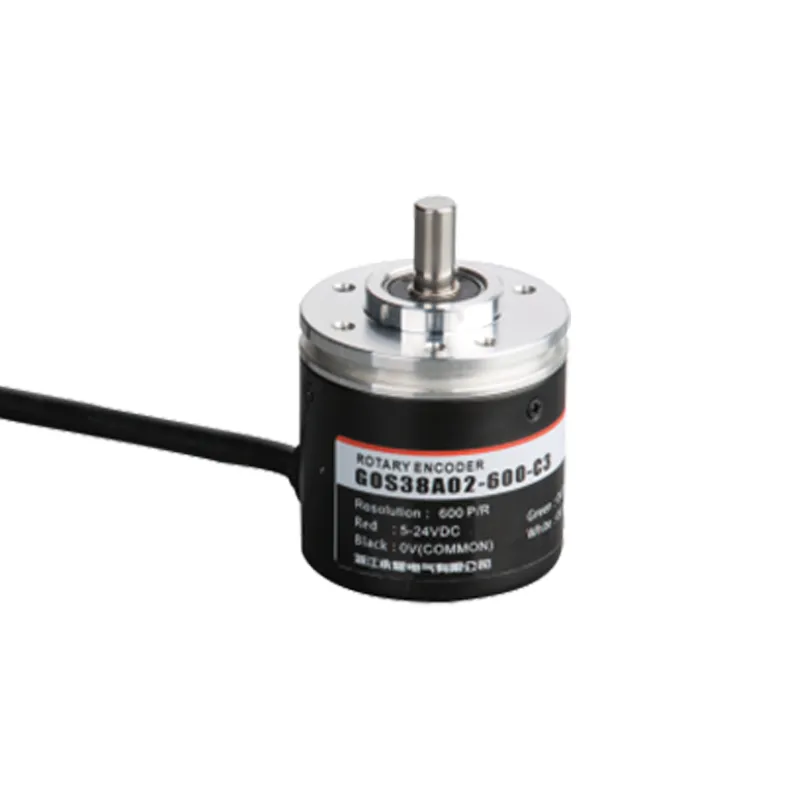
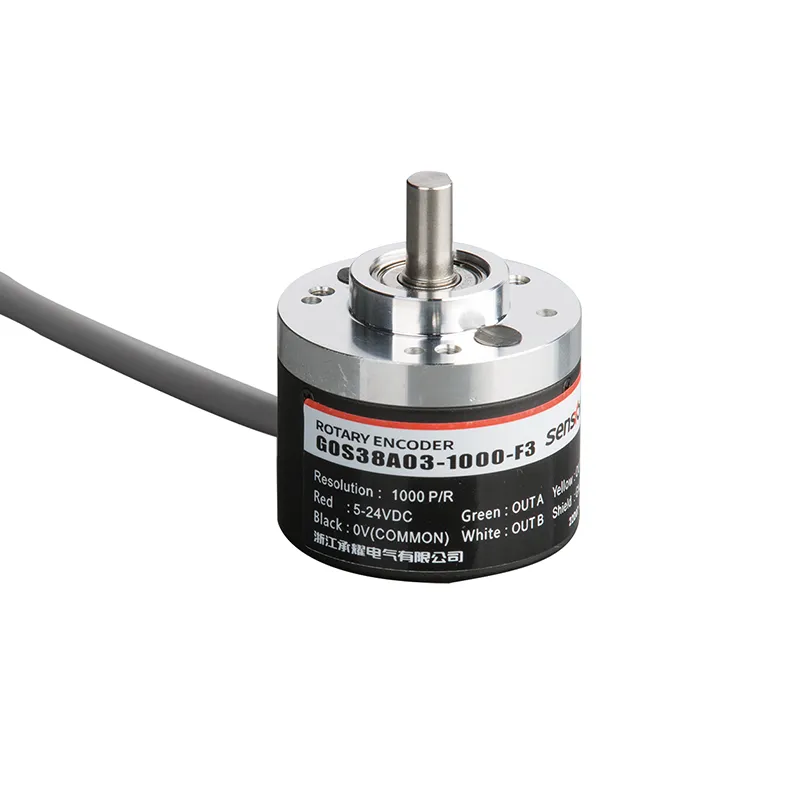
A 24V rotary encoder is an industrial sensor that converts rotary or linear motion into electrical signals for monitoring position, speed, and direction. Because many industrial control systems operate on a 24V DC power supply, a industrial rotary encoder integrates easily with PLCs, servo drives, motion controllers, and industrial automation equipment.
These encoders are widely used in manufacturing, packaging, robotics, material handling, printing, and CNC machinery, where precise motion feedback is essential for productivity and quality.
Whether an application requires incremental or absolute positioning, selecting the correct industrial rotary encoder improves system stability, repeatability, and operational efficiency.
How Does a 24V Encoder Work?
A 24V rotary encoder detects shaft movement using optical or magnetic sensing technology. As the shaft rotates, the encoder generates electrical signals that are transmitted to the control system.
The controller interprets these signals to determine:
Shaft position
Rotation direction
Rotational speed
Travel distance
Modern industrial encoders support multiple output interfaces including TTL, HTL, Push-Pull, Open Collector, SSI, CANopen, Modbus, and EtherCAT, making them suitable for various automation platforms.
Types of 24V Encoder
24V Incremental Encoder
Incremental industrial encoders generate pulses corresponding to shaft movement. They are commonly used for:
Conveyor systems
Packaging machines
Printing presses
Servo motors
Material handling equipment
Advantages include affordability, fast response, and simple installation.
24V Absolute Encoder
Absolute rotary position sensors provide an exact position value, even after power interruptions.
They are ideal for:
Robotics
CNC machining centers
Wind turbines
Automated storage systems
Heavy industrial machinery
Absolute encoders eliminate the need for homing procedures after power loss.
Benefits of Using a 24V Encoder
High Position Accuracy
A rotary position sensor delivers highly accurate position feedback, ensuring precise machine movement and reducing production errors.
Excellent Compatibility
Most PLCs and industrial controllers operate on 24V DC, allowing a rotary position sensor to integrate seamlessly without additional power conversion.
Improved Productivity
Reliable feedback minimizes downtime, increases machine efficiency, and enhances production quality.
Long Service Life
Industrial-grade rotary position sensors feature durable housings, high IP protection ratings, and resistance to vibration, dust, and moisture.
Easy Maintenance
Modern encoders require minimal maintenance while providing years of reliable operation.
Applications of 24V Encoder
A incremental encoder is widely used across industrial sectors.
Manufacturing Automation
Production lines rely on incremental encoders for synchronized motion control and quality assurance.
Packaging Equipment
Encoders ensure accurate label placement, sealing, filling, and cutting operations.
CNC Machines
Machine tools use incremental encoders to achieve micron-level positioning accuracy.
Robotics
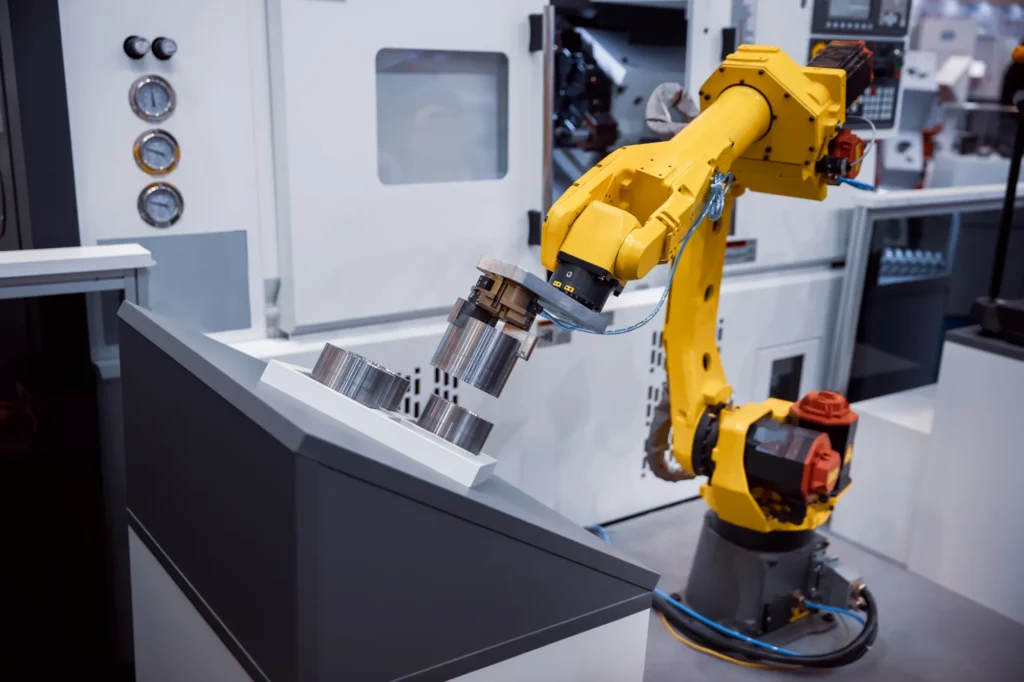
Industrial robots depend on encoder feedback for precise joint positioning and repeatable movement.
Conveyor Systems
Conveyor motors equipped with absolute encoders maintain accurate speed and positioning for efficient material transport.
Printing Machinery
Printing equipment uses encoder feedback to ensure color registration and paper alignment.
How to Choose the Right 24V Encoder
When selecting a absolute encoder, consider the following factors:
Encoder Type
Incremental
Absolute
Resolution
Higher pulse counts provide greater positioning accuracy.
Output Signal
Select an interface compatible with your controller:
TTL
HTL
SSI
CANopen
EtherCAT
Modbus
Environmental Protection
Choose an IP65, IP67, or IP69K rated absolute encoder for harsh industrial environments.
Mechanical Installation
Consider:
Shaft diameter
Hollow shaft or solid shaft
Flange type
Mounting dimensions
Installation Tips for a 24V Encoder
Proper installation improves encoder performance and lifespan.
(These are authoritative resources that can be linked with standard dofollow links if your CMS does not automatically apply nofollow.)
Frequently Asked Questions
What voltage does a 24V encoder require?
A 24V encoder is designed to operate with a 24V DC power supply commonly used in industrial automation systems.
Can a 24V encoder work with a PLC?
Yes. Most PLCs support 24V DC inputs, making integration straightforward.
What is the difference between incremental and absolute 24V encoders?
Incremental encoders output relative position information, while absolute encoders retain the exact position even after power loss.
Where are 24V encoders commonly used?
They are used in robotics, CNC machines, packaging equipment, conveyor systems, printing machinery, and automated production lines.
How long does a 24V encoder last?
With proper installation and maintenance, industrial-grade encoders can provide reliable service for many years, depending on operating conditions.
Conclusion
A 24V encoder is a critical component for modern industrial automation, delivering accurate position, speed, and motion feedback across a wide range of applications. By choosing the appropriate encoder type, output interface, and environmental protection level, manufacturers can improve productivity, reduce downtime, and enhance overall system performance.
For dependable industrial encoder solutions, visit SensyorCoder to explore a comprehensive selection of products tailored to automation, robotics, CNC machinery, and other demanding industries:
Table of Contents Introduction ISO9001 encoder technology is widely used in modern industrial automation systems where quality, precision, and reliability are essential. An ISO9001 encoder is manufactured under internationally recognized ISO9001 quality management standards, ensuring stable performance and consistent production quality. Industries such as robotics, CNC machining, packaging automation, and smart manufacturing rely on ISO9001 […]
Table of Contents What is an Encoder for Robotics An encoder for robotics is a device that converts mechanical motion into electrical signals, enabling precise monitoring of position, speed, and direction. Robotics systems rely heavily on encoder feedback to perform accurate movements in automation, assembly, inspection, and material handling tasks. Encoders can be incremental or […]
Table of Contents Introduction to Motion Control Sensor Motion control sensor technology is essential in modern industrial automation systems. A motion control sensor helps machines detect position, speed, movement, and direction with high accuracy. Industries rely on a motion control sensor to improve production efficiency, reduce positioning errors, and ensure stable automation performance. A high-quality […]
We use cookies to enhance your browsing experience, serve personalised ads or content, and analyse our traffic. By clicking "Accept All", you consent to our use of cookies.