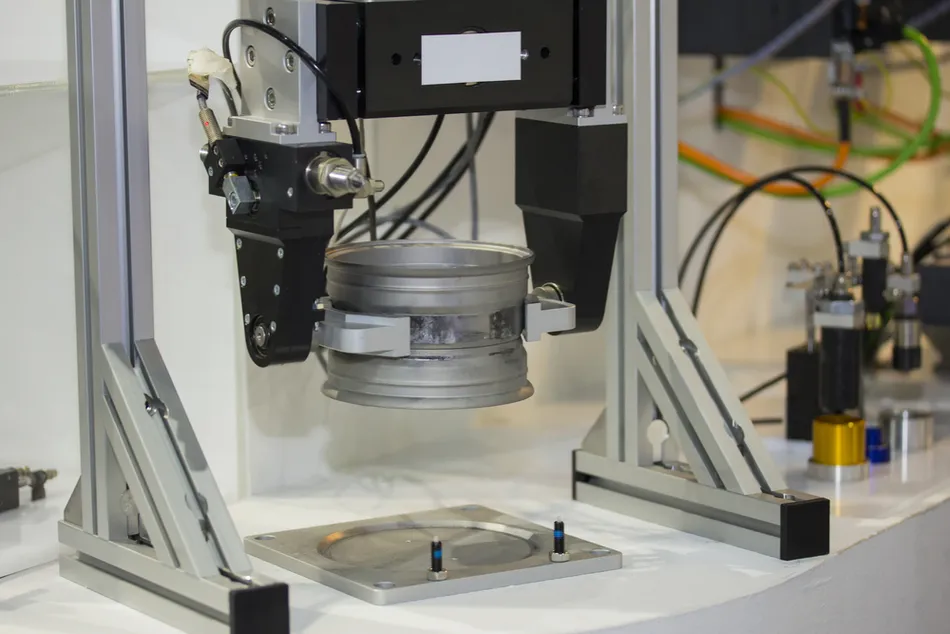
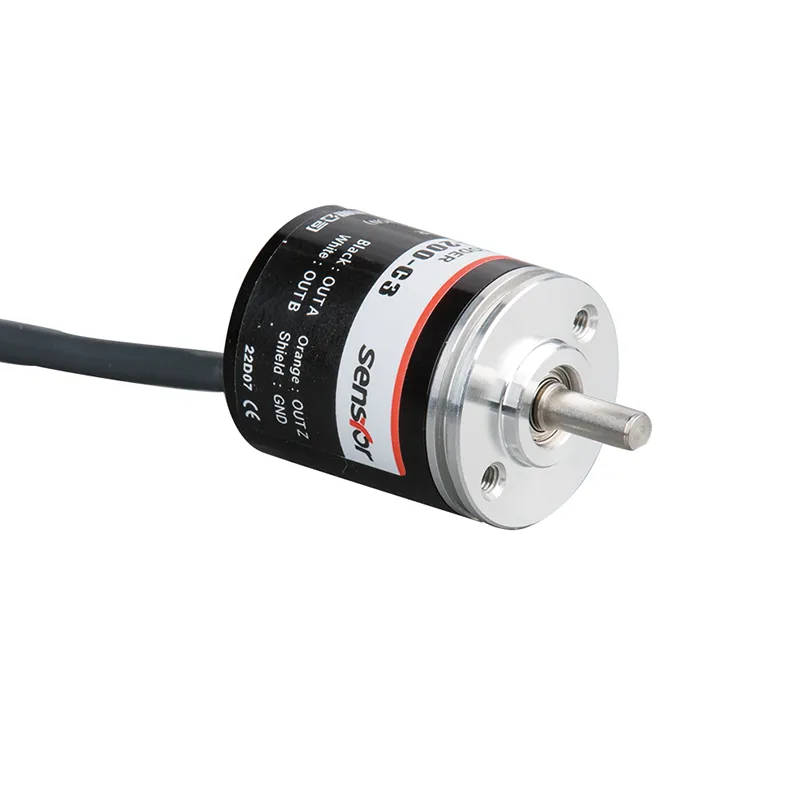
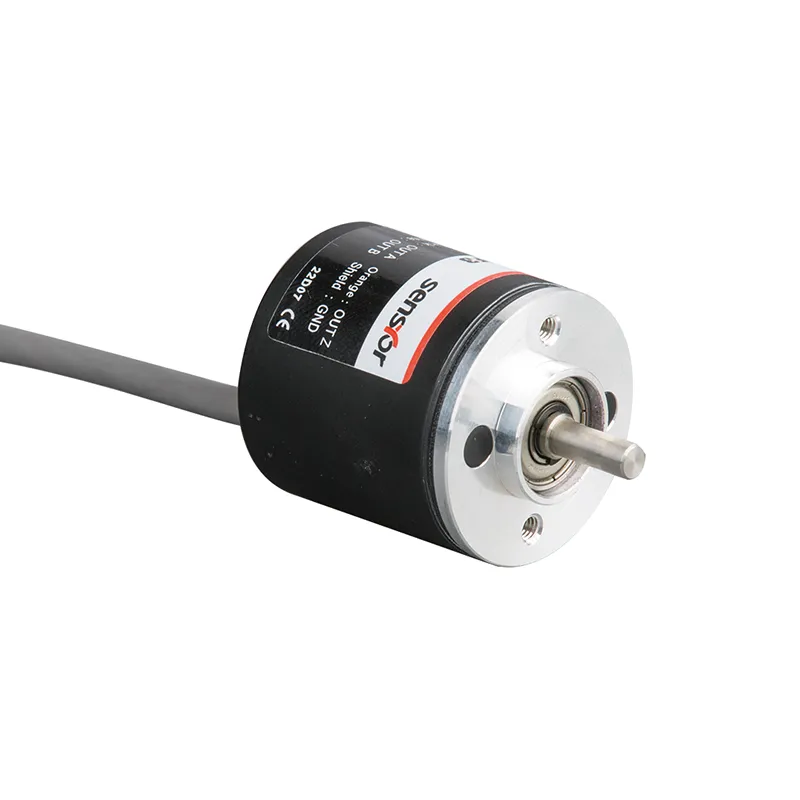
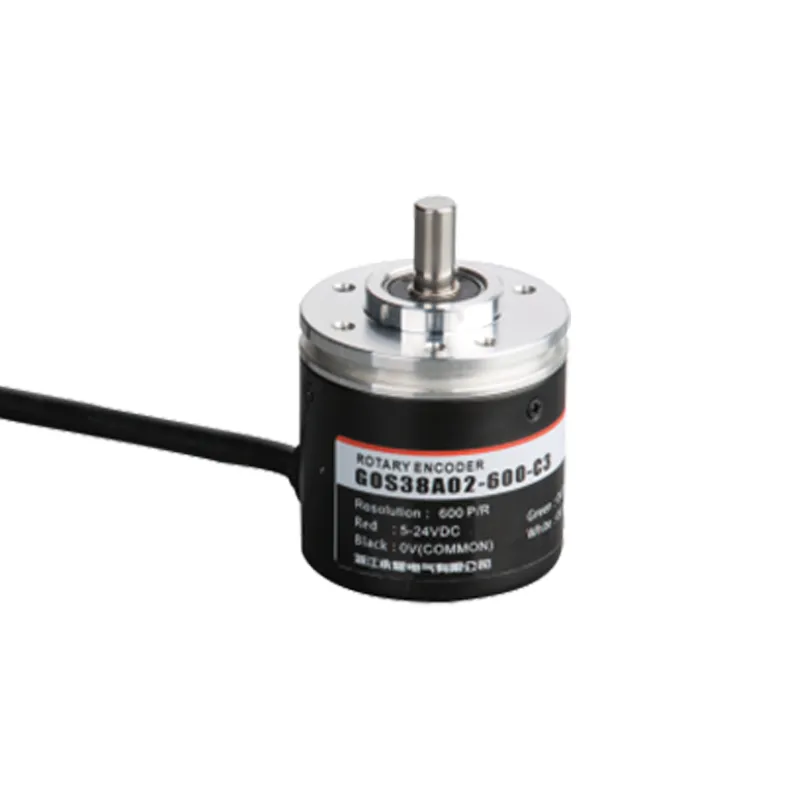
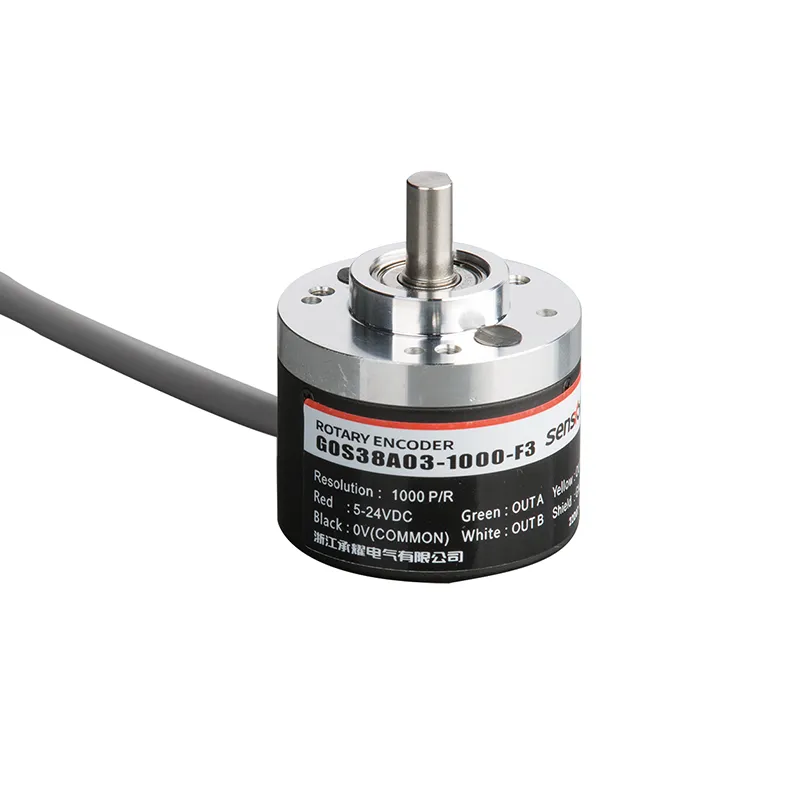
A hollow shaft rotary encoder provides accurate rotational feedback for industrial automation systems.
What Is a Hollow Shaft Rotary Encoder?
A hollow shaft rotary encoder is an industrial motion feedback device designed to measure rotational speed, position, and direction without requiring a traditional solid shaft connection. Unlike conventional encoders, this design allows the machine shaft to pass directly through the encoder, creating a simple and efficient mounting structure.
In modern automation systems, a hollow shaft rotary encoder plays an important role in improving motion accuracy, machine reliability, and production efficiency. These encoders are commonly used in motors, robotics, conveyors, packaging equipment, and other industrial applications where precise rotational feedback is required.
For manufacturers looking for reliable encoder products, SensyRcoder provides industrial encoder solutions suitable for different automation requirements:
A hollow shaft rotary encoder detects mechanical rotation and converts it into electrical signals. The control system, such as a PLC or motion controller, receives these signals and calculates:
Rotational speed
Angular position
Direction of movement
Machine operating status
Depending on the sensing technology, encoders can use optical or magnetic detection methods.
Optical Detection Technology
Optical encoders use a coded disc and light sensor system. When the disc rotates, interruptions in the light pattern generate electrical pulses.
Advantages include:
High resolution
Excellent accuracy
Fast response speed
Magnetic Detection Technology
Magnetic encoders use magnetic fields to detect rotation. They are suitable for environments containing dust, vibration, or moisture.
Main Components of a Hollow Shaft Rotary Encoder
A typical hollow shaft rotary encoder includes:
Component
Function
Hollow shaft
Allows direct mounting onto rotating shafts
Sensor element
Detects rotational movement
Encoder housing
Protects internal components
Electronic circuit
Converts signals into usable output
Connector
Transfers feedback data
Key Features of Hollow Shaft Rotary Encoder Technology
Compact Hollow Shaft Design
One major advantage of a hollow shaft rotary encoder is its compact structure. The through-shaft design eliminates the need for additional couplings, reducing installation space and mechanical complexity.
This makes it ideal for:
Servo motors
Gear systems
Industrial robots
Automated production equipment
High Accuracy and Reliable Feedback
Modern industrial machines require accurate position control. A high-quality hollow shaft encoder provides precise feedback that helps maintain:
Stable motor operation
Better product quality
Reduced production errors
Easy Installation and Flexible Mounting
Compared with traditional shaft encoders, hollow shaft designs simplify installation because the encoder can be mounted directly onto the rotating shaft.
Benefits include:
Faster installation
Lower alignment requirements
Reduced mechanical parts
Applications of Hollow Shaft Rotary Encoder
Factory Automation Systems
Automation equipment depends on accurate motion control. Hollow shaft rotary encoder technology is widely used in:
Conveyor systems
Assembly machines
Packaging equipment
CNC machinery
According to industrial automation principles, accurate feedback systems improve productivity and reduce downtime.
Servo systems require continuous feedback to maintain precise movement.
A hollow shaft rotary encoder helps servo motors achieve:
Accurate positioning
Smooth acceleration
Better speed control
Robotics and Industrial Equipment
Robotic systems rely on encoder feedback to determine joint movement and position.
Applications include:
Robotic arms
Automated inspection systems
Material handling equipment
Benefits of Using Hollow Shaft Rotary Encoder
Improved Machine Performance
A reliable encoder improves machine control by providing accurate rotational information. This allows automation systems to operate more efficiently.
Reduced Maintenance Requirements
The simplified mounting structure reduces mechanical components, which can lower maintenance requirements.
Space-Saving Industrial Design
Industrial equipment often has limited installation space. The hollow shaft structure provides an efficient solution where compact design is necessary.
Hollow Shaft Rotary Encoder vs Solid Shaft Encoder
Feature
Hollow Shaft Rotary Encoder
Solid Shaft Encoder
Installation
Direct shaft mounting
Requires coupling
Space requirement
Compact
Larger
Alignment
Easier
Requires accurate alignment
Maintenance
Lower
Moderate
Industrial applications
Excellent
Good
How to Select the Right Hollow Shaft Rotary Encoder
Resolution Requirements
Resolution determines how accurately the encoder measures rotation.
Consider:
Pulses per revolution (PPR)
Required positioning accuracy
Machine speed
Environmental Protection Rating
Industrial environments may expose equipment to:
Dust
Oil
Water
Vibration
Temperature changes
Choose an encoder with suitable protection ratings such as IP65 or higher when necessary.
Output Signal Options
Common output options include:
Incremental signals
Absolute signals
Analog outputs
Industrial communication interfaces
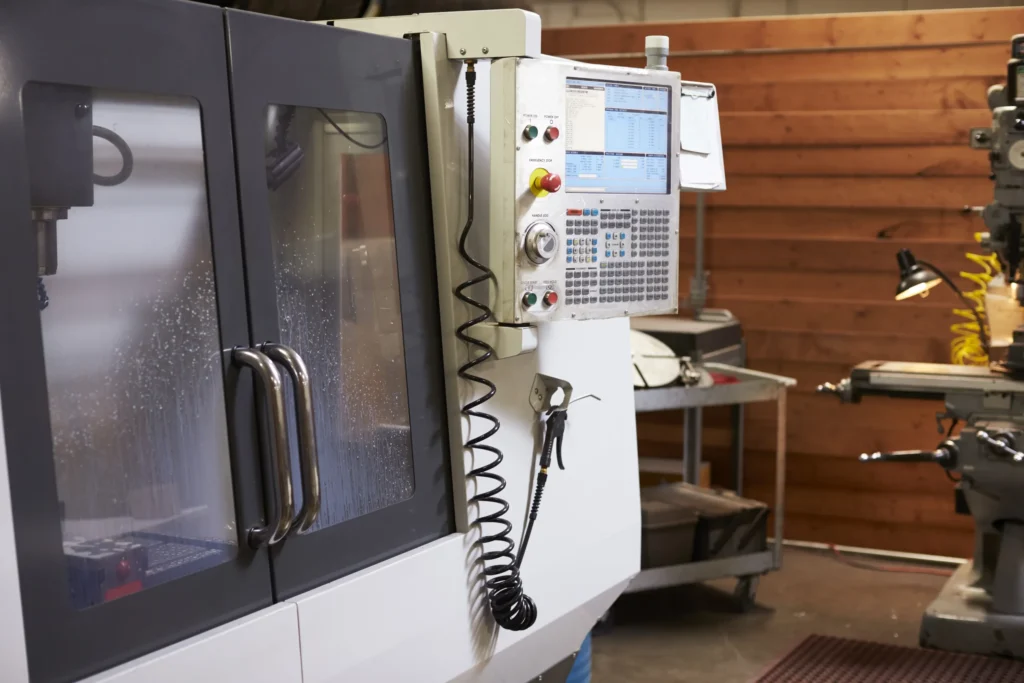
Industrial machinery uses hollow shaft rotary encoder technology for reliable speed and position monitoring.
Industrial Encoder Solutions From SensyRcoder
Selecting the correct encoder supplier is important for achieving long-term machine reliability.
SensyRcoder provides industrial encoder products designed for applications requiring:
A hollow shaft rotary encoder is an essential component for modern industrial automation systems. Its compact design, accurate feedback capability, and easy installation make it a preferred choice for many demanding applications.
From factory automation to robotics and motion control, these encoders help machines operate with greater precision and efficiency.
For reliable industrial encoder solutions, explore SensyRcoder products:
Table of Contents Introduction encoder for printing machinery is a critical component used to ensure precision, synchronization, and consistent output in modern printing systems. The encoder for printing machinery helps monitor speed, position, and direction, allowing printing equipment to maintain alignment and avoid errors. In high-speed printing environments, even a small misalignment can cause defects. […]
Table of Contents Introduction ISO9001 encoder technology is widely used in modern industrial automation systems where quality, precision, and reliability are essential. An ISO9001 encoder is manufactured under internationally recognized ISO9001 quality management standards, ensuring stable performance and consistent production quality. Industries such as robotics, CNC machining, packaging automation, and smart manufacturing rely on ISO9001 […]
Table of Contents Introduction Omron encoder replacement solutions are widely used in industrial automation systems where accurate motion control and reliable feedback are essential. An effective Omron encoder replacement helps maintain machine performance while reducing downtime and replacement costs. Many manufacturers choose an Omron encoder replacement when upgrading older automation systems or replacing discontinued encoder […]
We use cookies to enhance your browsing experience, serve personalised ads or content, and analyse our traffic. By clicking "Accept All", you consent to our use of cookies.