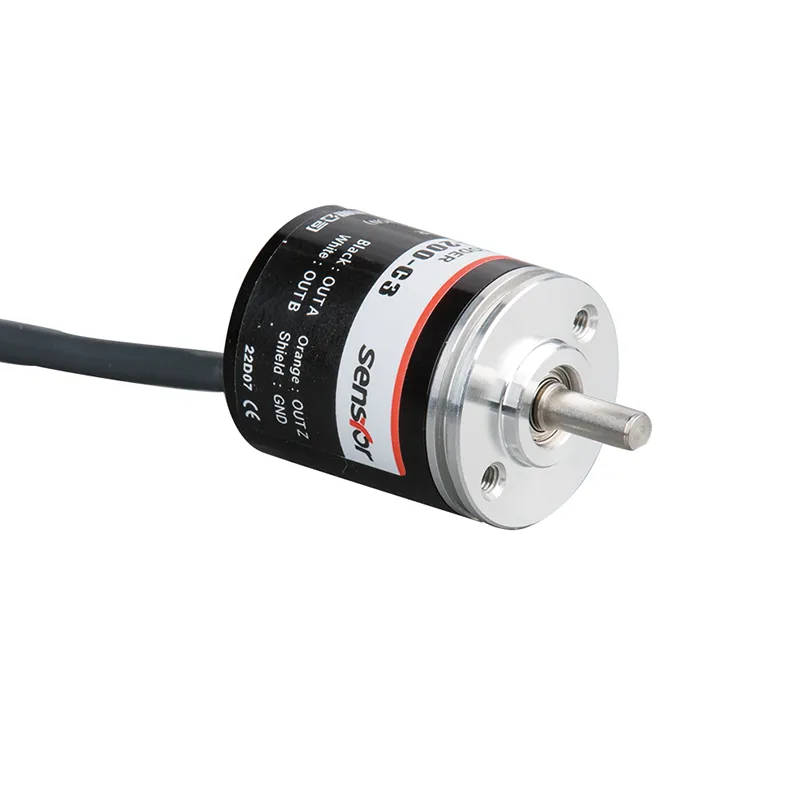
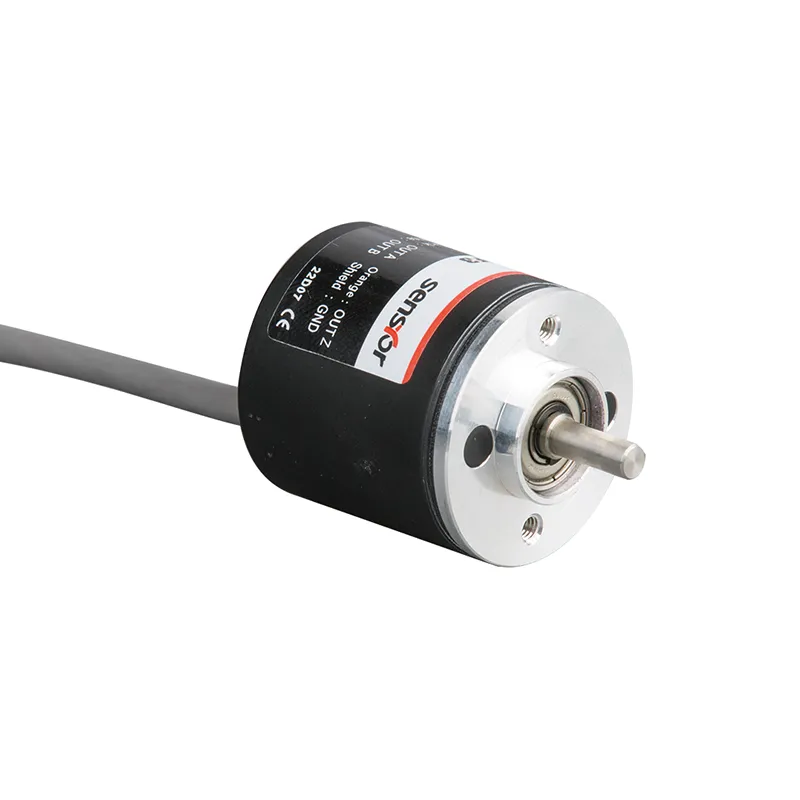
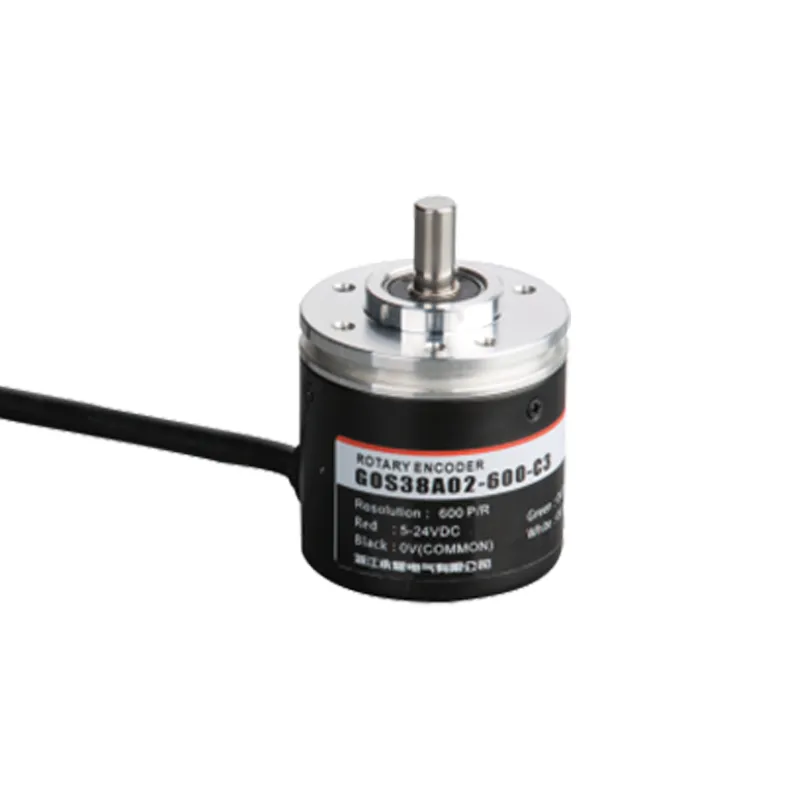
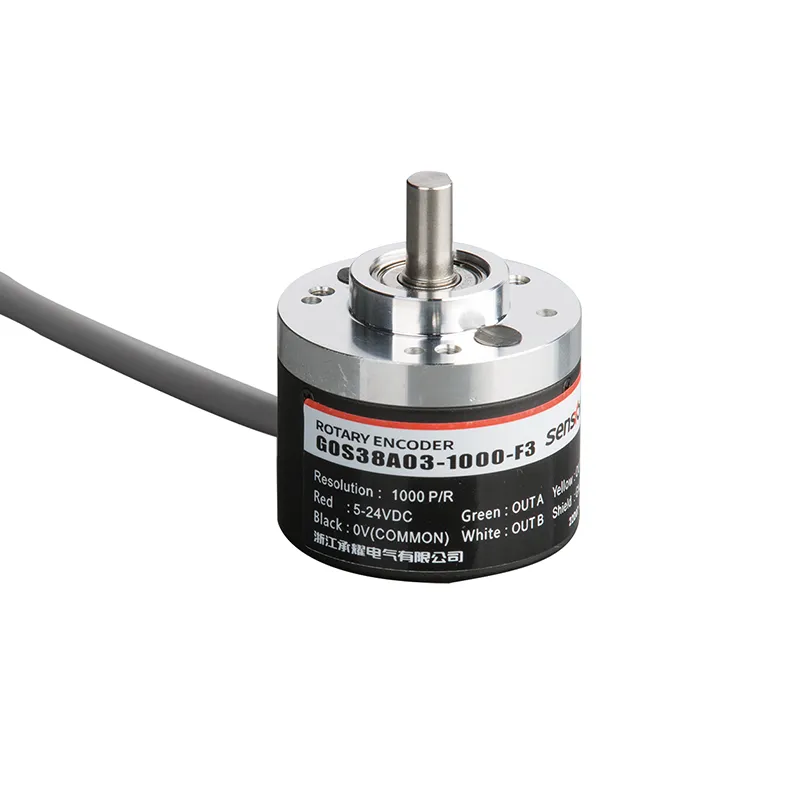
A rotary encoder for industrial automation converts rotational movement into an electrical signal that a control system can use to monitor position, speed, direction, or motion. Rotary encoders are widely used in motors, conveyors, packaging machines, robotics, machine tools, and other automated equipment where accurate motion feedback is important.
For manufacturers, OEMs, system integrators, and industrial equipment buyers, selecting the right encoder requires more than comparing resolution and price. The encoder must also match the machine’s mechanical design, controller, output interface, operating environment, and required feedback performance.
If you are sourcing encoders for an automation project, you can explore Sensyor rotary encoder products to review available solutions.
What Is a Rotary Encoder for Industrial Automation?
A rotary encoder is a sensor that detects rotational movement and converts it into an electrical output. The control system can use this feedback to determine information such as rotational position, speed, and direction.
In industrial automation, rotary encoders are often connected to motors, drives, PLCs, controllers, and motion-control systems.
The exact feedback method depends on the encoder type. Incremental encoders generally provide pulses as the shaft rotates, while absolute encoders provide a position value associated with the shaft’s angular position.
The correct choice depends on the requirements of the specific automation system.
Why Are Rotary Encoders Important in Industrial Automation?
Modern automated machines need feedback to control and monitor movement. Without appropriate feedback, a controller may have limited information about what a motor or mechanical component is actually doing.
A rotary encoder for industrial automation can provide feedback that helps a control system monitor rotational movement.
Common benefits include:
Motion feedback – Provides information about rotating components.
Speed monitoring – Helps control systems monitor rotational speed.
Direction detection – Incremental encoder signals can be used to determine direction.
Position feedback – Supports applications that require rotational position information.
Automation control – Can be integrated into PLC and motion-control systems.
Machine monitoring – Provides feedback for automated machinery.
Repeatable movement – Supports controlled machine operations.
Motor feedback – Can be used with motors and drive systems.
System integration – Encoders are available with different mechanical and electrical configurations.
The actual performance depends on the encoder design, installation, controller, and application conditions.
rotary encoder for industrial automation
9 Common Applications of Rotary Encoders in Industrial Automation
1. Conveyor Systems
Conveyors are widely used in manufacturing, logistics, packaging, and material-handling systems.
A rotary encoder can monitor the movement of a conveyor drive or roller. The feedback can then be used by a control system to coordinate conveyor speed, positioning, or other machine operations.
For example, an encoder can help a controller monitor the rotation of a drive shaft and determine whether the conveyor is moving at the expected speed.
2. Motor Feedback
Motors are fundamental components in industrial automation.
A rotary encoder can provide feedback from a motor shaft so that the control system can monitor rotational movement. Depending on the application, the feedback may be used for speed regulation, position control, or other motion-control functions.
When selecting an encoder for motor feedback, engineers should consider shaft dimensions, mounting, resolution, maximum speed, output interface, and environmental conditions.
3. Robotics
Industrial robots require coordinated movement across multiple axes.
Encoders can be used as part of motion-feedback systems to provide information about rotating joints or motors. The controller can use this information to coordinate movement according to the robot’s control architecture.
For robotic applications, mechanical dimensions, resolution, response requirements, environmental conditions, and interface compatibility should all be considered.
4. Packaging Machinery
Packaging machines often perform repetitive and synchronized movements.
Examples include:
Filling machines
Labeling machines
Sealing machines
Wrapping machines
Cutting systems
Printing and coding equipment
A rotary encoder for industrial automation can provide feedback that helps synchronize rotating components with other machine functions.
For example, an encoder can monitor the rotation of a shaft while the control system coordinates another operation according to the detected movement.
5. CNC and Machine Tools
CNC machines and other machine tools rely on controlled mechanical movement.
Rotary encoders may be used for spindle feedback, rotary-axis feedback, or other motion-control functions depending on the machine design.
The required encoder specifications can vary significantly between applications. Resolution, accuracy requirements, mechanical installation, output format, and environmental conditions should therefore be evaluated before selecting a product.
6. Textile Machinery
Textile equipment often contains continuously rotating components that need monitoring and synchronization.
Encoders can provide feedback from motors, rollers, shafts, and other rotating components.
A suitable encoder can help the control system monitor movement and coordinate different machine functions.
7. Printing Equipment
Printing machinery requires coordinated movement between rollers, motors, and material-handling mechanisms.
Rotary encoders can provide rotational feedback that supports synchronization and motion control.
In these applications, the encoder may need to operate continuously and maintain stable performance under the machine’s mechanical and environmental conditions.
8. Material Handling Equipment
Automated material-handling equipment can include conveyors, lifting systems, sorting equipment, and other motor-driven mechanisms.
A rotary encoder for industrial automation can provide movement feedback for these systems.
When selecting an encoder for material-handling equipment, buyers should evaluate operating speed, mounting requirements, environmental protection, cable or connector configuration, and controller compatibility.
9. Automated Production Lines
Production lines may contain multiple motors, conveyors, actuators, and synchronized processes.
Encoders can provide feedback at different points in the system, helping controllers monitor rotational movement and coordinate machine operations.
For system integrators, selecting encoders with compatible electrical and mechanical specifications is particularly important when designing a complete automation solution.
Incremental vs. Absolute Rotary Encoders
One of the most important decisions when choosing a rotary encoder is whether the application requires an incremental or absolute design.
Incremental Rotary Encoders
Incremental encoders generate output signals as the shaft rotates.
Depending on the output configuration, the control system can use these signals to determine:
Relative movement
Speed
Direction
Position changes
Incremental encoders are often considered for applications where the control system can establish or maintain the required reference position.
Absolute Rotary Encoders
Absolute encoders provide a position value associated with the shaft’s angular position.
They may be appropriate when an automation system requires absolute position information.
The choice between incremental and absolute technology should be based on the control architecture, application requirements, interface, and required position feedback.
How to Choose a Rotary Encoder for Industrial Automation
Choosing the right rotary encoder for industrial automation starts with defining the machine’s requirements.
Resolution
Resolution determines how finely rotational movement can be represented by the encoder.
The required resolution depends on the application. Higher resolution is not automatically better if the control system and mechanical system do not require it.
Output Type
The encoder output must be compatible with the receiving controller, drive, or interface.
Depending on the encoder, possible output configurations can include different pulse or communication interfaces.
Always confirm compatibility before ordering.
Shaft and Mounting Dimensions
Mechanical compatibility is essential.
Check:
Shaft diameter
Shaft length
Housing dimensions
Mounting pattern
Mounting orientation
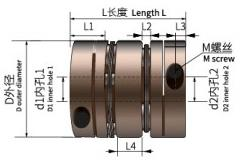
Coupling requirements
An encoder with incompatible mechanical dimensions may not be suitable even if its electrical specifications are correct.
Operating Speed
Check the encoder’s rated or specified rotational speed against the actual machine speed.
Continuous operation near application limits should be evaluated carefully according to the manufacturer’s specifications.
Environmental Conditions
Industrial machinery may expose encoders to:
Dust
Moisture
Vibration
Shock
Temperature variations
Oil or other contaminants
The encoder’s environmental specifications should match the installation environment.
The encoder must communicate correctly with the machine’s control architecture.
Before purchasing, confirm the required electrical interface, supply voltage, signal characteristics, and controller input requirements.
How to Integrate a Rotary Encoder Into an Automation System
A typical encoder integration process includes several steps.
Step 1: Define the Motion Requirement
Determine what needs to be measured:
Speed
Direction
Relative position
Absolute position
Rotational movement
rotary encoder for industrial automation
Step 2: Select the Encoder Type
Choose incremental or absolute technology according to the control requirements.
Step 3: Check Mechanical Compatibility
Verify shaft dimensions, mounting arrangement, available installation space, and coupling requirements.
Step 4: Check Electrical Compatibility
Confirm supply voltage, output signals, connector type, and controller compatibility.
Step 5: Evaluate the Environment
Review temperature, vibration, dust, moisture, and other conditions at the installation location.
Step 6: Test the Encoder
Before full-scale deployment, testing the encoder within the actual or representative machine environment can help verify mechanical and electrical compatibility.
What Makes a Good Industrial Encoder Supplier?
Choosing the right product is only part of the sourcing process. The manufacturer or supplier also matters.
Industrial buyers should consider:
Product range
Manufacturing capability
Quality-control procedures
Technical documentation
OEM/ODM capability
Sample availability
Production capacity
Lead times
Communication
After-sales support
For OEMs and machine builders, customization capability can be particularly important because the required encoder may need specific mechanical dimensions, connectors, cables, output configurations, or other characteristics.
A supplier should be able to clearly communicate which specifications are standard and which can be customized.
For industrial automation communication technologies, the ODVA organization provides information about technologies and standards associated with industrial networks such as EtherNet/IP.
The appropriate standards and requirements should always be determined according to the specific machine, market, and application.
FAQs About Rotary Encoders for Industrial Automation
What is a rotary encoder used for in industrial automation?
A rotary encoder provides feedback about rotational movement. Depending on its type and configuration, it can be used to monitor speed, direction, relative position, or absolute position in automated machinery.
Which rotary encoder is best for industrial automation?
There is no single encoder that is best for every automation application. The appropriate product depends on resolution, output type, mechanical dimensions, operating speed, environmental conditions, and controller compatibility.
What is the difference between incremental and absolute encoders?
An incremental encoder produces signals representing rotational movement, while an absolute encoder provides a position value associated with the shaft’s angular position. The appropriate technology depends on the machine’s control requirements.
Can rotary encoders be used with PLC systems?
Yes, rotary encoders can be integrated into automation systems that use PLCs when the encoder’s electrical output and signal characteristics are compatible with the PLC input or associated interface.
How do I choose encoder resolution?
Choose resolution based on the required measurement or positioning performance, mechanical system, and controller capabilities. A higher resolution should be selected only when it provides a meaningful benefit for the application.
Can a rotary encoder work in harsh industrial environments?
Some rotary encoders are designed for demanding industrial environments. Buyers should check the manufacturer’s specifications for temperature, vibration, dust, moisture, ingress protection, and other environmental requirements.
Can rotary encoders be customized for OEM applications?
Depending on the manufacturer, OEM customization may be available for mechanical dimensions, connectors, cables, output configurations, labeling, and other requirements. Buyers should discuss their technical specifications with the manufacturer.
Where can I buy rotary encoders for industrial automation?
Industrial buyers can purchase rotary encoders from specialized manufacturers, distributors, or automation suppliers. When sourcing directly from a manufacturer, compare product specifications, quality procedures, production capability, lead times, and technical support.
Conclusion
A rotary encoder for industrial automation provides valuable motion feedback for automated machinery, including conveyors, motors, robotics, packaging equipment, CNC machines, textile machinery, and production lines.
Selecting the correct encoder requires careful consideration of resolution, encoder type, output interface, mechanical dimensions, operating speed, environmental conditions, and controller compatibility.
For OEMs, distributors, system integrators, and machine builders, supplier capability is equally important. A reliable manufacturer should be able to provide suitable products, technical information, consistent quality, and support for the required application.
If you are looking for rotary encoder products for an industrial automation project, visit the Sensyor rotary encoder product page to explore the available options.
Table of Contents Replace Omron Encoder Overview Replace Omron encoder solutions are often required when an existing encoder reaches the end of its service life, becomes unavailable, or when users want a more cost-effective alternative. Choosing the right encoder replacement is critical because compatibility directly affects machine performance, positioning accuracy, and long-term reliability. Modern industrial […]
📊 Comprehensive Outline for “encoder for CNC machine” Heading Level Topic H1 Encoder for CNC Machine: 15 Powerful Insights H2 Introduction to Encoder for CNC Machine H3 What is an Encoder in CNC Systems H3 Importance of Precision in CNC Machines H2 How Encoder for CNC Machine Works H3 Signal Generation and Feedback H3 Role […]
📊 Comprehensive Outline for “encoder for textile machinery” Heading Level Topic H1 Encoder for Textile Machinery: Improve Precision and Efficiency H2 Introduction to Encoder for Textile Machinery H3 What is an Encoder in Textile Machines H3 Why It Matters in Textile Production H2 How Encoder Systems Work in Textile Machinery H3 Signal Conversion and Feedback […]
We use cookies to enhance your browsing experience, serve personalised ads or content, and analyse our traffic. By clicking "Accept All", you consent to our use of cookies.