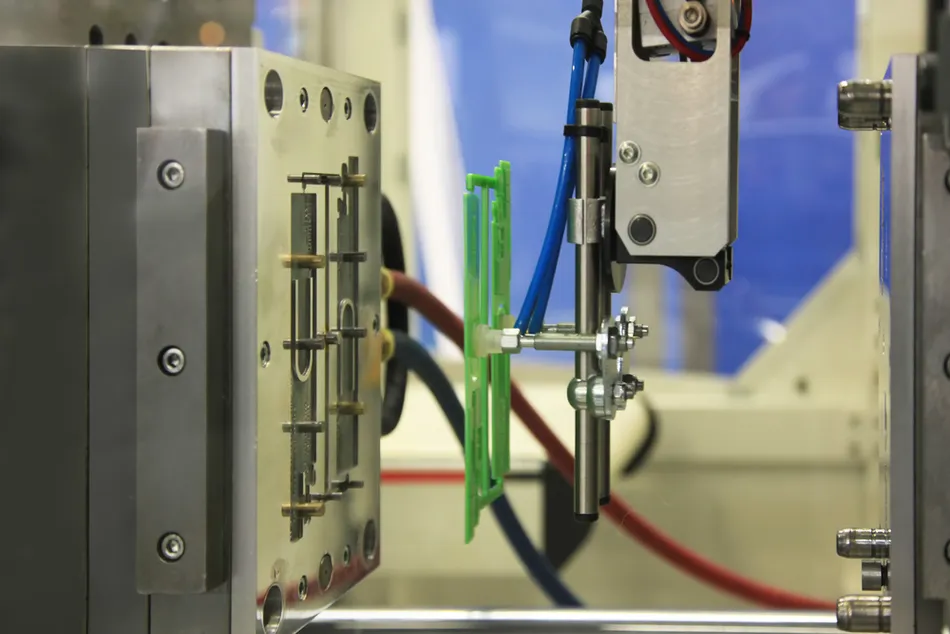
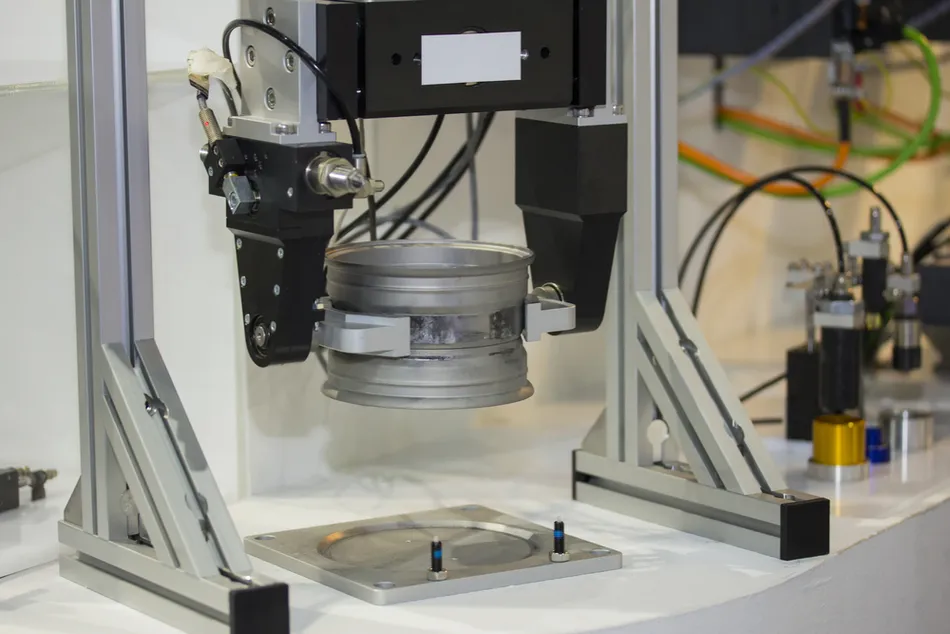
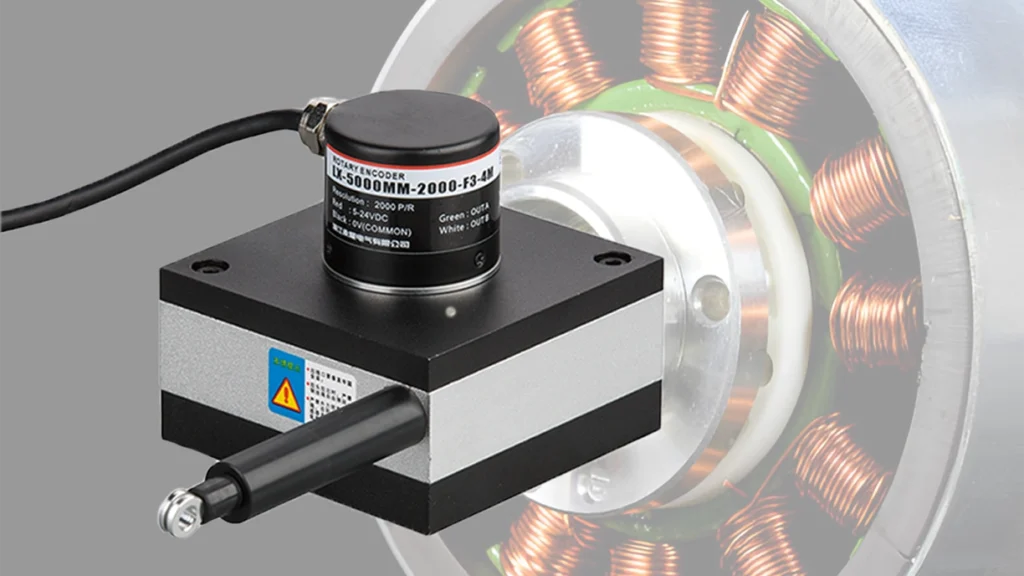
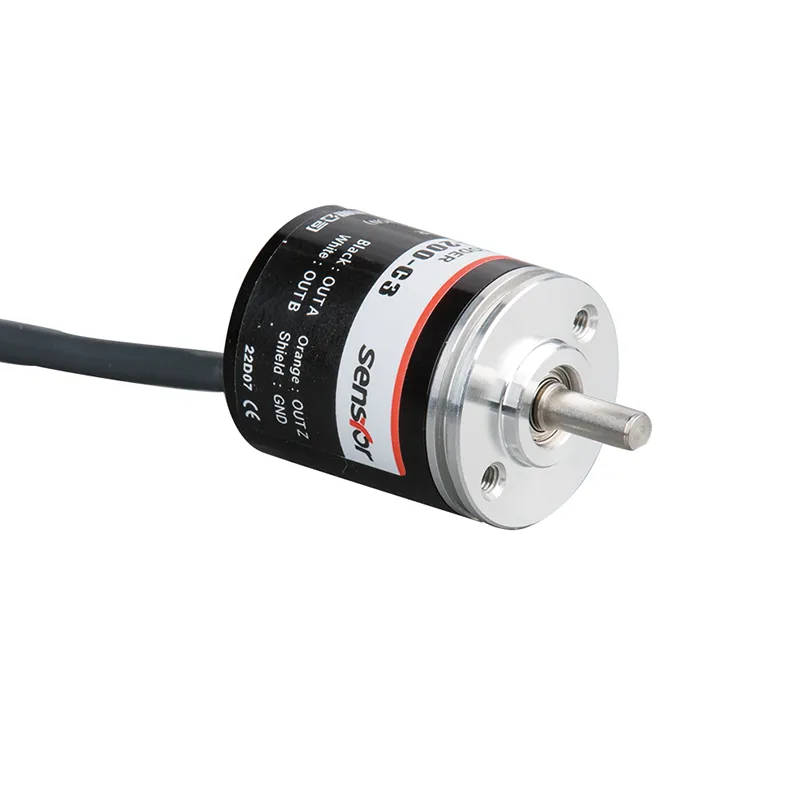
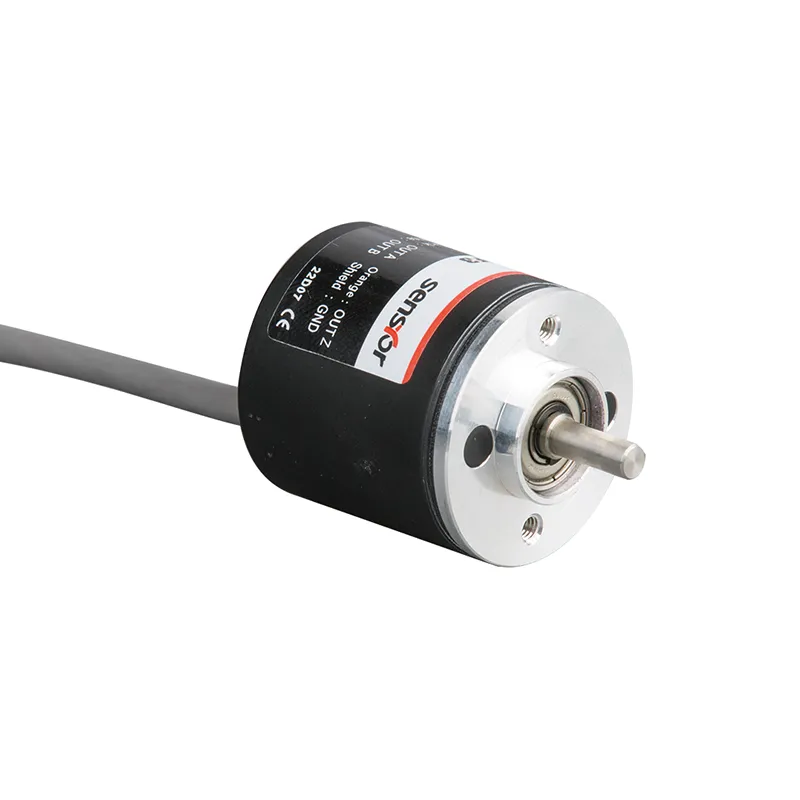
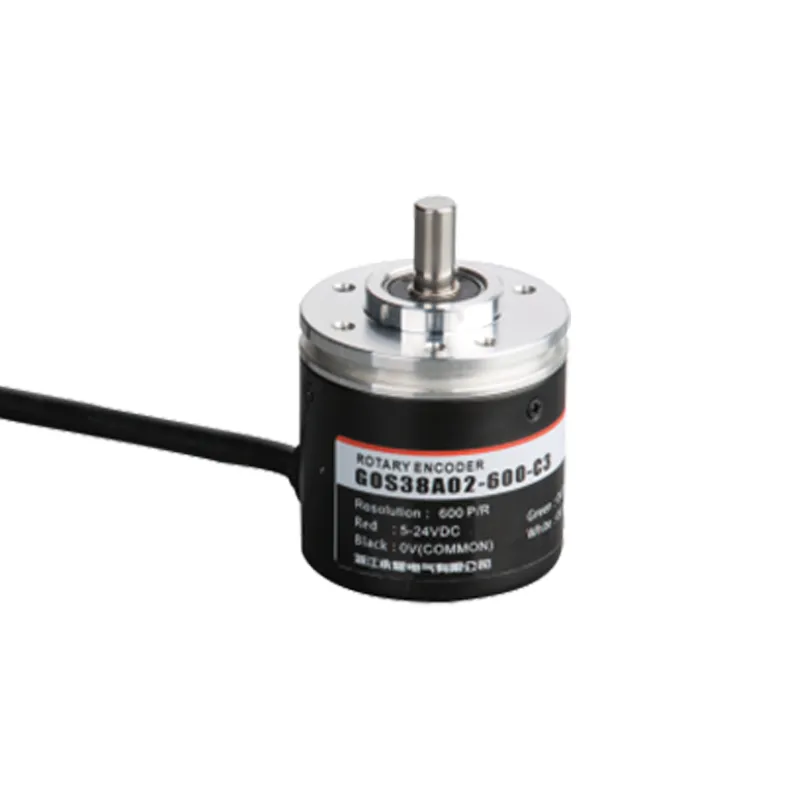
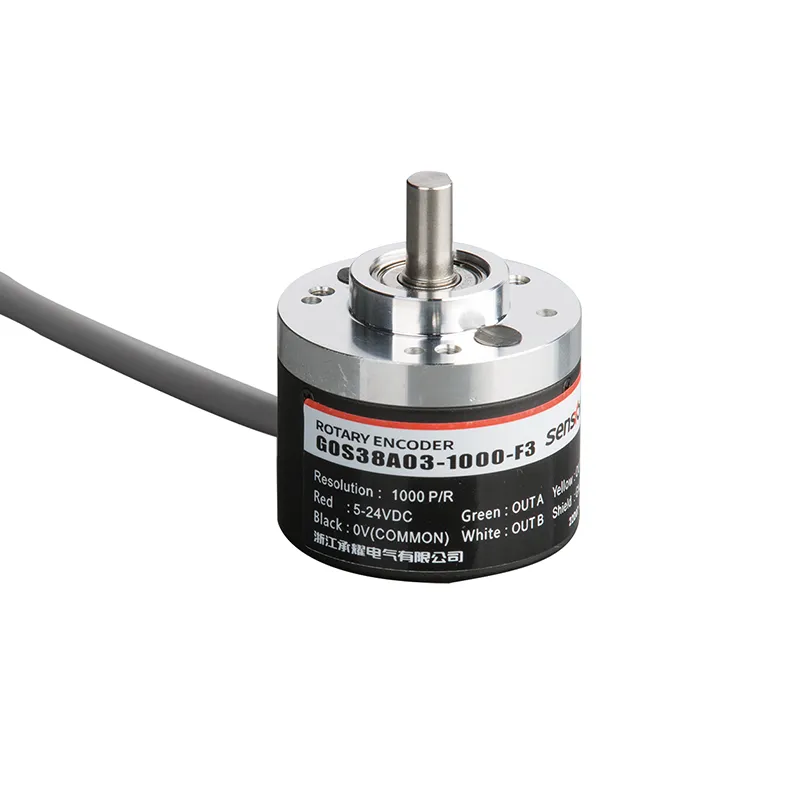
A rotary encoder for robotics equipment provides rotational feedback that can help a robot control system monitor position, speed, direction, or movement. Encoders are commonly considered in robotic arms, servo motors, automated machinery, positioning systems, and other motion-control applications.
For robotics manufacturers, OEMs, engineers, and system integrators, choosing the right encoder requires careful consideration of resolution, output type, mechanical dimensions, operating speed, environmental conditions, and controller compatibility.
If you are sourcing encoder products for robotic or industrial applications, you can explore Sensyor rotary encoder products to review the available product range.
What Is a Rotary Encoder for Robotics Equipment?
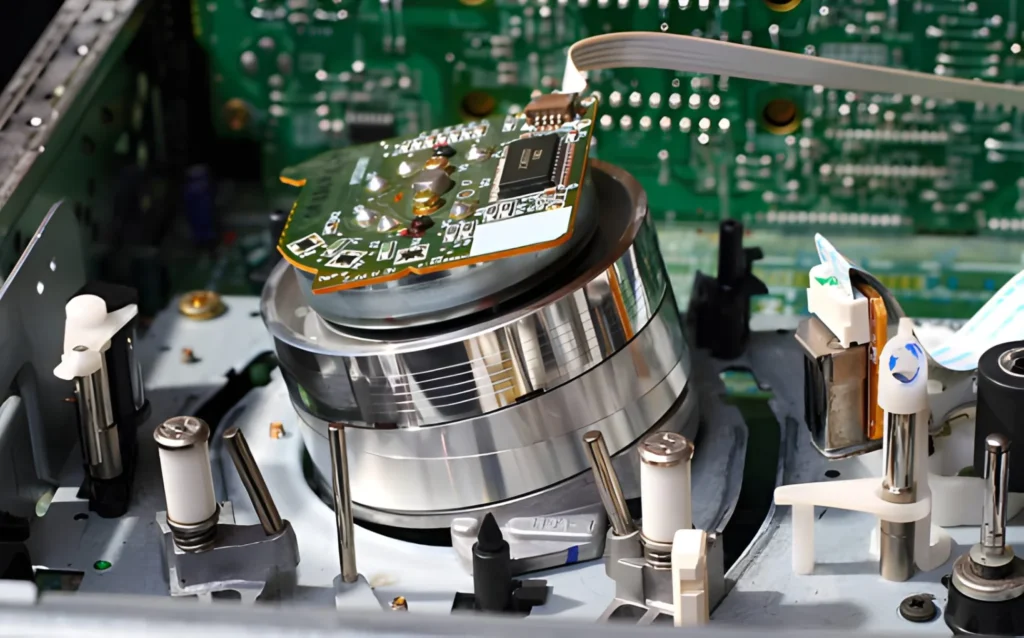
A rotary encoder is a feedback device that detects the rotation of a shaft and converts that movement into an electrical signal.
In robotics, the encoder can be installed on a motor or rotating mechanism. The resulting feedback can be processed by a controller to determine information about the movement of that component.
Depending on the encoder technology, feedback can be used for:
Rotational position
Speed
Direction
Relative movement
Absolute angular position
The exact function depends on the encoder type and the architecture of the robotic system.
A rotary encoder for robotics equipment therefore acts as an important feedback component when a machine needs information about rotational movement.
Why Do Robots Need Rotary Encoders?
Robotic systems frequently perform controlled and repeated movements. The controller needs feedback from the machine to monitor what is happening at the motor or mechanical axis.
Without appropriate feedback, a control system may have less information about the actual movement of a rotating component.
A rotary encoder can support applications involving:
Position feedback
Speed monitoring
Motion synchronization
Motor control
Repetitive movement
Automated positioning
For example, an encoder connected to a motor shaft can provide rotational feedback to a control system. The controller can then use that information according to the robot’s control strategy.
The encoder does not operate independently. Its usefulness depends on correct integration with the motor, drive, controller, mechanical system, and software.
9 Applications of Rotary Encoders in Robotics Equipment
1. Robot Joint Position Feedback
Robot joints are responsible for moving robotic arms and other mechanisms.
A rotary encoder for robotics equipment can provide rotational feedback from a joint or associated motor. This information can be used by the robot’s control system to monitor angular movement.
The required encoder specifications depend on the joint design and control architecture.
Engineers should consider factors such as:
Required resolution
Shaft configuration
Mounting space
Rotational speed
Output interface
Environmental conditions
2. Servo Motor Feedback
Servo motors are widely used in motion-control applications.
Encoders can provide feedback from a servo motor so that the control system can monitor rotational movement. The encoder and motor must be selected as compatible components within the overall control system.
When choosing an encoder for servo applications, buyers should check electrical specifications, mechanical compatibility, resolution, speed, and environmental requirements.
3. Robotic Arms
Industrial robotic arms perform coordinated movements across multiple axes.
Each axis may require motion feedback depending on the robot’s design. An encoder can provide rotational information from a motor or joint mechanism.
For robotic-arm applications, compact mechanical designs may be important because installation space can be limited.
The appropriate rotary encoder for robotics equipment should therefore match both the mechanical structure and the feedback requirements of the robotic arm.
4. Pick-and-Place Robots
Pick-and-place systems need to move components between defined locations.
Encoders can be used in the motion system to monitor the rotation of motors or other rotating components.
Feedback can support coordinated movement between different machine functions. The exact encoder requirements depend on the mechanical arrangement, controller, motor, and positioning method.
5. Automated Guided Equipment
Automated mobile equipment can contain motor-driven wheels, steering mechanisms, or other rotating components.
A rotary encoder can provide information about wheel or motor rotation where such feedback is part of the vehicle’s control architecture.
For these applications, engineers should consider vibration, shock, dust, temperature, mounting, cable routing, and other environmental factors.
6. Robotic Assembly Machines
Automated assembly systems often combine robotic mechanisms with motors, conveyors, feeders, and positioning equipment.
Rotary encoders can provide feedback from rotating components within these systems.
For example, an encoder may be used with a motor that drives a rotating mechanism. The control system can use the feedback to monitor movement and coordinate the assembly process.
7. Industrial Robot Positioning Systems
Positioning systems require controlled movement to place a component or tool at a defined location.
Depending on the machine architecture, rotary encoders can provide rotational feedback that contributes to the positioning system.
The required resolution should be determined based on the overall mechanical and control requirements rather than selected independently.
8. Robotic Conveyors
Robotic work cells frequently include conveyors for transporting parts.
An encoder can monitor conveyor movement and provide feedback to the control system. This can help coordinate conveyor operation with robotic tasks.
When integrating a rotary encoder for robotics equipment into a conveyor, buyers should check the drive mechanism, shaft configuration, output signal, speed, and environmental requirements.
9. Automated Production Systems
Modern production systems can combine robots, conveyors, motors, sensors, and controllers.
Encoders can serve as feedback devices within different motion-control sections of the system.
Their role depends on the machine architecture, but common requirements include reliable feedback, suitable resolution, compatible electrical signals, and appropriate mechanical installation.
Incremental vs. Absolute Encoders for Robotics
One of the most important decisions when selecting a rotary encoder for robotics equipment is choosing between incremental and absolute technology.
Incremental Rotary Encoders
Incremental encoders generate signals corresponding to rotational movement.
Depending on the output configuration, a controller can use these signals to determine relative position, speed, and direction.
They can be considered for applications where the control system uses a reference procedure or otherwise manages relative position.
Absolute Rotary Encoders
Absolute encoders provide a position value associated with the shaft’s angular position.
They may be suitable for robotic applications where the control architecture requires absolute position information.
The choice depends on the robot’s design, controller, interface, position requirements, and operating conditions.
There is no universal answer that makes one technology better for every robotic application.
7 Specifications to Consider When Choosing an Encoder for Robotics
1. Resolution
Resolution describes how finely rotational movement is represented by the encoder.
The required resolution depends on the robot’s mechanical system and control requirements.
Higher resolution should not automatically be treated as better. The complete system must be capable of using the available feedback effectively.
2. Encoder Type
Determine whether the application requires incremental or absolute feedback.
This decision should be made based on the control architecture and positioning requirements.
3. Output Interface
The encoder output must be compatible with the receiving controller, drive, or interface.
Confirm signal type, voltage, wiring, connector configuration, and other relevant electrical specifications before ordering.
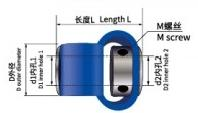
4. Mechanical Dimensions
Mechanical compatibility is critical in robotic equipment.
Check:
Shaft diameter
Shaft length
Housing dimensions
Mounting pattern
Installation orientation
Coupling requirements
A technically suitable encoder may still be unsuitable if it cannot be installed correctly.
5. Rotational Speed
Check the encoder’s specified operating speed against the actual robot or motor speed.
Robotic systems can perform repeated and rapid movements, so the encoder’s specifications should be reviewed against the application’s operating conditions.
6. Environmental Conditions
Robotic equipment may operate around:
Dust
Oil
Vibration
Shock
Temperature changes
Moisture
The encoder’s environmental specifications should be suitable for its installation location.
The encoder must work as part of the complete motion-control system.
Engineers should verify compatibility with the motor, drive, controller, communication interface, mechanical coupling, and software architecture.
How to Select the Right Rotary Encoder for Robotics Equipment
A practical selection process can start with the application rather than the product catalog.
Step 1: Define the Robot’s Motion
Determine what the encoder needs to measure.
Is the requirement related to:
Joint position?
Motor speed?
Direction?
Relative position?
Absolute position?
Step 2: Define the Mechanical Requirements
Measure the available installation space and identify the required shaft and mounting configuration.
Step 3: Determine Electrical Requirements
Identify the required supply voltage and output interface.
Step 4: Select the Encoder Technology
Choose incremental or absolute technology based on the control system.
Step 5: Check Operating Conditions
Evaluate temperature, vibration, dust, moisture, rotational speed, and other relevant conditions.
Step 6: Compare Suppliers
Compare manufacturers based on product compatibility, quality procedures, technical support, customization capability, lead time, and commercial requirements.
You can start by reviewing the Sensyor rotary encoder product range and matching the available products against your robotics application requirements.
What Should You Look for in a Robotics Encoder Supplier?
Product specifications are only one part of the purchasing decision.
For OEM and industrial buyers, a suitable supplier should be able to clearly communicate technical specifications and manufacturing capabilities.
Important factors include:
Product range
Manufacturing capability
Quality-control procedures
Technical documentation
OEM/ODM support
Sample availability
Production capacity
Delivery capability
Technical communication
After-sales support
If you need a customized rotary encoder for robotics equipment, provide the supplier with detailed mechanical and electrical requirements before requesting a quotation.
This makes it easier to determine whether the proposed encoder is appropriate for the application.
Encoders provide information about rotational movement. This feedback can become part of a larger closed-loop motion-control system.
For example, a robot controller may receive feedback associated with a motor or joint and use that information according to its control algorithm.
The encoder itself does not determine the robot’s complete positioning accuracy. Mechanical transmission, motor characteristics, controller performance, calibration, installation, and other components also influence the overall system.
This distinction is important when evaluating encoder specifications for a robotics project.
FAQs About Rotary Encoder for Robotics Equipment
What is a rotary encoder used for in robotics?
A rotary encoder can provide feedback about rotational movement from a motor, joint, shaft, or other rotating mechanism. Depending on the encoder type, this feedback can represent speed, direction, relative position, or absolute position.
Why are rotary encoders important for robotic arms?
Rotary encoders can provide rotational feedback from robot joints or motors. The robot’s control system can use this information as part of its motion-control architecture.
Are incremental encoders suitable for robotics?
Incremental encoders can be suitable for many robotic applications where relative motion, speed, or direction feedback is required. The correct choice depends on the robot’s controller and motion requirements.
Are absolute encoders better for robotic equipment?
Not necessarily. Absolute encoders can be appropriate when the control system requires absolute position information, while incremental encoders may be suitable for other applications. Selection should be based on system requirements.
What encoder resolution is needed for robotics?
There is no universal resolution requirement. The appropriate resolution depends on the robot’s mechanical transmission, desired positioning performance, controller, motor, and application.
Can rotary encoders be used with robotic servo motors?
Yes. Encoders are commonly considered for servo motor feedback applications. The encoder’s electrical and mechanical specifications must be compatible with the servo motor and drive system.
Can rotary encoders be customized for robotics?
Depending on the manufacturer, customization may be available for mechanical dimensions, shaft configuration, connectors, cables, output configurations, and other requirements. Buyers should confirm available customization with the supplier.
Where can I source a rotary encoder for robotics equipment?
Industrial buyers can source encoders from specialized manufacturers and suppliers. When comparing suppliers, evaluate technical compatibility, quality control, customization capability, production capacity, documentation, and lead time rather than price alone.
Conclusion
A rotary encoder for robotics equipment can provide important rotational feedback for robotic arms, servo motors, positioning systems, conveyors, automated assembly machines, and other industrial equipment.
The right encoder should match the robot’s mechanical design, resolution requirements, output interface, rotational speed, environmental conditions, and controller architecture. Incremental and absolute encoders can both be useful, depending on the application.
For OEMs, robotics manufacturers, system integrators, and industrial automation buyers, supplier capability is also an important part of the sourcing decision.
If you are looking for encoder products for a robotics or automation project, visit Sensyor’s rotary encoder product page to explore the available options.
Introduction to Custom Rotary Encoder OEM Factory A custom rotary encoder OEM factory provides specialized design, engineering, and manufacturing services for companies requiring customized motion control components. Unlike standard encoder suppliers, OEM factories develop products according to specific technical requirements, including mechanical dimensions, electrical output, communication protocols, accuracy levels, and environmental conditions. Modern automation systems […]
Introduction to 40mm Encoder The 40mm encoder is a compact yet highly precise motion feedback device widely used in industrial automation. A 40mm encoder is designed to deliver accurate position and speed signals in applications where space is limited but performance is critical. The 40mm encoder has become a key component in robotics, CNC machines, […]
📊 Comprehensive Outline for “24V encoder” Heading Level Topic H1 24V Encoder: 15 Smart Ways to Boost Industrial Accuracy H2 Introduction to 24V Encoder H3 What is a 24V Encoder H3 Why Voltage Matters in Encoders H2 How a 24V Encoder Works H3 Signal Output and Power Supply H3 Electrical Characteristics H2 Types of 24V […]
We use cookies to enhance your browsing experience, serve personalised ads or content, and analyse our traffic. By clicking "Accept All", you consent to our use of cookies.