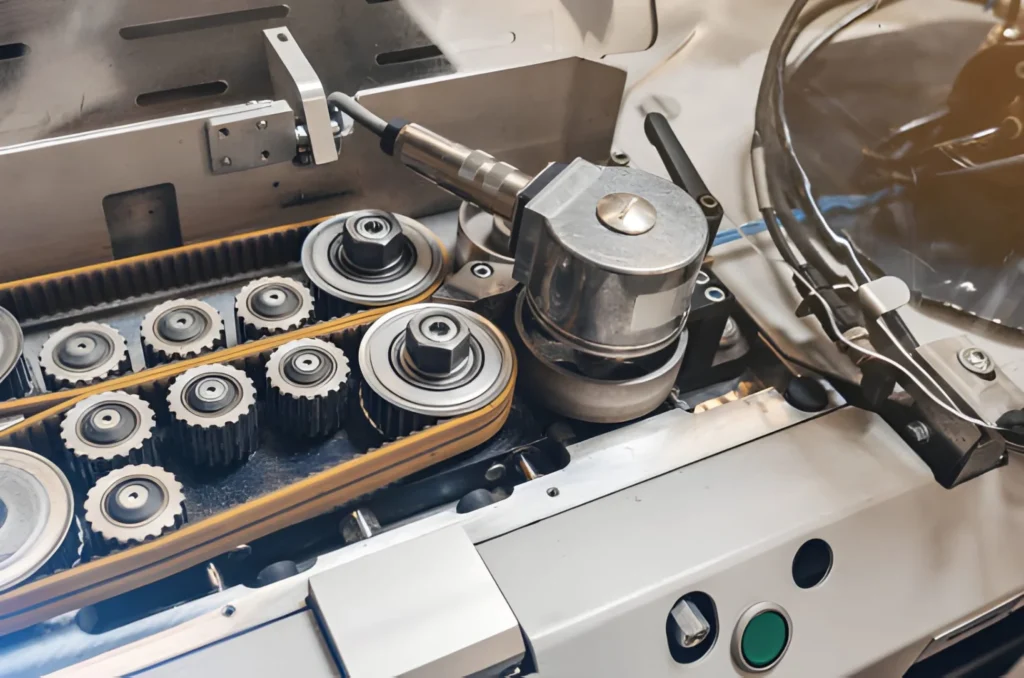
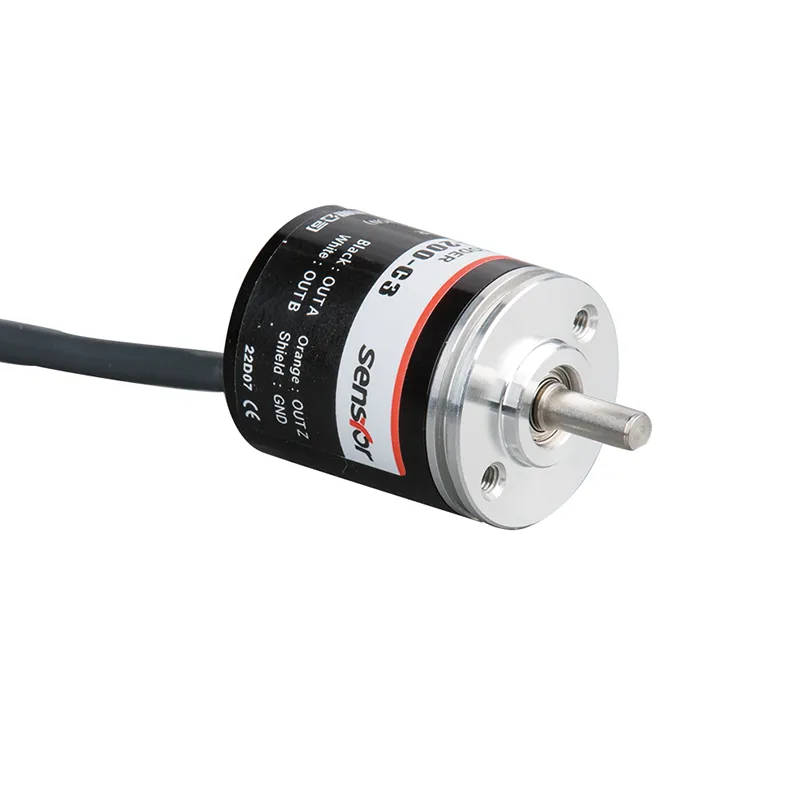
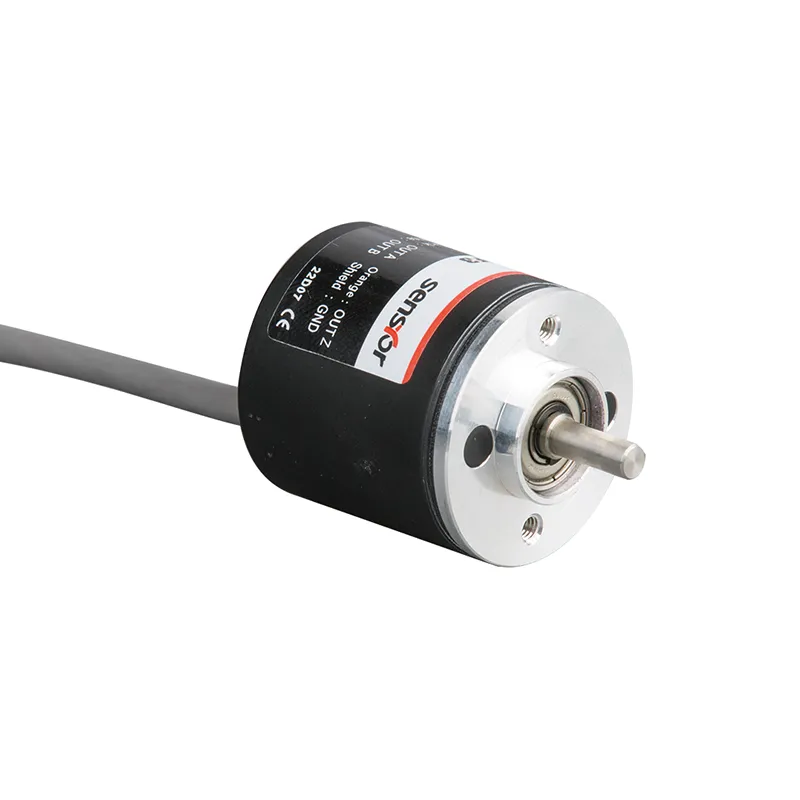
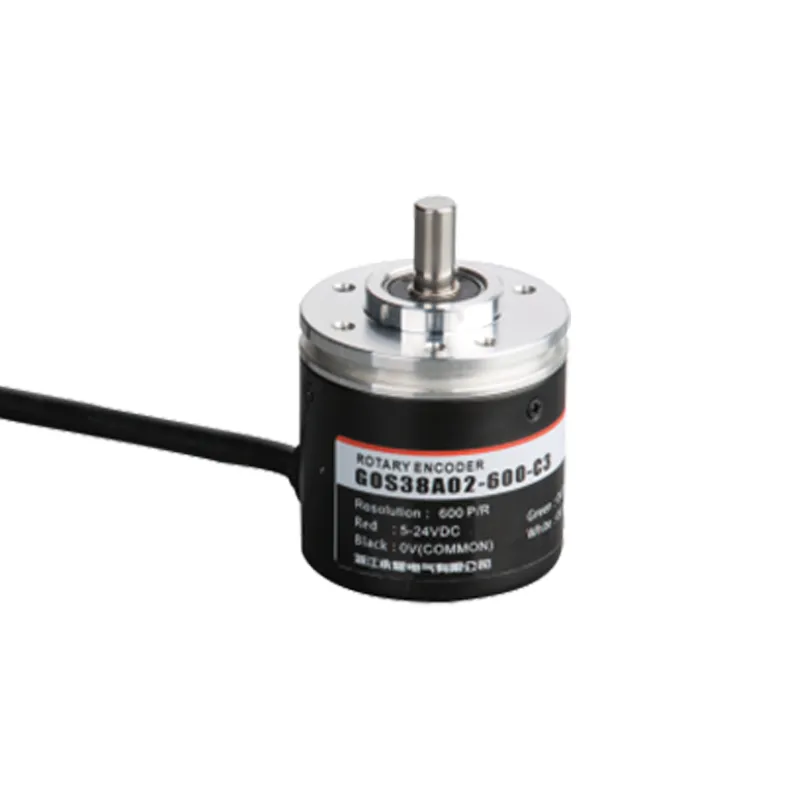
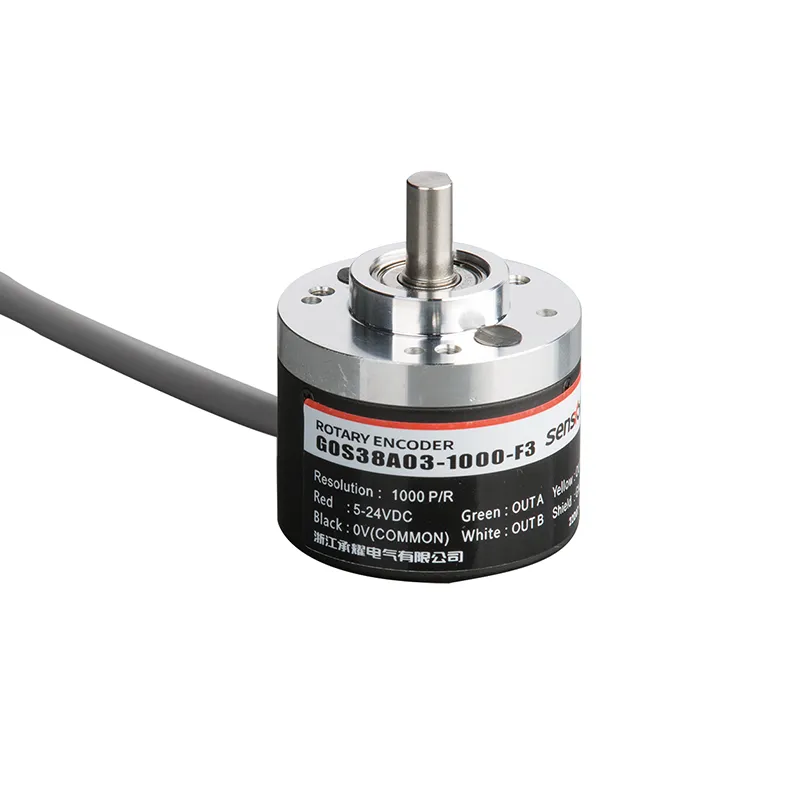
A rotary encoder for PLC control system applications provides rotational feedback that a programmable logic controller can use as part of an industrial automation process. Depending on the encoder type and PLC architecture, the feedback can represent speed, direction, position, or rotational movement.
Rotary encoders are used with PLC-based systems in conveyors, packaging machines, printing equipment, textile machinery, CNC equipment, production lines, servo systems, and other automated machinery.
For machine builders, automation engineers, OEMs, system integrators, and industrial buyers, selecting an encoder requires attention to the PLC’s input capabilities, encoder output signal, resolution, operating speed, mechanical configuration, and environmental conditions.
If you are sourcing industrial encoder products, visit the Sensyor rotary encoder product page to review available rotary encoder solutions.
What Is a Rotary Encoder for PLC Control System?
A rotary encoder is a feedback device that detects rotational movement and converts that movement into an electrical output.
When connected to a PLC-based automation system, a rotary encoder for PLC control system applications can send signals to PLC inputs or an associated high-speed counter, motion module, or other interface.
Depending on the encoder technology, the PLC may receive information related to:
- Rotational speed
- Direction
- Pulse count
- Relative position
- Absolute position
- Movement status
The encoder and PLC perform different functions. The encoder generates feedback, while the PLC processes the input according to its programmed logic and hardware capabilities.
A suitable encoder therefore needs to match both the machine and the PLC system.
How a Rotary Encoder Works With a PLC
The basic process is relatively straightforward:
Rotating shaft → Rotary encoder → Electrical output → PLC input/interface → PLC program → Machine control
When the encoder shaft rotates, the encoder generates an output signal.
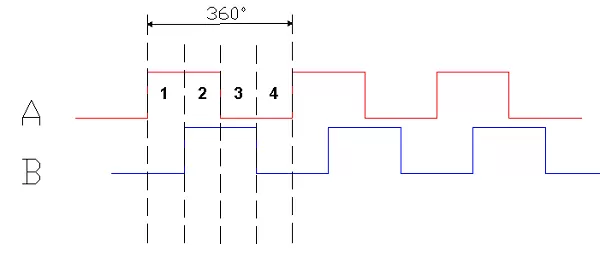
For an incremental encoder, the PLC may count pulses to determine movement or calculate speed. With suitable A/B signals, the system can also determine rotational direction.
For an absolute encoder, the position information may be transmitted through an appropriate electrical or communication interface supported by the control architecture.
A rotary encoder for PLC control system applications must therefore be electrically compatible with the PLC or its encoder interface.
Before purchasing an encoder, engineers should verify the PLC model, input type, maximum input frequency, voltage requirements, signal format, and wiring configuration.
Why PLC Systems Need Rotary Encoder Feedback
PLCs are widely used to monitor and control industrial machinery.
However, a PLC needs suitable input information to determine what is happening in the physical machine.
A rotary encoder for PLC control system applications can provide feedback from rotating components such as motors, rollers, shafts, conveyors, and spindles.
Common functions include:
- Speed monitoring
- Position detection
- Direction detection
- Pulse counting
- Distance calculation
- Synchronization
- Motor feedback
- Conveyor monitoring
- Automated machine sequencing
The exact application depends on the PLC program and hardware configuration.
For example, a conveyor encoder can generate pulses corresponding to conveyor movement. The PLC can process these pulses and use the resulting information within the machine’s control logic.
9 Applications of Rotary Encoders in PLC Systems
1. Conveyor Speed Monitoring
Conveyors are common in industrial automation.
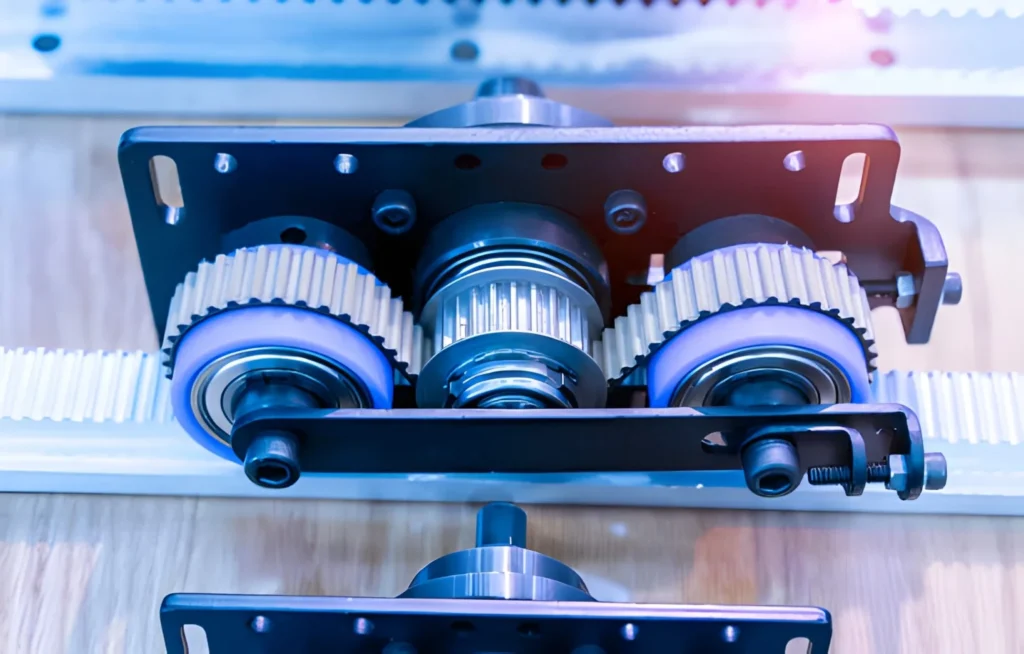
A rotary encoder can be installed on a conveyor drive shaft, roller, or motor.
As the shaft rotates, the rotary encoder for PLC control system sends feedback signals to the PLC. The PLC can process the signals according to its program.
Depending on the system design, this can support speed monitoring, movement detection, or coordination with other equipment.
When selecting an encoder for a conveyor, consider shaft dimensions, rotational speed, resolution, output signal, and PLC input compatibility.
2. Position Detection
A PLC may need to determine when a machine component reaches a specific position.
An incremental encoder can provide pulse information that the PLC uses to calculate relative movement.
For example, encoder pulses can be associated with the rotation of a roller or motor shaft.
The required resolution depends on the machine’s mechanical transmission and positioning requirements.
A rotary encoder for PLC control system applications should therefore be selected according to the actual movement that needs to be detected.
3. Motor Speed Feedback
A rotary encoder can provide feedback from a motor shaft.
The PLC can receive encoder pulses and process them to monitor rotational movement.
For applications involving motor control, the encoder output must be compatible with the PLC input hardware or an appropriate interface module.
The encoder’s maximum operating speed and output frequency should also be checked.
4. Packaging Machinery
Packaging machines often use conveyors, rollers, motors, film-feeding systems, cutting mechanisms, and other rotating components.
A rotary encoder for PLC control system applications can provide feedback from these components.
The PLC can use encoder information as part of machine sequencing, speed monitoring, material handling, or synchronization.
For packaging applications, environmental conditions such as dust, vibration, and material particles should also be considered.
5. Printing Machinery
Printing equipment can require coordinated movement between rollers, motors, and material-feeding mechanisms.
Encoder feedback can provide information about rotational movement to a PLC-based control system.
A rotary encoder for PLC control system applications can therefore be considered for roller speed monitoring, material movement detection, or other automation functions.
The correct encoder depends on the printing machine’s mechanical and electrical architecture.
6. Textile Machinery
Textile machinery can contain multiple rotating shafts, rollers, motors, and winding mechanisms.
A rotary encoder can provide feedback from selected components and transmit signals to a PLC or associated control system.
A rotary encoder for PLC control system applications in textile equipment should be evaluated for continuous operation, vibration, dust, fibers, temperature, and other environmental conditions.
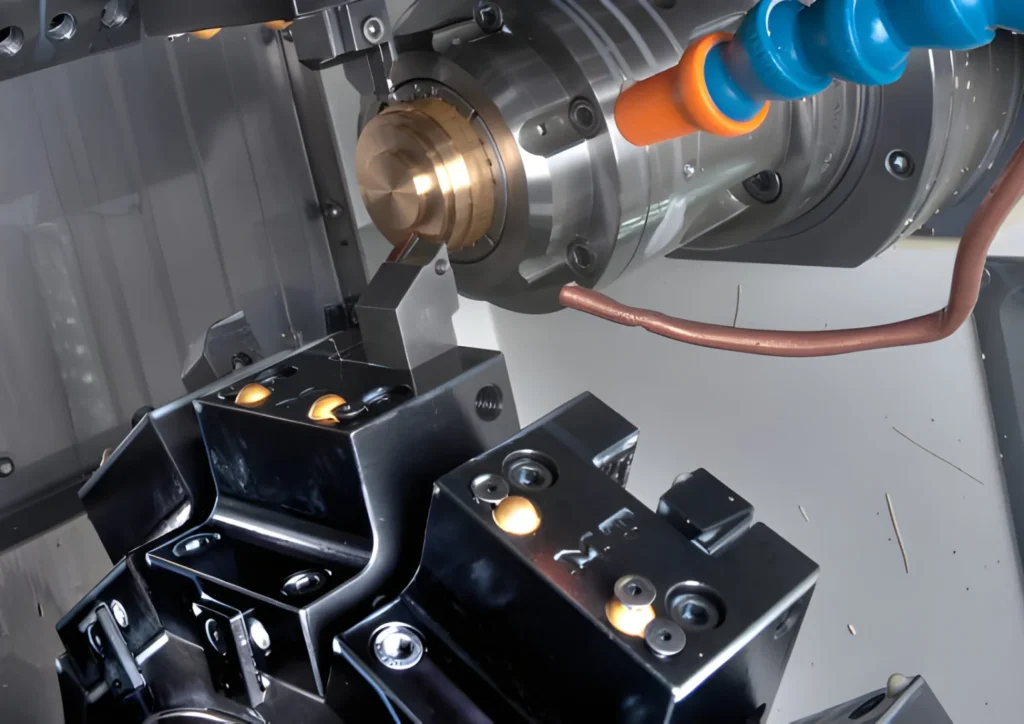
CNC machines can use PLCs alongside dedicated CNC and motion-control systems.
Encoders may be used for spindle, axis, motor, or other rotational feedback depending on the machine architecture.
When integrating an encoder with a PLC-based control system, engineers must confirm that the PLC hardware and software can process the encoder’s output at the required speed.
For industrial encoder sourcing, you can review Sensyor’s rotary encoder products.
8. Automated Assembly Equipment
Assembly machines often require controlled movement of motors, indexing mechanisms, rotary tables, and conveyors.
Encoder feedback can provide information about the position or movement of these components.
A PLC can then use that information as part of the machine sequence.
The encoder resolution and PLC input performance should be evaluated together.
9. Production Line Synchronization
Production lines may contain several machines that need to coordinate movement.
A rotary encoder for PLC control system applications can provide feedback from a drive roller, conveyor, motor, or shaft.
The PLC can use this feedback as part of its programmed synchronization strategy.
The exact implementation depends on the production line architecture and control requirements.
Incremental vs. Absolute Encoders for PLC Systems
One of the key decisions when selecting a rotary encoder for PLC control system applications is choosing between incremental and absolute encoder technology.
Incremental Rotary Encoders
Incremental encoders generate output pulses as the shaft rotates.
The PLC can count these pulses to determine relative movement.
With appropriate A/B channel signals, the system can also determine direction.
Incremental encoders are often considered for applications involving:
- Speed measurement
- Conveyor monitoring
- Pulse counting
- Relative positioning
- Motor feedback
- Rotation detection
However, the PLC input must be capable of processing the encoder’s signal frequency.
Absolute Rotary Encoders
Absolute encoders provide an angular position value.
Depending on the encoder interface, this information may be transmitted to the PLC through a compatible interface or communication system.
Absolute encoders can be considered for applications where the control system needs position information associated with the shaft’s absolute position.
The PLC or interface module must support the encoder’s communication method.
Neither incremental nor absolute technology is universally better. The appropriate choice depends on the machine and PLC architecture.
Encoder Output Signals for PLC Systems
The encoder’s output signal is one of the most important compatibility factors.
A rotary encoder for PLC control system applications should have an output that the PLC can correctly receive and interpret.
Common considerations include:
- Pulse output
- A/B quadrature signals
- Direction signals
- Voltage level
- Differential or single-ended signaling
- Communication interface
- Maximum frequency
For an incremental encoder, the PLC may use pulse counting and quadrature inputs.
For higher-speed applications, a standard PLC digital input may not be sufficient. A high-speed counter or dedicated encoder interface may be required.
Always check the PLC manufacturer’s technical documentation before connecting an encoder.
For general information about industrial electrical and electronic standards, the International Electrotechnical Commission (IEC) provides relevant standards resources.
9 Specifications to Check Before Buying
1. Resolution
Encoder resolution determines how finely rotational movement is represented.
For incremental encoders, buyers may specify pulses or counts according to the encoder’s output configuration.
The required resolution depends on the machine’s mechanical transmission and the desired measurement accuracy.
2. Maximum Output Frequency
This specification is especially important for PLC applications.
If an encoder generates pulses faster than the PLC input or high-speed counter can process, the system may not correctly interpret the feedback.
Therefore, compare:
Encoder output frequency ↔ PLC input frequency capability
This is one of the most important checks when selecting a rotary encoder for PLC control system applications.
3. Rotational Speed
Check the encoder’s specified maximum operating speed against the actual machine speed.
High-speed rollers, spindles, and motors may require encoders designed for the relevant operating range.
4. Output Voltage
The encoder output voltage must be compatible with the PLC input.
Check the PLC input specification and encoder output specification before ordering.
5. Signal Type
Determine whether the PLC requires:
- Single-ended output
- Differential output
- A/B quadrature
- Pulse and direction
- Another supported interface
6. Shaft Configuration
Mechanical specifications may include:
- Shaft diameter
- Shaft length
- Shaft type
- Housing dimensions
- Mounting holes
- Mounting orientation
7. Environmental Protection
Industrial machinery may expose encoders to:
- Dust
- Oil
- Moisture
- Vibration
- Mechanical shock
- Temperature changes
The encoder’s environmental rating should match the actual installation location.
8. Operating Temperature
Check the manufacturer’s specified temperature range and compare it with the machine environment.
9. PLC Compatibility
The encoder must be compatible with the PLC’s hardware and software architecture.
Before purchasing a rotary encoder for PLC control system, verify:
- PLC model
- Input type
- High-speed counter capability
- Maximum input frequency
- Voltage
- Signal type
- Interface requirements
How to Choose the Right Rotary Encoder for PLC Control System
A practical selection process can reduce compatibility problems.
Step 1: Identify the PLC
Determine the exact PLC model and available input interfaces.
Step 2: Identify the Application
Determine whether the encoder will monitor:
- Conveyor movement
- Motor speed
- Position
- Roller rotation
- Spindle rotation
- Material movement
- Machine indexing
Step 3: Determine the Required Resolution
Calculate how much movement corresponds to one encoder pulse or count.
Step 4: Check Maximum Frequency
Determine the encoder’s maximum output frequency and compare it with the PLC input or high-speed counter capability.
Step 5: Check Electrical Compatibility
Verify voltage, signal type, wiring, and connector requirements.
Step 6: Check Mechanical Compatibility
Confirm shaft dimensions, mounting space, coupling, and installation orientation.
Step 7: Evaluate the Environment
Consider temperature, dust, moisture, vibration, oil, and other industrial conditions.
Step 8: Compare Suppliers
Consider:
- Manufacturing capability
- Product range
- Technical documentation
- Quality-control procedures
- OEM/ODM support
- Production capacity
- Lead time
- Technical support
You can explore Sensyor rotary encoder products when comparing encoder options for PLC applications.
What Makes a Good Rotary Encoder Supplier for PLC Systems?
For machine manufacturers and industrial automation companies, choosing the right encoder supplier can be as important as choosing the product.
A suitable supplier should provide clear technical specifications and help customers determine whether an encoder configuration is compatible with their PLC system.
Important evaluation factors include:
- Manufacturing capability
- Product specifications
- Quality-control processes
- Technical documentation
- Customization options
- Sample availability
- Production capacity
- Delivery capability
- Technical support
When requesting a quotation, provide the encoder supplier with the PLC model, application, shaft dimensions, required resolution, output signal, operating speed, and environmental conditions.
For general information about international quality-management standards, buyers can consult the International Organization for Standardization (ISO).
Why Consider Sensyor Rotary Encoder Products?
When sourcing a rotary encoder for PLC control system applications, compatibility should be evaluated before price.
Sensyor provides rotary encoder products for industrial applications. You can visit the Sensyor rotary encoder product page to review the available product information.
For OEMs, machine builders, distributors, and system integrators, providing complete application specifications can make the product-selection process more efficient.
Useful information includes:
- PLC model
- Encoder application
- Required resolution
- Maximum rotational speed
- Output signal
- Supply voltage
- Shaft dimensions
- Mounting configuration
- Environmental conditions
- Required quantity
FAQs About Rotary Encoder for PLC Control System
What is a rotary encoder used for in a PLC control system?
A rotary encoder provides rotational feedback that a PLC can process for speed monitoring, position detection, direction detection, pulse counting, movement measurement, and other automation functions.
How does a rotary encoder connect to a PLC?
An encoder connects to suitable PLC inputs or an encoder interface module. The exact wiring depends on the encoder’s output type, voltage, signal format, and the PLC hardware.
Can a PLC read an incremental encoder?
Yes, if the PLC or its associated input hardware supports the encoder’s output signals and frequency. High-speed applications may require a dedicated high-speed counter or encoder input.
Can a PLC use an absolute encoder?
Yes, provided the PLC or an appropriate interface supports the absolute encoder’s output or communication protocol.
What encoder is best for a PLC?
There is no universal best encoder. The appropriate rotary encoder for PLC control system applications depends on the PLC input type, maximum frequency, required resolution, output signal, mechanical requirements, and environment.
What is the difference between an encoder and a PLC?
An encoder is a feedback device that measures rotational movement, while a PLC is a programmable controller that processes inputs and controls machine outputs. They perform different but complementary functions.
Resolution can affect the number of pulses or data points the PLC needs to process. The encoder resolution should therefore be matched with the machine requirements and the PLC’s input-processing capability.
Can rotary encoders be used with conveyor PLC systems?
Yes. Encoders are commonly considered for conveyor speed, movement, and position feedback. The encoder must be mechanically and electrically compatible with the conveyor and PLC system.
How do I choose a rotary encoder supplier for PLC applications?
Compare suppliers based on product compatibility, manufacturing capability, quality control, technical documentation, customization support, production capacity, lead time, and technical support.
Conclusion
A rotary encoder for PLC control system applications can provide valuable feedback about speed, position, direction, and rotational movement in industrial automation systems.
Encoders can be used with PLC-controlled conveyors, packaging machines, printing equipment, textile machinery, CNC equipment, assembly systems, production lines, and many other automated machines.
When selecting an encoder, buyers should evaluate resolution, output frequency, rotational speed, voltage, signal type, shaft configuration, environmental conditions, and PLC compatibility.
For incremental encoders, the PLC’s high-speed input capability is particularly important because the controller must be able to process the encoder’s output frequency. Absolute encoders require compatible interfaces for transferring position information.
For OEMs, system integrators, distributors, and machine builders, choosing a supplier with clear technical documentation and appropriate manufacturing capabilities can simplify the sourcing process.
If you are looking for a rotary encoder for PLC control system applications, visit the Sensyor rotary encoder product page to explore available encoder solutions.