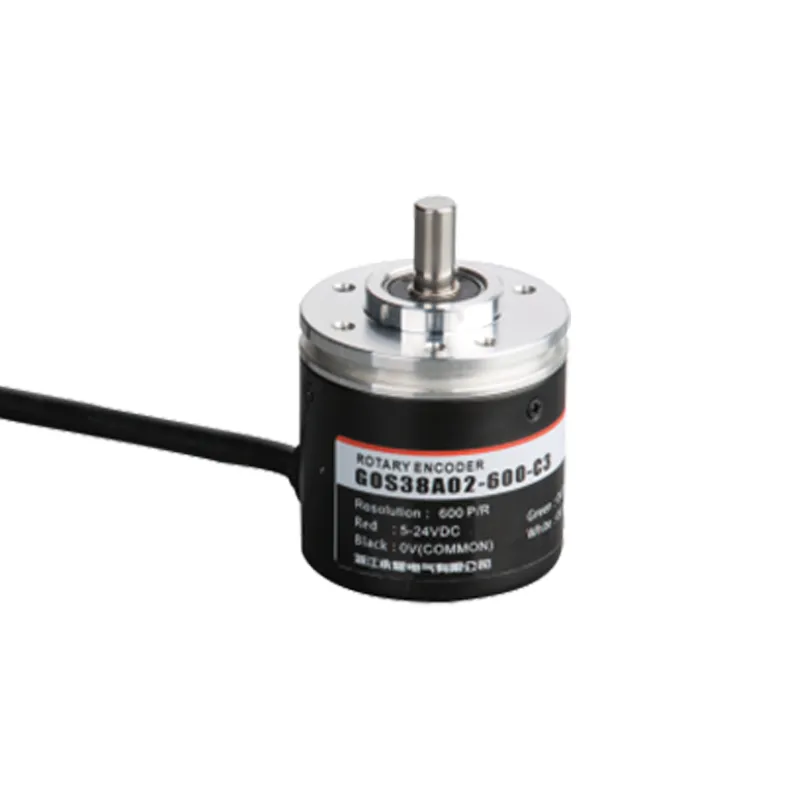
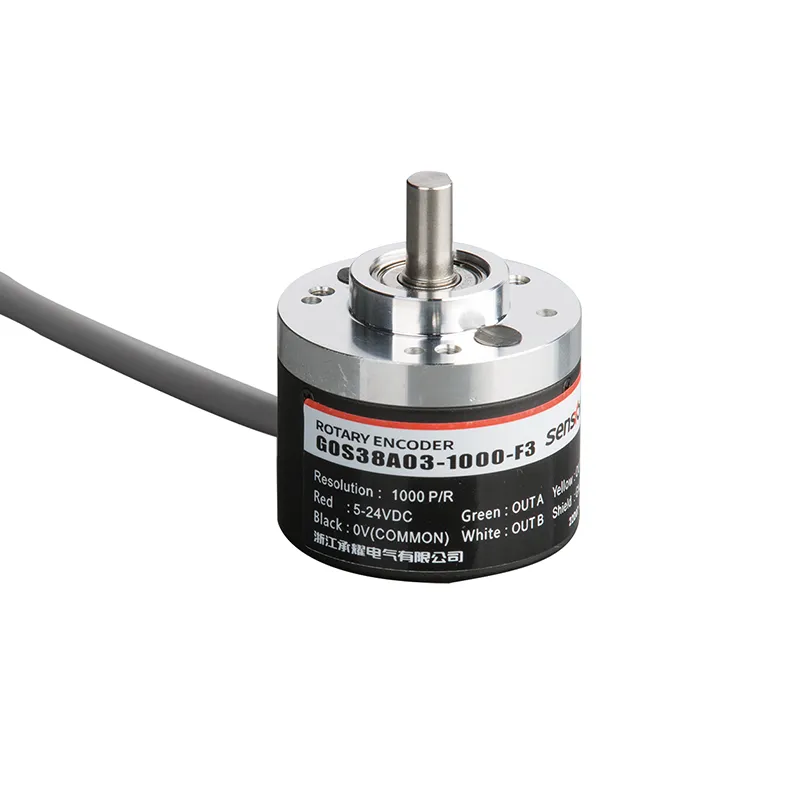
Choosing the right industrial encoder supplier involves more than comparing product prices. OEMs, machine builders, distributors, and automation companies should evaluate encoder specifications, manufacturing capabilities, quality control, customization options, technical support, production capacity, and long-term supply requirements.
Industrial encoders are used as feedback components in many automated machines. Depending on the encoder type and control architecture, they can provide information related to rotational position, speed, direction, or movement.
For this reason, an industrial encoder supplier needs to provide products that match the mechanical, electrical, and environmental requirements of the intended application.
An industrial encoder supplier provides rotary or other encoder products for use in industrial equipment, automation systems, machinery, and motion-control applications.
Depending on the company, a supplier may provide:
Incremental rotary encoders
Absolute encoders
High-resolution encoders
Motor feedback encoders
Customized encoder configurations
OEM encoder solutions
Replacement encoders
Technical documentation
Samples for evaluation
Bulk-order support
Not every supplier has the same manufacturing capabilities.
Some companies manufacture their own products, while others source encoders from third-party manufacturers.
For OEM buyers, it is therefore useful to determine whether the supplier is a manufacturer, distributor, or sourcing company and whether its capabilities match the requirements of your project.
Why Choosing the Right Encoder Supplier Matters
An encoder is not simply a standalone electronic component.
It must work correctly with the machine’s mechanical system and receiving control equipment.
An unsuitable encoder can create problems related to:
Mechanical installation
Signal compatibility
Resolution
Maximum operating speed
Controller input frequency
Environmental conditions
Wiring
Maintenance
Product availability
A reliable industrial encoder supplier should be able to provide enough technical information for engineers and purchasing teams to evaluate the product before ordering.
This is especially important for OEM applications where the encoder may become part of a machine’s standard bill of materials.
9 Factors to Evaluate an Industrial Encoder Supplier
1. Product Range
Start by checking whether the industrial encoder supplier offers products that match your application.
Potential applications include:
Industrial automation
Servo motor systems
PLC control systems
CNC machine tools
Robotics
Packaging machinery
Printing equipment
Textile machinery
Conveyor systems
Material-handling equipment
A supplier with a suitable product range can make it easier to source different encoder configurations for different machines.
Industrial machinery often requires encoder configurations that differ from standard catalog products.
An OEM may require a specific:
Housing size
Shaft diameter
Shaft length
Mounting arrangement
Resolution
Output configuration
Connector
Cable length
Electrical specification
A capable industrial encoder supplier should be able to explain which configurations are standard and which may require customization.
Before requesting customization, provide a clear technical drawing or specification sheet whenever possible.
This helps reduce misunderstandings during product development.
6. Samples and Testing
Sample testing is a practical way to evaluate an encoder before a larger purchase.
An engineering team can install a sample and check:
Mechanical fit
Electrical connection
Output signal
Controller compatibility
Installation
Machine performance
Environmental suitability
When evaluating an industrial encoder supplier, ask whether samples are available and what information is required to obtain them.
For OEM projects, testing the sample under realistic operating conditions can provide useful information before mass production.
7. Production Capacity and Lead Time
Lead time can directly affect machine production schedules.
When comparing an industrial encoder supplier, ask about:
Sample lead time
Standard production lead time
Bulk-order lead time
Minimum order quantity
Monthly production capability
Peak-season capacity
Spare or replacement availability
If encoders are used in multiple machines, consistent supply can become an important procurement consideration.
8. Technical Support
Encoder selection can involve both mechanical and electrical questions.
A good industrial encoder supplier should be able to provide clear information about:
Wiring
Pin assignments
Output signals
Resolution
Mounting
Shaft configuration
Operating speed
Controller compatibility
Installation requirements
Technical support is particularly useful when an OEM is developing a new machine or replacing an existing encoder.
9. Global Shipping and Documentation
International buyers should also evaluate the supplier’s ability to support export orders.
Depending on the purchasing arrangement, relevant considerations may include:
Commercial invoices
Packing lists
Product labels
Export packaging
Shipping arrangements
Technical documentation
Product identification
Delivery schedules
The exact requirements vary by destination and transaction.
For international B2B purchases, clarify commercial and shipping terms before confirming the order.
Types of Industrial Encoders
Understanding encoder types can help buyers communicate more effectively with an industrial encoder supplier.
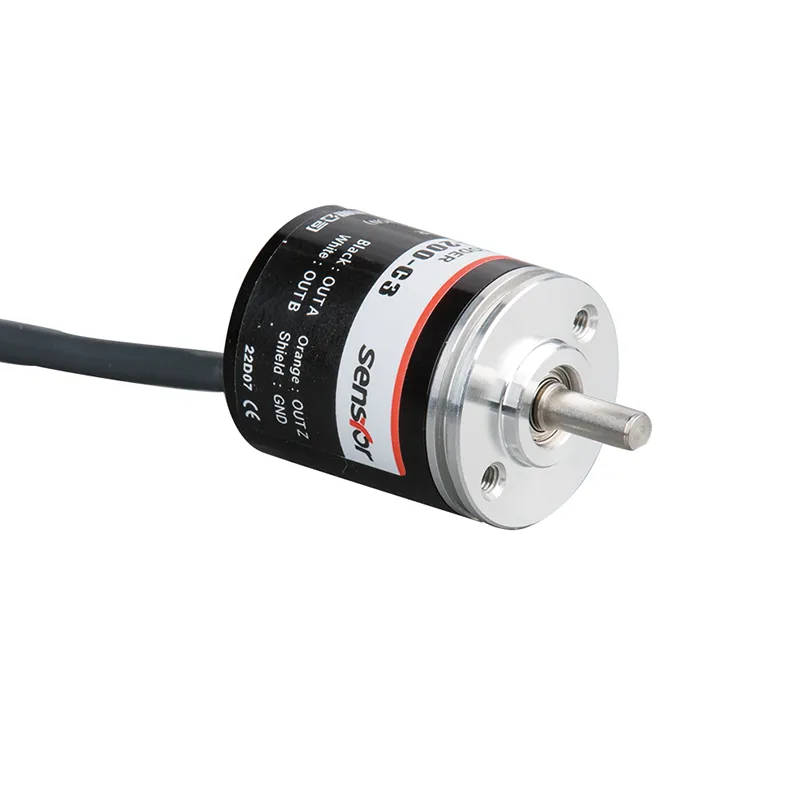
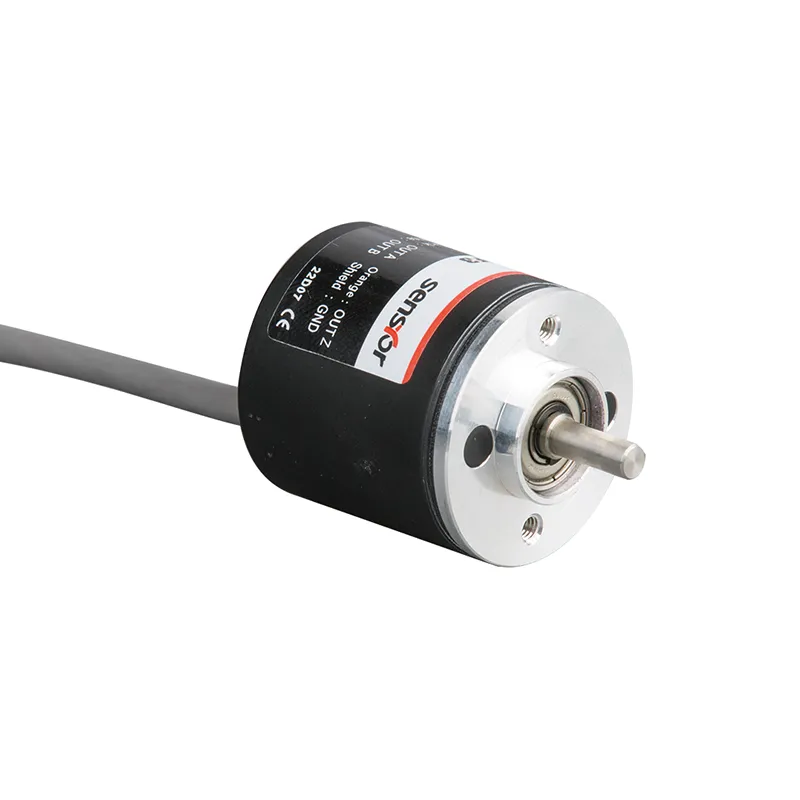
Incremental Rotary Encoders
Incremental encoders generate output signals associated with rotational movement.
Depending on their configuration, they can be used for:
Speed measurement
Position tracking
Direction detection
Pulse counting
Motion control
They are commonly considered for automation systems, motors, conveyors, packaging machinery, and machine tools.
Absolute Rotary Encoders
Absolute encoders provide position information associated with the encoder shaft.
They can be considered when an application requires absolute position information rather than only relative movement feedback.
The communication interface and controller compatibility should be checked before selecting an absolute encoder.
High-Resolution Encoders
Some industrial applications require a high number of pulses or position increments per revolution.
High-resolution encoders can be useful for applications requiring detailed rotational feedback.
However, higher resolution can also increase the required signal-processing capability in incremental encoder applications.
The encoder’s resolution should therefore be evaluated together with machine speed and controller input capability.
How to Request an Encoder Quotation
A clear RFQ can make communication with an industrial encoder supplier more efficient.
Instead of sending only “I need a rotary encoder,” provide the following information:
Requirement
Example Information
Application
CNC, packaging, servo, conveyor, etc.
Encoder type
Incremental or absolute
Resolution
Required P/R or counts
Maximum RPM
Machine operating speed
Output
Required signal/interface
Voltage
Controller supply requirement
Shaft
Diameter and length
Mounting
Mechanical requirements
Connector
Required connector
Environment
Temperature, dust, water, vibration
Quantity
Sample and expected order volume
This information gives the supplier a clearer understanding of the application.
How to Compare Industrial Encoder Suppliers
Price is important, but it should not be the only comparison factor.
A practical supplier comparison can use the following table:
Evaluation Factor
Supplier A
Supplier B
Supplier C
Product compatibility
Check
Check
Check
Manufacturing capability
Check
Check
Check
Technical documentation
Check
Check
Check
Quality-control information
Check
Check
Check
Customization
Check
Check
Check
Sample availability
Check
Check
Check
Production capacity
Check
Check
Check
Lead time
Check
Check
Check
Technical support
Check
Check
Check
Export support
Check
Check
Check
Overall commercial terms
Check
Check
Check
This method allows purchasing and engineering teams to evaluate suppliers using consistent criteria.
How to Verify an Industrial Encoder Supplier
Before entering a long-term supplier relationship, perform reasonable due diligence.
Review Technical Documentation
Request the official datasheet, mechanical drawing, wiring diagram, and applicable specifications.
Test a Sample
Where possible, test a sample with the actual motor, PLC, servo drive, or motion controller.
Confirm Production Capability
Ask about manufacturing capacity, lead time, MOQ, and expected recurring order volume.
Evaluate Quality Information
Review the supplier’s relevant quality-control information and product inspection process.
Confirm Customization Requirements
If your machine requires a non-standard configuration, discuss technical feasibility before placing the order.
Clarify Commercial Terms
Confirm quotation validity, payment terms, lead time, packaging, shipping arrangements, and other purchasing conditions.
Why Consider Sensyor as an Industrial Encoder Supplier?
For OEMs and industrial automation companies, the right industrial encoder supplier should be evaluated according to the application’s technical and commercial requirements.
Sensyor provides rotary encoder products for industrial applications.
When contacting Sensyor about an encoder requirement, providing complete application information can help the supplier understand your needs.
Useful information includes:
Machine type
Encoder application
Required resolution
Maximum RPM
Output type
Supply voltage
Shaft dimensions
Mounting requirements
Controller or drive model
Environmental conditions
Quantity
This information is especially useful for OEM and bulk purchasing inquiries.
FAQs About Industrial Encoder Suppliers
What is an industrial encoder supplier?
An industrial encoder supplier provides encoder products and related technical information for industrial machinery, automation systems, motors, motion-control equipment, and other applications requiring rotational feedback.
How do I choose an industrial encoder supplier?
Compare suppliers based on product compatibility, technical specifications, manufacturing capability, quality control, customization support, samples, production capacity, lead time, technical support, and commercial requirements.
What specifications should I provide to an encoder supplier?
Provide the application, encoder type, resolution, maximum RPM, output signal, supply voltage, shaft dimensions, mounting requirements, controller model, environmental conditions, and required quantity.
What is the difference between an encoder manufacturer and supplier?
A manufacturer produces the encoder or its components, while a supplier can manufacture, distribute, or source products. Buyers should verify the specific company’s role and production capabilities.
Can an industrial encoder supplier provide customized products?
Some suppliers may provide customized mechanical or electrical configurations. The available options depend on the supplier’s manufacturing capabilities and the specific encoder platform.
Should I test an encoder sample before bulk purchasing?
For many OEM applications, testing a sample can be useful. It allows engineers to verify mechanical fit, electrical compatibility, signal performance, and machine integration before committing to a larger order.
Can industrial encoders work with PLC systems?
Many industrial encoders can be used with PLC systems when the encoder’s output and the PLC’s input interface are compatible. The PLC’s maximum input frequency should also be checked.
Can rotary encoders be used with servo motors?
Yes, rotary encoders can be used in servo-related applications when their feedback interface, resolution, speed rating, mechanical configuration, and other specifications are compatible with the servo drive and motor system.
What industries use industrial encoders?
Industrial encoders can be used in automation, CNC machinery, robotics, packaging, printing, textile machinery, conveyors, material handling, and other motion-control applications.
Where can I find Sensyor industrial rotary encoders?
Finding the right industrial encoder supplier requires a balanced evaluation of technical, manufacturing, quality, and commercial factors.
The first step is to define the encoder requirements clearly. Resolution, output type, supply voltage, maximum RPM, shaft dimensions, mounting configuration, environmental conditions, and controller compatibility should all be considered.
For OEMs and machine builders, manufacturing capacity, customization, samples, technical support, and long-term supply capability can also be important.
Rather than choosing a supplier solely because of a low quotation, compare multiple suppliers using the same technical and commercial criteria. This makes it easier to identify an industrial encoder supplier that fits the application’s requirements.
📊 SEO-Optimized Outline (Content AI Structured) Heading Level Topic H1 Custom Encoder Manufacturer: 15 Expert Insights for Choosing the Right Partner H2 What is a Custom Encoder Manufacturer H2 Why a Custom Encoder Manufacturer Matters H2 How a Custom Encoder Manufacturer Works H3 Design and Engineering Process H3 Manufacturing and Calibration H2 Types of Products […]
Table of Contents Introduction to Tamagawa Encoder Replacement Tamagawa encoder replacement solutions are essential for maintaining the performance and reliability of industrial servo systems. A high-quality Tamagawa encoder replacement helps restore accurate motion feedback, reduce downtime, and extend machine lifespan. Many industries use Tamagawa encoder replacement products when original encoders become damaged, outdated, or difficult […]
Finding the right rotary encoder manufacturer China supplier requires more than comparing unit prices. Industrial buyers should evaluate manufacturing capability, encoder specifications, quality-control processes, technical documentation, customization support, production capacity, and communication before placing an order. Chinese rotary encoder manufacturers can serve OEMs, machine builders, distributors, automation companies, and system integrators with different product and […]
We use cookies to enhance your browsing experience, serve personalised ads or content, and analyse our traffic. By clicking "Accept All", you consent to our use of cookies.