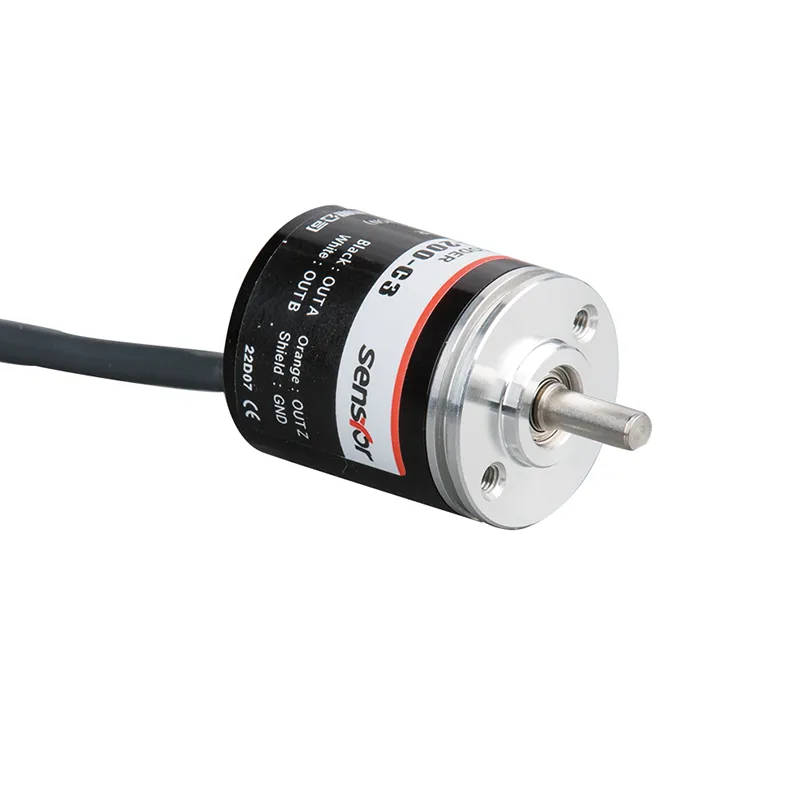
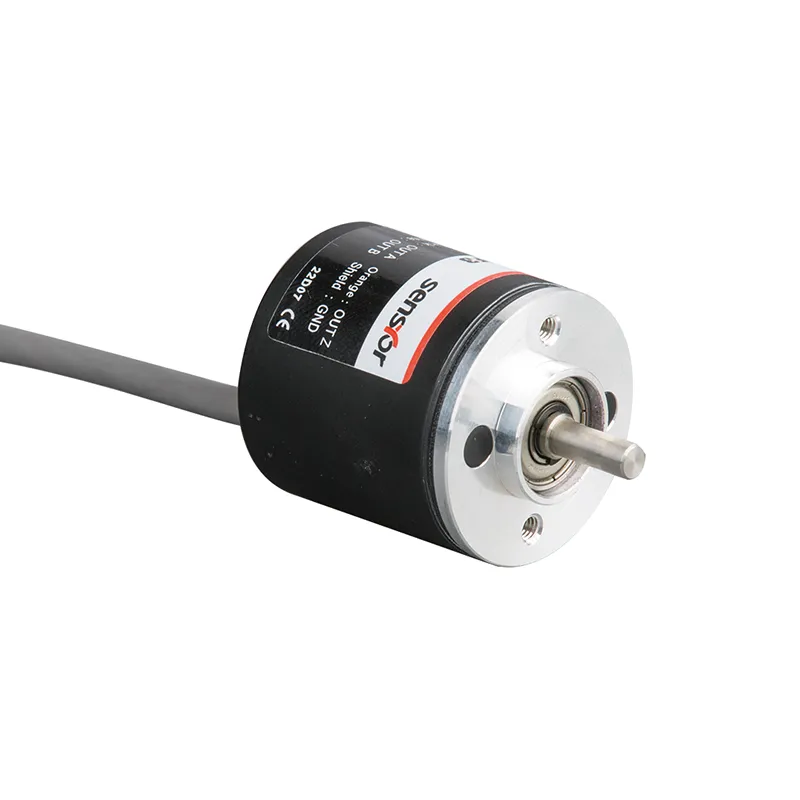
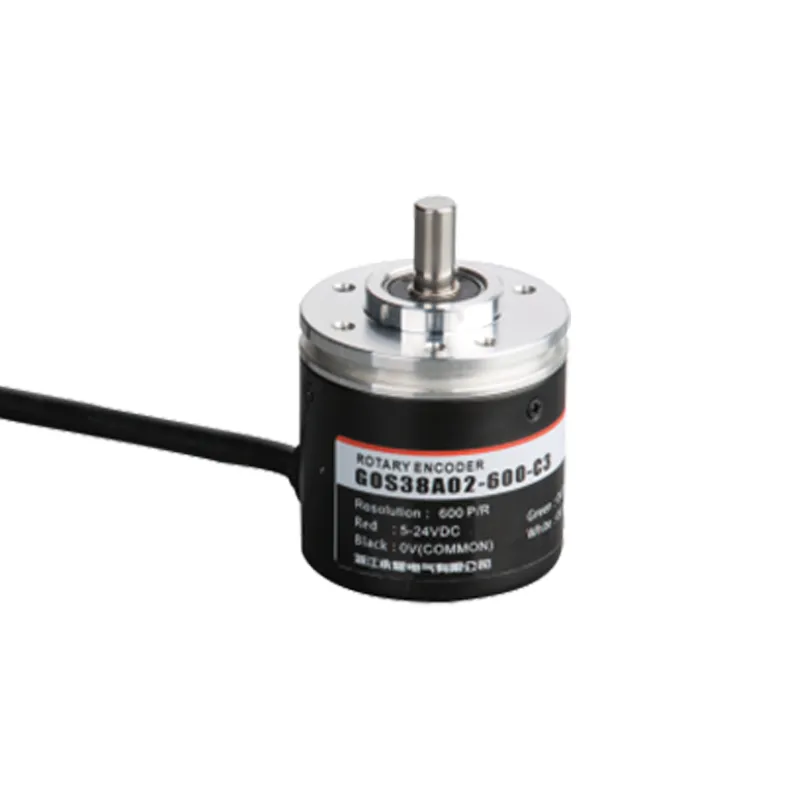
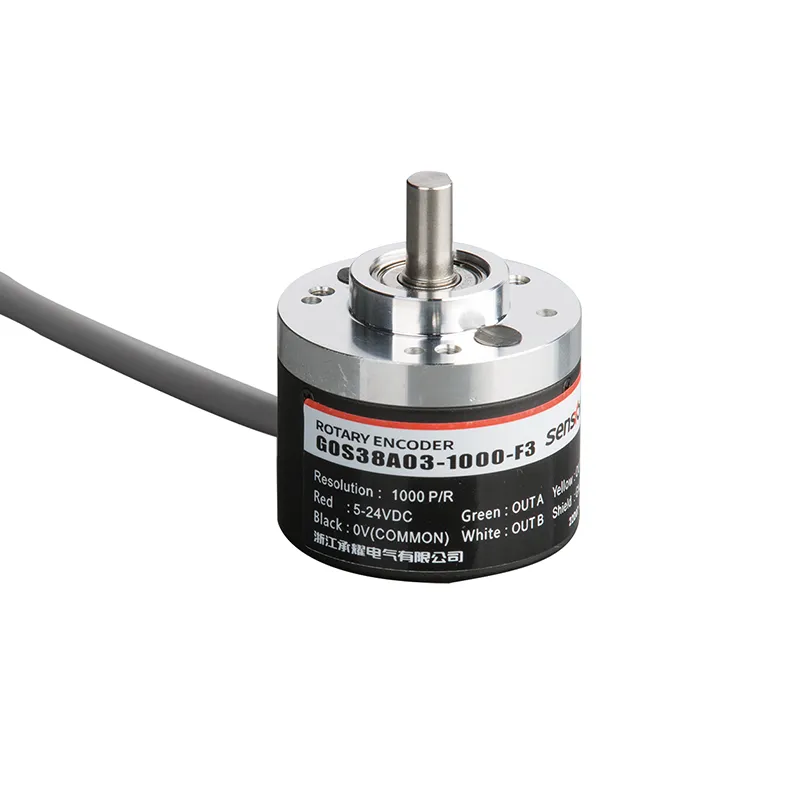
Finding the right custom rotary encoder OEM factory is important when a standard encoder does not fully match an OEM machine’s mechanical, electrical, or environmental requirements. A capable OEM factory should be able to discuss customization, provide technical documentation, support sample evaluation, and manufacture the agreed configuration consistently.
Custom rotary encoders may be required for applications involving unusual shaft dimensions, mounting arrangements, output requirements, resolutions, connectors, or installation constraints. However, customization should start with clearly defined engineering requirements rather than simply modifying a standard product.
For OEMs and machine builders, evaluating the factory’s manufacturing capabilities, quality-control process, technical support, production capacity, and documentation is just as important as evaluating the encoder itself.
A custom rotary encoder OEM factory is a manufacturing supplier that can produce rotary encoders according to an OEM customer’s specified technical requirements.
Depending on the factory and product platform, customization may involve:
Housing dimensions
Shaft dimensions
Mounting configuration
Resolution
Output signal
Connector
Cable
Electrical specifications
Environmental requirements
Labeling or packaging
The exact customization options vary by manufacturer and encoder model.
OEM buyers should distinguish between a factory that actually manufactures or assembles encoders and a trading company that sources finished products from another supplier.
This distinction can matter when a project requires repeated customization, engineering communication, quality control, or long-term production.
Why Choose a Custom Rotary Encoder?
Standard rotary encoders can be suitable for many machines, but some equipment has application-specific requirements.
A custom encoder may be considered when:
The available installation space is limited.
The existing shaft dimensions are non-standard.
A particular mounting method is required.
The control system requires a specific output.
A particular resolution is needed.
A specific connector or cable configuration is required.
The machine requires a specialized mechanical design.
For example, an OEM may have an existing machine design where changing the motor or mounting structure would be expensive. A customized encoder may provide a way to match the feedback component to the existing mechanical arrangement.
However, customization should be based on engineering requirements and verified through testing.
9 Factors to Evaluate a Custom Rotary Encoder OEM Factory
1. Manufacturing Capability
The first factor to evaluate is the factory’s actual manufacturing capability.
When contacting a custom rotary encoder OEM factory, ask about:
Product manufacturing processes
Assembly capability
Testing procedures
Production capacity
Engineering support
Custom product development
Sample production
Bulk production
A supplier may offer customization but only support minor changes to an existing model.
Another factory may have broader engineering capabilities.
Therefore, explain your requirements in detail and ask what can realistically be customized.
2. Mechanical Customization
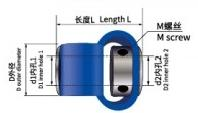
Mechanical compatibility is one of the most common reasons an OEM may need a custom rotary encoder.
Potential requirements include:
Housing diameter
Housing length
Shaft diameter
Shaft length
Shaft shape
Mounting flange
Mounting holes
Connector position
Cable exit
Installation orientation
When working with a custom rotary encoder OEM factory, provide a mechanical drawing whenever possible.
A technical drawing is much more useful than describing dimensions only in an email.
Why Mechanical Accuracy Matters
An encoder may have the correct resolution and electrical output but still be unsuitable if it cannot physically fit the machine.
Before approving an OEM design, check:
Shaft alignment
Mounting dimensions
Available clearance
Coupling requirements
Shaft loading
Overall dimensions
The final production drawing should be approved before mass production.
3. Electrical Configuration
Electrical compatibility is another important part of custom encoder development.
An OEM buyer may require a specific:
Supply voltage
Output signal
Signal interface
Connector
Cable
Pin assignment
Signal frequency
When discussing a custom rotary encoder OEM factory, provide the specifications of the PLC, servo drive, motion controller, or other receiving device whenever possible.
This allows the supplier to understand the intended interface.
Do not assume that two encoders with the same resolution will have the same electrical output.
4. Resolution and Output
Encoder resolution should be selected according to the application’s actual feedback requirements.
For incremental encoders, resolution is often expressed in pulses per revolution, or P/R.
For example, an OEM application might require a particular P/R value to achieve the desired rotational feedback.
However, higher resolution is not automatically better.
At a given RPM, a higher P/R encoder produces a higher pulse frequency.
A simplified calculation is:
Output frequency = P/R × RPM ÷ 60
For example:
10,000 P/R × 600 RPM ÷ 60 = 100,000 pulses per second
Therefore, when designing a custom rotary encoder OEM factory project, engineers should evaluate resolution and maximum speed together with the receiving controller.
5. Quality Control
OEM buyers need consistent products across production batches.
When evaluating a custom rotary encoder OEM factory, ask about applicable quality-control procedures.
Potential inspection areas include:
Incoming component inspection
Mechanical inspection
Electrical testing
Signal testing
Assembly inspection
Final inspection
Batch testing
Product traceability
The exact process depends on the factory and encoder design.
Quality requirements should also be agreed upon before mass production rather than after delivery.
6. Prototype and Sample Support
A prototype or sample is particularly useful for custom encoder projects.
A sample allows the OEM engineering team to verify:
Mechanical fit
Shaft compatibility
Mounting
Electrical connection
Output signal
Controller compatibility
Installation
Machine performance
Before placing a large production order with a custom rotary encoder OEM factory, consider testing an approved sample in the intended machine.
If changes are required, it is generally easier to address them during the prototype stage than after mass production.
7. Production Capacity
A factory’s ability to produce samples does not necessarily indicate its ability to support long-term OEM volumes.
Ask about:
Sample lead time
Standard production lead time
Monthly production capability
Minimum order quantity
Capacity planning
Repeat-order process
Component availability
For an OEM machine manufacturer, supply consistency can be just as important as the initial product price.
If the encoder becomes part of a standard machine design, the factory should be evaluated for expected recurring demand.
8. Technical Support
Custom encoder projects require communication between the buyer’s engineering team and the supplier.
A capable custom rotary encoder OEM factory should be able to discuss technical topics such as:
Mechanical drawings
Output signals
Resolution
Shaft configuration
Mounting
Wiring
Connector selection
Operating speed
Environmental requirements
Clear technical communication can reduce the risk of specification errors.
It is useful to nominate a technical contact on both sides for custom product development.
9. Documentation
Documentation should be part of the OEM process.
Depending on the project, buyers may request:
Product datasheet
Mechanical drawing
Wiring diagram
Pin assignment
Technical specification
Inspection information
Installation instructions
Packaging information
For a customized encoder, the approved drawing should clearly identify the final configuration.
This gives the buyer and factory a common technical reference for future production.
Common Applications for Custom Rotary Encoders
A custom rotary encoder OEM factory can be relevant to many industries where standard encoder dimensions or electrical configurations do not meet machine requirements.
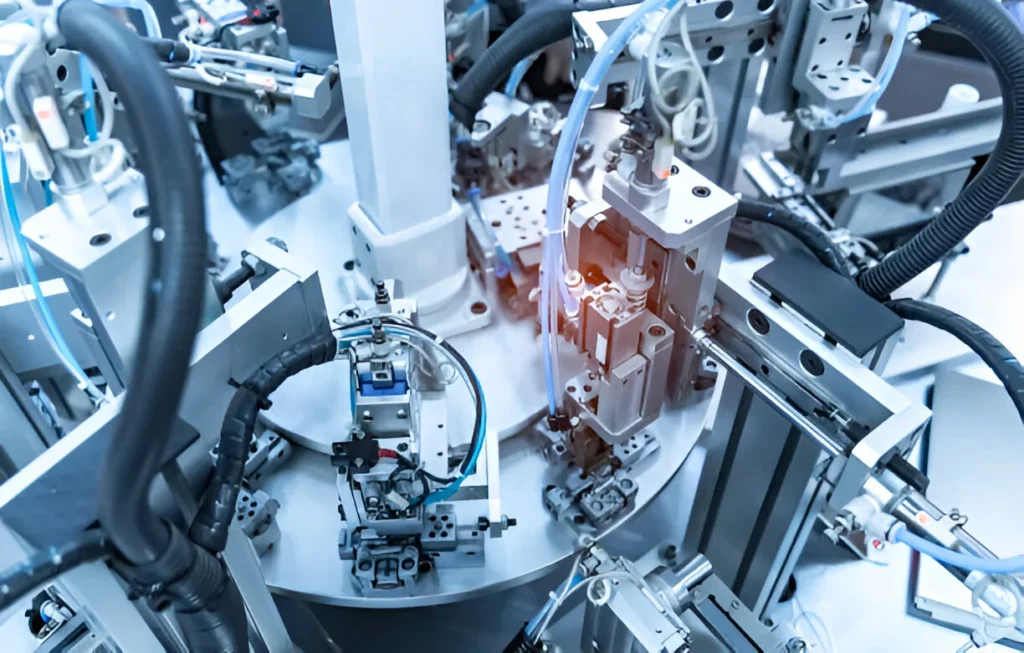
Industrial Automation
Automation equipment often combines motors, actuators, conveyors, and positioning systems.
Custom encoder configurations may be considered when the machine has limited installation space or specialized feedback requirements.
Servo systems depend on feedback for controlled motion.
A custom encoder may be designed around specific motor dimensions, feedback requirements, or drive interfaces.
The encoder must be tested with the intended servo system before production approval.
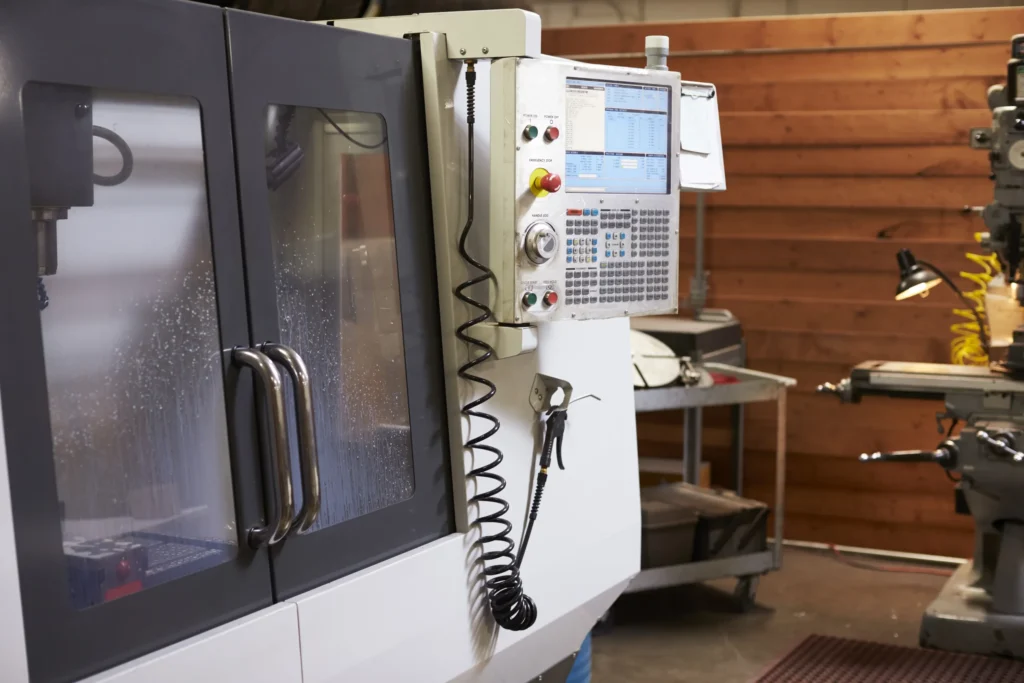
CNC Machine Tools
CNC equipment can use encoders for motor, spindle, or axis feedback depending on the machine architecture.
OEM machine builders may require specific mechanical dimensions or feedback configurations.
Robotics
Robotic systems can have strict space and weight constraints around motors and joints.
A customized compact encoder may be considered when standard products cannot meet the available mechanical space.
Packaging Machinery
Packaging equipment may use encoder feedback for rollers, feeders, cutting mechanisms, and synchronized motion.
A custom encoder can be considered when the standard shaft, mounting, or electrical configuration does not fit the machine.
Printing and Textile Machinery
Printing and textile machines can contain multiple rotating components and may require specific encoder configurations.
Environmental conditions, operating speed, installation space, and feedback requirements should all be evaluated.
What Information Should You Send an OEM Factory?
When contacting a custom rotary encoder OEM factory, provide as much technical information as possible.
A good RFQ can include:
Requirement
Information to Provide
Application
Machine and encoder function
Encoder type
Incremental or absolute
Resolution
P/R or required counts
Maximum RPM
Maximum shaft speed
Output
Required electrical interface
Voltage
Supply requirement
Shaft
Diameter, length, and type
Mounting
Flange and mounting dimensions
Connector
Connector type and location
Cable
Length and configuration
Environment
Temperature, dust, water, vibration
Quantity
Sample and expected annual volume
Drawing
Mechanical drawing if available
The more complete the initial requirements are, the easier it is for an OEM supplier to evaluate feasibility.
How to Compare OEM Rotary Encoder Factories
When comparing a custom rotary encoder OEM factory, use a consistent evaluation framework.
Factor
Supplier A
Supplier B
Supplier C
Customization capability
Check
Check
Check
Manufacturing capability
Check
Check
Check
Engineering support
Check
Check
Check
Technical documentation
Check
Check
Check
Sample support
Check
Check
Check
Quality control
Check
Check
Check
Production capacity
Check
Check
Check
Lead time
Check
Check
Check
Communication
Check
Check
Check
OEM support
Check
Check
Check
Commercial terms
Check
Check
Check
This approach prevents buyers from selecting a supplier solely because of the lowest quotation.
For long-term OEM projects, technical compatibility and supply consistency should be considered alongside price.
How to Manage a Custom Encoder OEM Project
A structured development process can make OEM customization easier.
Step 1: Define the Requirements
Prepare the mechanical and electrical specifications.
Step 2: Discuss Feasibility
Ask the custom rotary encoder OEM factory whether the requested configuration can be manufactured.
Step 3: Review the Drawing
Check every critical dimension before sample production.
Step 4: Test the Sample
Install the sample on the intended machine and verify its operation.
Step 5: Approve the Final Specification
Once testing is complete, approve the final technical drawing and specifications.
Step 6: Begin Mass Production
Confirm the production quantity, lead time, packaging, and inspection requirements.
Step 7: Manage Repeat Orders
Use the approved specification as the reference for future orders.
This process can help reduce ambiguity between the OEM buyer and manufacturer.
Why Consider Sensyor for Custom Rotary Encoder Requirements?
When selecting a custom rotary encoder OEM factory, OEM buyers should evaluate technical capabilities, product compatibility, production support, and communication.
Sensyor provides rotary encoder products for industrial applications.
This gives the supplier a clearer basis for discussing an OEM encoder configuration.
FAQs About Custom Rotary Encoder OEM Factory
What is a custom rotary encoder OEM factory?
A custom rotary encoder OEM factory is a manufacturing supplier that can produce rotary encoders according to an OEM customer’s specified mechanical, electrical, and application requirements.
What can be customized on a rotary encoder?
Depending on the manufacturer’s capabilities, customization may include shaft dimensions, housing dimensions, mounting configuration, resolution, output, connector, cable, and other mechanical or electrical characteristics.
Why would an OEM need a custom rotary encoder?
An OEM may need customization when a standard encoder does not fit the machine’s available space, shaft dimensions, mounting structure, feedback requirements, electrical interface, or other application specifications.
How do I find a custom rotary encoder OEM factory?
Evaluate suppliers based on manufacturing capability, customization experience, technical documentation, sample support, quality control, production capacity, engineering communication, and long-term supply capability.
Should I request a sample before placing a bulk order?
For custom encoder projects, sample testing can be useful. It allows engineers to verify mechanical fit, electrical compatibility, output signals, and machine performance before mass production.
Can a custom rotary encoder be designed for a specific motor?
Depending on the factory’s capabilities, an encoder may be customized to suit specific mechanical or feedback requirements associated with a motor. The complete motor and encoder interface should be evaluated together.
How much information should I provide to an OEM encoder factory?
Provide the machine application, encoder type, resolution, maximum RPM, output, supply voltage, shaft dimensions, mounting requirements, connector, cable requirements, environmental conditions, and expected quantity.
Is a higher-resolution rotary encoder always better?
No. Higher resolution can provide more detailed rotational feedback, but it can also increase output frequency at higher RPM. The encoder resolution should match the machine and controller capabilities.
Can OEM factories produce large quantities of customized rotary encoders?
Some manufacturers can support volume OEM production. Buyers should confirm production capacity, lead times, minimum order quantities, and repeat-order capabilities directly with the supplier.
Choosing the right custom rotary encoder OEM factory is an important step for OEM machine manufacturers, automation companies, and industrial equipment builders.
The best supplier should be evaluated on more than price. Manufacturing capability, customization options, technical documentation, quality control, prototype support, production capacity, technical communication, and long-term supply should all be considered.
Start by defining the exact mechanical and electrical requirements. Include the shaft dimensions, mounting configuration, resolution, output signal, supply voltage, maximum RPM, controller interface, environmental conditions, and expected order volume.
Then provide these requirements to potential OEM factories and compare their technical responses.
For customized encoder projects, sample testing and final drawing approval are particularly important. They allow both the buyer and manufacturer to establish a clear reference before mass production.
If you are looking for a custom rotary encoder OEM factory for industrial automation, servo systems, CNC machinery, robotics, packaging, printing, or other equipment, you can review the Sensyor rotary encoder product range and discuss your application requirements with the supplier.
Table of Contents What Is an Absolute Encoder? An absolute encoder is a position sensing device that provides a unique digital value for every shaft position. Unlike incremental encoders, an absolute encoder retains position information even after power loss, making it ideal for applications that require continuous accuracy and reliability. Manufacturers across automation, robotics, packaging, […]
📊 Comprehensive Outline for “high resolution encoder” Heading Level Topic H1 High Resolution Encoder: 17 Powerful Insights You Must Know for Precision Control H2 Introduction to High Resolution Encoder H3 What is a High Resolution Encoder? H3 Why High Resolution Matters H2 Working Principle of High Resolution Encoder H3 Basic Operation Mechanism H4 Signal Generation […]
We use cookies to enhance your browsing experience, serve personalised ads or content, and analyse our traffic. By clicking "Accept All", you consent to our use of cookies.