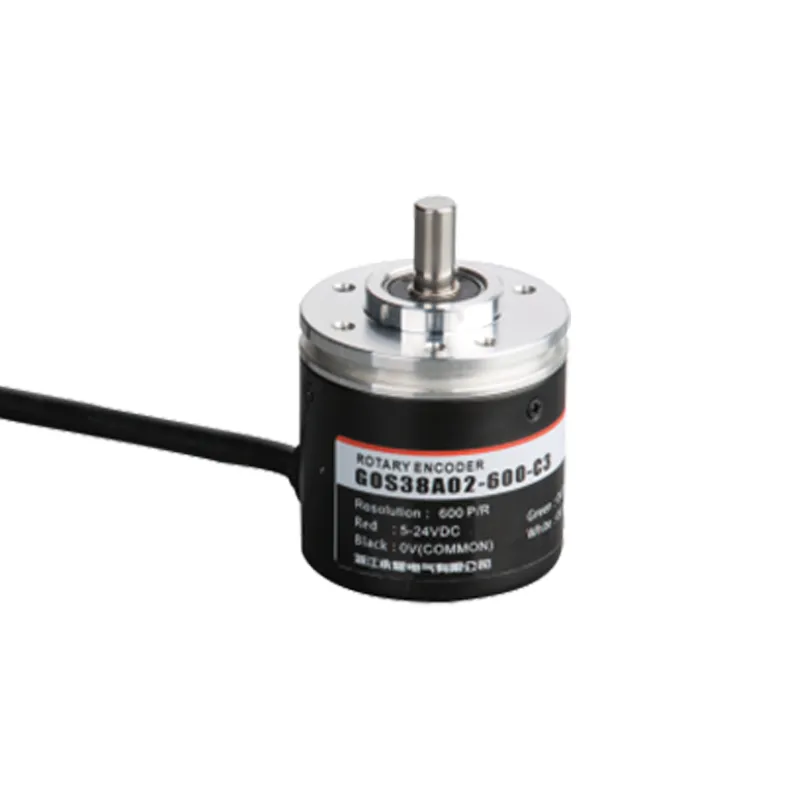
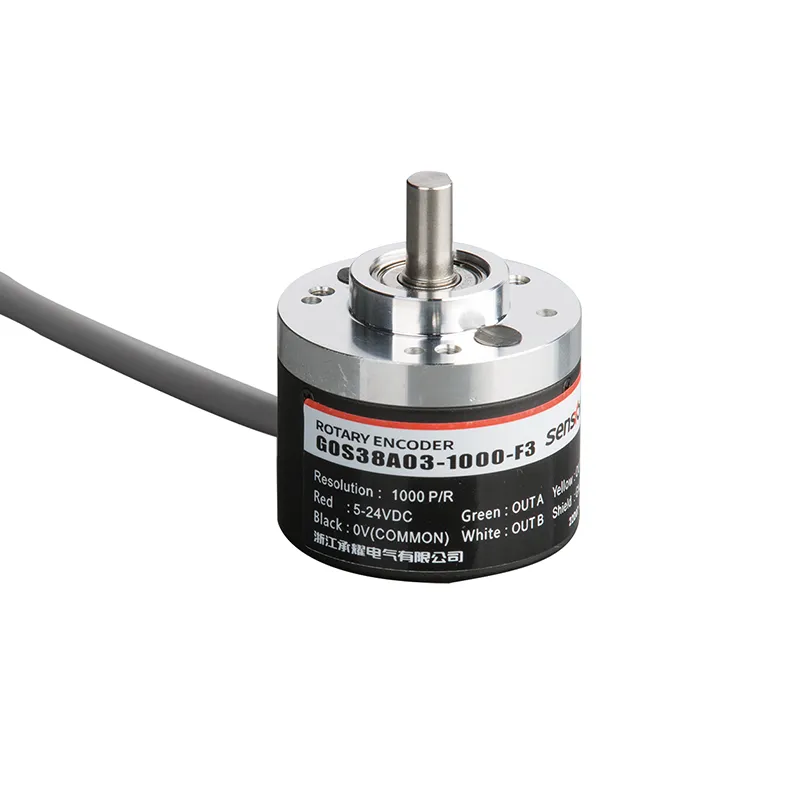
Choosing the right rotary encoder supplier is an important decision for OEM manufacturers, machine builders, automation companies, and industrial distributors. A suitable supplier should offer more than a product catalog. Buyers should evaluate technical specifications, product consistency, customization capability, quality control, documentation, samples, production capacity, delivery, and technical support.
The right encoder also depends on the machine application. Resolution, output signal, maximum speed, shaft configuration, mounting dimensions, supply voltage, environmental conditions, and controller compatibility should be confirmed before purchasing.
A rotary encoder supplier provides encoder products and related technical information to customers who need rotational feedback for machinery and automation systems.
Depending on the supplier’s capabilities, services may include:
Standard encoder products
Incremental encoders
Absolute encoders
Hollow shaft models
Solid shaft models
OEM customization
Technical drawings
Wiring diagrams
Samples
Technical support
Bulk orders
Custom packaging
A supplier may manufacture its own products or source products from manufacturers.
Therefore, buyers should understand whether they are communicating directly with a factory, an authorized distributor, or a trading company.
This distinction can become particularly important when customized products are required.
Rotary Encoder Supplier vs Manufacturer
The terms supplier and manufacturer are sometimes used interchangeably, but they are not necessarily the same.
A manufacturer produces the encoder, while a supplier can refer to a company that provides the product to customers. A supplier may also be the original manufacturer.
Factor
Supplier
Manufacturer
Product supply
Yes
Yes
Own production facility
Not always
Yes
OEM customization
Depends on capability
Often available
Direct engineering communication
Depends on company
Often possible
Product sourcing
May source from factories
Produces directly
Bulk supply
Depends on capacity
Based on production capability
For standard products, a distributor can be convenient.
For OEM projects requiring customized dimensions or electrical configurations, direct access to manufacturing and engineering resources may be advantageous.
9 Factors to Evaluate Before Choosing a Supplier
1. Product Range
First check whether the supplier offers products suitable for your application.
Common options include:
Incremental encoders
Absolute encoders
Hollow shaft encoders
Solid shaft encoders
Through-bore encoders
Industrial motion-feedback products
A large catalog is not necessarily better.
The important question is whether the available products match the actual requirements of your machine.
For example, an encoder for a conveyor may have very different requirements from one used in a high-speed servo system.
2. Technical Specifications
Technical specifications should be one of the first things you compare.
Important parameters can include:
Resolution
Pulses per revolution
Maximum RPM
Output signal
Supply voltage
Shaft diameter
Mounting dimensions
Protection rating
Operating temperature
Cable and connector
A reliable rotary encoder supplier should be able to provide clear technical information rather than relying only on product photographs or general descriptions.
For electrical and electronic equipment, the International Electrotechnical Commission (IEC) provides international standards and technical resources that engineers may consult when evaluating applicable requirements.
3. OEM Customization
OEM applications frequently require specifications that differ from standard catalog products.
Potential customization requirements may include:
Shaft diameter
Shaft length
Housing dimensions
Mounting configuration
Connector type
Cable length
Output configuration
Resolution
Labeling
Packaging
Not every supplier can provide all of these options.
Before starting an OEM project, ask exactly which specifications can be customized and whether customized products have minimum order requirements.
Providing a mechanical drawing can help the supplier evaluate the required configuration more efficiently.
4. Quality Control
Quality is especially important for components used in continuously operating industrial equipment.
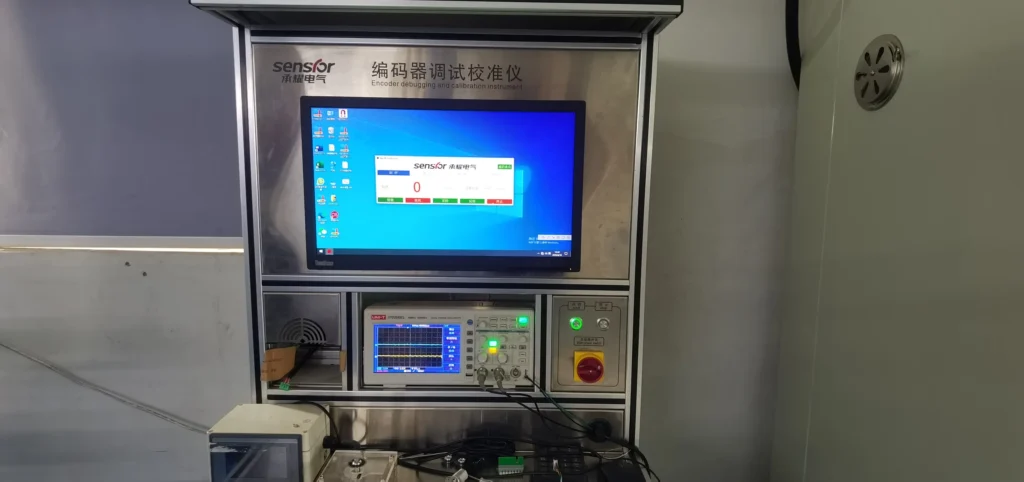
When evaluating a supplier, ask about its quality-control process.
Relevant areas may include:
Incoming material inspection
Assembly inspection
Electrical testing
Signal testing
Mechanical inspection
Final inspection
Product traceability
Quality management information can also be evaluated against recognized standards. The International Organization for Standardization (ISO) provides information about international standards and quality-management systems.
However, certification should not be the only consideration. Product specifications, testing procedures, documentation, and actual sample performance also matter.
5. Technical Documentation
Good documentation can make machine integration much easier.
Before purchasing, request documents such as:
Product datasheet
Mechanical drawing
Wiring diagram
Connector pinout
Output specifications
Resolution information
Operating-speed specifications
Environmental specifications
For OEM applications, the dimensional drawing is particularly important.
It allows engineers to verify:
Shaft diameter
Shaft length
Housing diameter
Mounting holes
Flange dimensions
Connector location
Never rely only on product photographs when checking mechanical compatibility.
6. Sample Availability
A sample can help confirm whether the product is suitable before placing a larger order.
During sample testing, check:
Mechanical fit
Shaft compatibility
Mounting
Wiring
Signal output
Resolution
Controller compatibility
Operating performance
Whenever possible, test the sample under conditions similar to the final machine.
For example, if the encoder will operate at high RPM, testing only at low speed may not provide enough information about the final application.
7. Production Capacity
Production capability becomes increasingly important when an OEM customer moves from testing to mass production.
Ask the supplier about:
Standard lead time
Sample lead time
Bulk-order lead time
Production capacity
Minimum order quantity
Component availability
Production scheduling
Packaging
A product may be technically suitable but commercially unsuitable if the supplier cannot support the required volume.
Long-term OEM projects should consider supply continuity as well as the initial order.
8. Technical Support
Technical support can be valuable during product selection and machine integration.
A capable rotary encoder supplier should be able to communicate about:
Encoder selection
Resolution
Output signals
Wiring
Mechanical mounting
Controller compatibility
Troubleshooting
Customization
This is particularly important for international buyers because small differences in electrical interfaces or mechanical dimensions can cause integration problems.
9. Delivery and Long-Term Supply
Delivery performance should be evaluated before placing an important order.
Consider:
Production lead time
Shipping arrangements
Packaging
Order quantity
Repeat-order capability
Product availability
Communication
Long-term product support
For an OEM machine, a component shortage can affect the production schedule of the complete system.
Therefore, buyers should consider whether the supplier can support both the initial project and future replacement or repeat orders.
Types of Encoders You May Need
The best product depends on the application.
Incremental Encoder
An incremental encoder generates pulses as the shaft rotates.
The controller can use these signals to determine:
Relative movement
Rotational speed
Direction
Pulse count
Resolution is commonly expressed as pulses per revolution, or P/R.
Incremental models are widely considered for conveyors, motors, packaging machines, printing equipment, textile machinery, and industrial automation.
Absolute Encoder
An absolute encoder provides a coded value associated with shaft position.
Depending on the design, absolute products may be:
Single-turn
Multi-turn
Digital interface
Application-specific
They can be considered when the control system requires absolute position feedback.
Hollow Shaft Encoder
A hollow shaft design has a central bore that fits around an existing machine shaft.
This can simplify mechanical integration in certain machine designs.
It is commonly connected to the machine through a coupling or another suitable mechanical arrangement.
The decision between hollow and solid shaft should be based on the actual machine structure.
OEM Rotary Encoder Sourcing Process
A structured purchasing process can reduce errors.
Step 1: Define the Application
Explain what the encoder will monitor.
Examples include:
Servo motors
Conveyors
CNC machines
Packaging machines
Textile equipment
Printing machinery
Robotics
Step 2: Define Mechanical Requirements
Provide:
Shaft diameter
Shaft length
Housing space
Mounting dimensions
Coupling requirements
Installation orientation
Step 3: Define Electrical Requirements
Specify:
Encoder type
Resolution
Output signal
Supply voltage
Maximum RPM
Cable
Connector
Step 4: Define Environmental Requirements
Consider:
Temperature
Humidity
Dust
Water
Oil
Vibration
Shock
Step 5: Request Documentation
Ask for the datasheet, dimensional drawing, wiring information, and relevant technical specifications.
Step 6: Test a Sample
Verify mechanical and electrical compatibility before placing a large production order.
Step 7: Confirm Commercial Details
After testing, confirm:
Quantity
Price
Lead time
MOQ
Packaging
Customization
Quality requirements
Questions to Ask a Rotary Encoder Supplier
Before placing an order, ask:
What encoder types do you provide?
What resolutions are available?
What output signals are supported?
What is the maximum operating speed?
Can the shaft dimensions be customized?
Can the cable or connector be customized?
What environmental protection ratings are available?
Can you provide a mechanical drawing?
Can you provide samples?
What is the production lead time?
What is the MOQ for customized products?
What quality inspections are performed before shipment?
Using the same questions for multiple suppliers makes technical comparison easier.
Why Consider Sensyor?
For industrial buyers, the selection process should begin with the machine’s requirements rather than simply comparing prices.
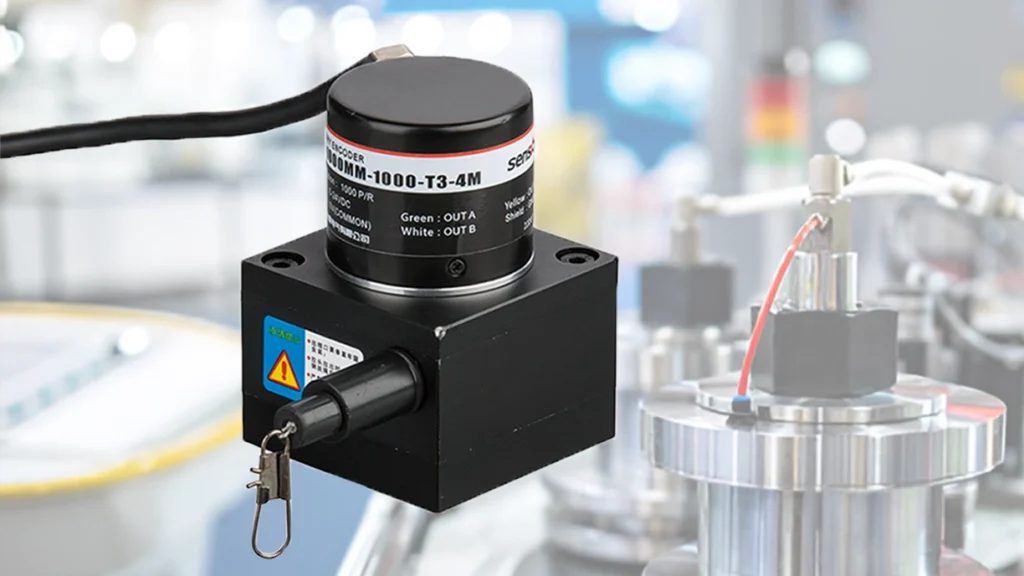
Sensyor provides encoder products for industrial applications. The Sensyor rotary encoder product page can be used to review the available product range.
When requesting product information, it is helpful to provide the application and complete technical requirements.
These may include:
Application type
Encoder type
Resolution
Maximum RPM
Output
Supply voltage
Shaft dimensions
Mounting method
Environmental conditions
Cable requirements
Connector requirements
Quantity
For OEM projects, providing an existing encoder model, technical drawing, or machine interface information can also help the supplier evaluate the requirement.
FAQs
What should I look for in a rotary encoder supplier?
Look at product specifications, technical capability, customization options, quality control, documentation, sample availability, production capacity, delivery, and technical support.
Is a manufacturer better than a distributor?
Not necessarily. A distributor can be useful for standard products, while direct manufacturer communication may be beneficial for customized OEM applications. The best choice depends on the project.
Can a supplier provide customized encoders?
Some suppliers offer OEM customization. Available options can include shaft dimensions, housing, output, cable, connector, and other specifications. Confirm the exact customization capability before ordering.
Should I test a sample first?
For a new machine or OEM project, sample testing is recommended because it can help verify mechanical fit, electrical compatibility, signal performance, and controller integration.
What information should I send when requesting a quotation?
Provide the application, encoder type, resolution, RPM, output, voltage, shaft dimensions, mounting requirements, environmental conditions, cable or connector requirements, and quantity.
What is an incremental encoder?
An incremental encoder generates electrical pulses as the shaft rotates. The controller can use the pulses to determine relative movement, speed, direction, or pulse count.
What is an absolute encoder?
An absolute encoder provides coded position information corresponding to shaft position. Depending on its design, it may provide single-turn or multi-turn feedback.
What is P/R?
P/R means pulses per revolution. It is commonly used to specify the resolution of an incremental encoder.
Can encoders be used with PLCs?
Yes. The output of the encoder must be electrically and functionally compatible with the PLC or an appropriate interface module.
Can encoders be used with servo motors?
Yes. Encoder feedback is commonly used in servo systems. The feedback device must match the servo drive, motor, electrical interface, and mechanical installation.
What is a hollow shaft encoder?
It is an encoder with a central bore that allows it to mount around a machine shaft. This configuration can be useful for certain direct-mount applications.
How do I compare suppliers?
Use the same technical and commercial checklist for each candidate. Compare specifications, documentation, sample results, customization, quality control, production capacity, lead time, and support.
Conclusion
Finding a suitable rotary encoder supplier requires more than comparing product prices.
Industrial buyers should evaluate the complete supply capability, including product range, technical specifications, OEM customization, quality control, documentation, sample testing, production capacity, technical support, and delivery.
The encoder itself must also match the machine. Resolution, output signal, maximum RPM, shaft configuration, mounting dimensions, supply voltage, environmental conditions, and controller compatibility should be confirmed before ordering.
For OEM machine builders and industrial distributors, establishing clear technical requirements at the beginning of the sourcing process can make product comparison and sample testing more efficient.
If you are looking for encoder products for industrial automation, CNC equipment, robotics, servo systems, packaging machinery, textile machinery, or other applications, you can review the Sensyor rotary encoder product range and compare the available solutions.
Table of Contents Encoder Manufacturer Overview An encoder manufacturer plays a critical role in modern industrial automation by designing and producing devices that convert motion into electrical signals. A reliable encoder manufacturer helps industries achieve accurate positioning, speed monitoring, and motion control across various applications. Industrial automation systems depend on the expertise of an experienced […]
Introduction to Rotary Encoder Technology A rotary encoder is one of the most important components in modern automation and motion control systems. This device converts rotational movement into electrical signals, enabling machines to monitor speed, direction, and position with exceptional precision. Today, manufacturers across industries rely on advanced encoder technology to improve productivity, reduce downtime, […]
What Is a Nemicon Slim Encoder Equivalent? Nemicon slim encoder equivalent refers to an alternative encoder solution designed to replace or match the performance characteristics of Nemicon slim encoder products. These replacement encoders are developed to provide similar mechanical dimensions, electrical specifications, signal output options, and installation compatibility. In modern industrial automation systems, rotary encoders […]
We use cookies to enhance your browsing experience, serve personalised ads or content, and analyse our traffic. By clicking "Accept All", you consent to our use of cookies.