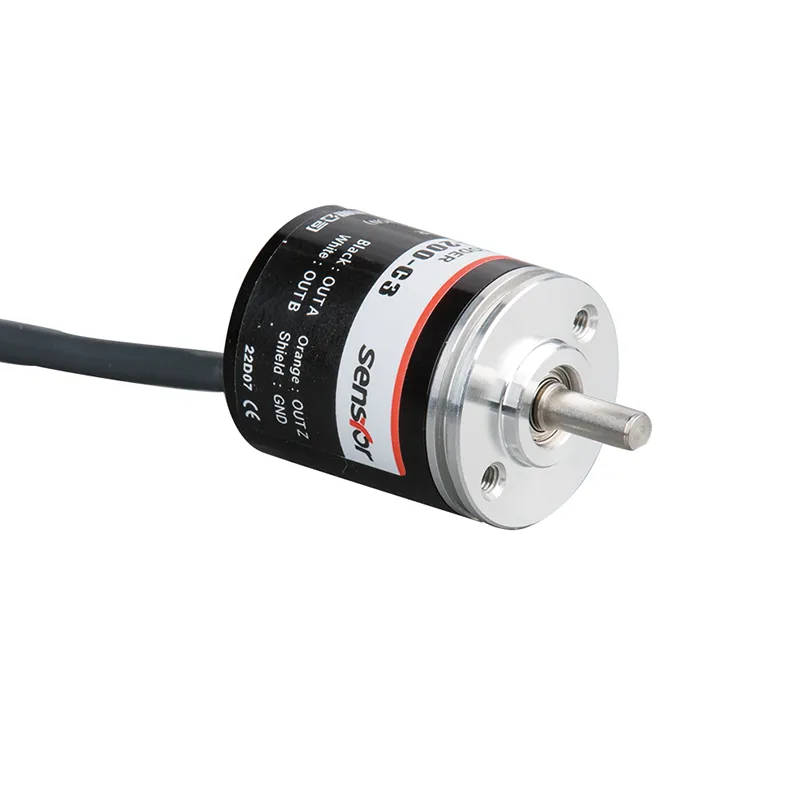
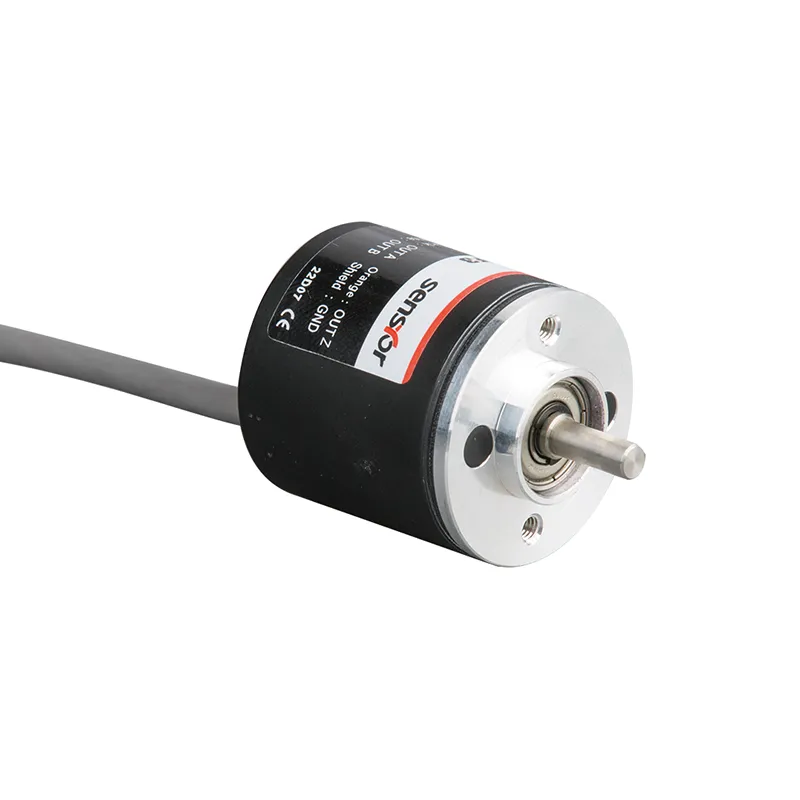
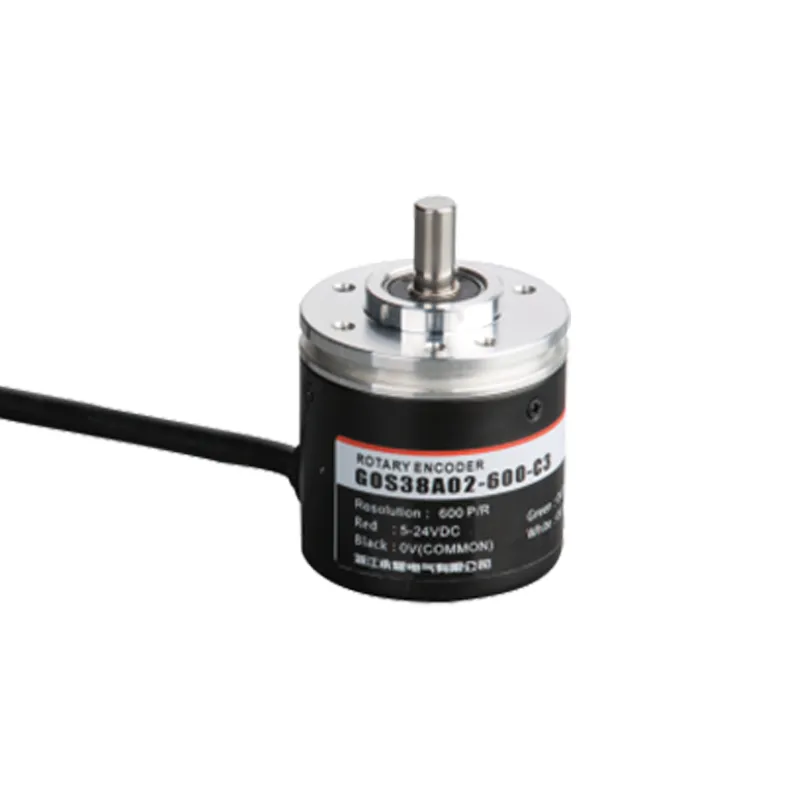
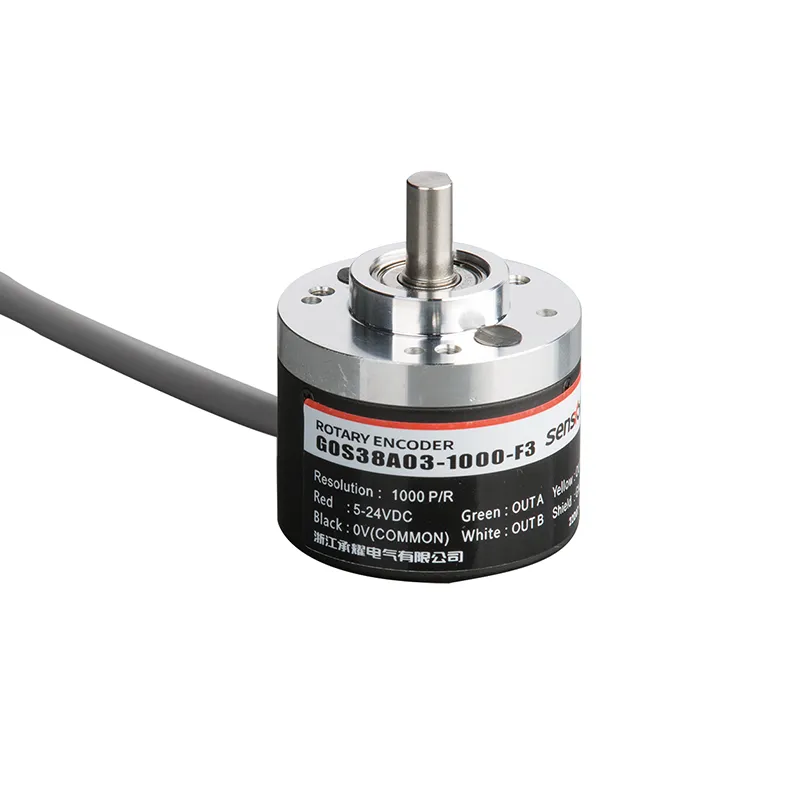
Choosing the right rotary encoder manufacturer is important for OEMs, machine builders, automation companies, and industrial distributors that depend on consistent motion-feedback components. A suitable supplier should provide more than a product catalog. Buyers should evaluate technical capability, mechanical and electrical specifications, customization options, quality control, production capacity, samples, technical support, and long-term supply capability.
For an industrial encoder project, it is also important to match the encoder to the actual application. Shaft dimensions, resolution, output signal, operating speed, environmental conditions, mounting method, and controller compatibility should all be considered before placing an order.
A manufacturer designs and produces encoder products used to provide rotational feedback in machinery and automation systems.
Depending on its capabilities, a manufacturer may be involved in:
Product design
Mechanical engineering
Electronic design
Sensor technology
Assembly
Testing
Quality control
Customization
OEM production
Technical support
This can be different from a distributor, which generally purchases products from manufacturers and resells them to customers.
For OEM buyers, direct communication with a factory or manufacturer can be useful when the application requires customized mechanical dimensions, electrical outputs, cables, connectors, or other specifications.
Manufacturer vs Distributor: Which Should You Choose?
Both manufacturers and distributors can be useful depending on the project.
Factor
Manufacturer
Distributor
Product source
Direct production
Resells products
Customization
May be available
Usually depends on original manufacturer
OEM projects
Often suitable
Depends on supplier
Technical communication
Direct factory contact may be possible
May pass requirements to factory
Product range
Based on manufacturing capability
Can represent multiple brands
Volume orders
Potentially suitable
Depends on distribution model
Samples
Depends on manufacturer
Often available
For standard products, a distributor may provide a convenient purchasing channel.
For an OEM project requiring specific mechanical or electrical characteristics, direct communication with a rotary encoder manufacturer may provide a more direct technical process.
9 Factors to Evaluate Before Choosing a Manufacturer
1. Product Range
Start by checking whether the supplier offers the encoder type required for your application.
Common categories include:
Incremental encoders
Absolute encoders
Solid shaft encoders
Hollow shaft encoders
Through-bore encoders
Industrial position-feedback devices
A broader product range can make it easier to identify a suitable configuration, but range alone does not indicate product quality.
The important point is whether the supplier has the specific technical capability your application requires.
2. Technical Capability
A capable supplier should understand the main technical parameters involved in encoder selection.
A supplier should be able to explain whether a proposed product is appropriate for the stated application rather than simply recommending the highest specification available.
3. Customization and OEM Support
Customization can be important for machine builders.
An OEM project may require changes to:
Shaft diameter
Housing size
Mounting structure
Cable length
Connector
Output configuration
Resolution
Electrical interface
Labeling or packaging
Not every manufacturer can support every customization.
Therefore, buyers should ask which specifications can actually be modified and whether customized products require a minimum order quantity.
For an OEM project, provide a technical drawing whenever possible.
A drawing can help the engineering team understand the required mechanical interface.
4. Quality Control
Quality control is a major consideration when selecting an industrial component supplier.
Buyers should ask how products are inspected and tested during production.
Relevant areas can include:
Incoming material inspection
Assembly inspection
Electrical testing
Signal testing
Mechanical inspection
Final inspection
Product traceability
Quality management should be evaluated using verifiable supplier information rather than assumptions.
A certification can be useful information, but buyers should also consider the actual product specifications, testing requirements, and application history available to them.
5. Mechanical and Electrical Documentation
Good technical documentation can reduce mistakes during product selection and installation.
Before ordering, request documentation covering:
Dimensions
Shaft specifications
Mounting holes
Wiring
Connector pinout
Output signals
Resolution
Operating speed
Supply voltage
Temperature range
Protection rating
Mechanical drawings are particularly important for OEM integration.
Do not rely only on product photographs when determining whether an encoder will fit a machine.
6. Production Capacity
Production capacity becomes particularly important for distributors and OEM customers.
Ask the supplier about:
Standard production lead time
Monthly capacity
Sample lead time
Bulk-order lead time
Production scheduling
Component availability
Packaging requirements
A product that is technically suitable may still create problems if the supplier cannot meet the required delivery schedule.
For long-term projects, buyers should evaluate whether the supplier can support both initial production and subsequent orders.
7. Samples and Testing
Sample testing is useful before committing to a large OEM order.
A sample can help verify:
Mechanical fit
Shaft compatibility
Mounting
Wiring
Output signal
Resolution
Controller compatibility
Operating performance
The testing procedure should reflect the actual application whenever practical.
For example, an encoder intended for a high-speed machine should be evaluated under representative operating conditions rather than only at low speed.
8. Technical Support
Technical support can become important when integrating feedback devices into a new machine.
A supplier should be able to communicate about:
Wiring
Signal configuration
Mechanical installation
Output specifications
Controller compatibility
Troubleshooting
Customization
For international OEM projects, clear technical communication is particularly useful because small differences in shaft dimensions, connector wiring, or output specifications can affect machine integration.
9. Delivery and Long-Term Supply
A sourcing decision should consider more than the first purchase.
For recurring OEM orders, evaluate:
Lead time
Minimum order quantity
Packaging
Production consistency
Replacement availability
Product revision management
Communication
Long-term supply plans
The goal is to establish a practical supply relationship that supports the machine’s production cycle.
Types of Encoders to Consider
A rotary encoder manufacturer may offer several product configurations.
Incremental Encoders
Incremental models generate pulses as the shaft rotates.
They are commonly considered for applications requiring speed, direction, or relative movement feedback.
Resolution is often specified in pulses per revolution.
Absolute Encoders
Absolute models provide coded position information associated with shaft position.
They may be available in single-turn and multi-turn configurations.
They can be considered when the control system requires absolute position feedback.
Hollow Shaft Encoders
A hollow shaft configuration allows the encoder to mount around an existing machine shaft.
This can be useful when the mechanical design favors direct shaft integration.
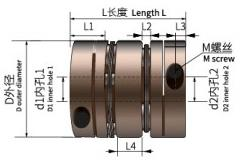
Solid shaft models use an external shaft that connects to the machine through a coupling or another mechanical arrangement.
The correct choice depends on the machine’s mechanical structure.
OEM Rotary Encoder Sourcing Process
A structured sourcing process can reduce specification errors.
Step 1: Define the Application
Explain what the encoder will monitor.
For example:
Servo motor
Conveyor
CNC machine
Packaging machine
Textile machine
Printing machine
Robotics equipment
Step 2: Define the Mechanical Requirements
Provide:
Shaft diameter
Shaft length
Housing space
Mounting dimensions
Required coupling
Installation orientation
Step 3: Define the Electrical Requirements
Specify:
Resolution
Output
Supply voltage
Maximum frequency
Cable
Connector
Controller
Step 4: Define Environmental Conditions
Provide the expected:
Temperature
Humidity
Dust
Water exposure
Oil exposure
Vibration
Step 5: Request Technical Documents
Ask for a datasheet, dimensional drawing, wiring diagram, and relevant specifications.
Step 6: Test Samples
Install the sample in a representative application and verify compatibility.
Step 7: Confirm Production Requirements
After successful testing, confirm quantity, packaging, lead time, customization, and quality requirements.
Questions to Ask a Rotary Encoder Manufacturer
Before placing an OEM order, consider asking:
What encoder types do you manufacture?
What resolutions are available?
What output signals are supported?
Can the shaft or housing be customized?
Are custom cables and connectors available?
What is the maximum operating speed?
What environmental protection options are available?
Can you provide mechanical drawings?
Can you provide samples for testing?
What is the standard production lead time?
What is the minimum order quantity for customized products?
What quality inspections are performed before shipment?
These questions can help buyers compare suppliers using technical and commercial criteria rather than price alone.
Why Consider Sensyor?
For an industrial encoder project, product selection should start with the machine’s requirements.
Sensyor provides encoder products for industrial applications. The Sensyor rotary encoder product page provides a starting point for reviewing available solutions.
When contacting the company about an OEM or industrial application, prepare:
Application
Encoder type
Resolution
Maximum RPM
Output
Supply voltage
Shaft dimensions
Mounting requirements
Environmental conditions
Cable and connector requirements
Required quantity
Providing complete specifications can help the supplier determine whether an existing product or customized configuration is appropriate.
FAQs About Rotary Encoder Manufacturers
What does a rotary encoder manufacturer produce?
A manufacturer produces encoder components and assemblies designed to provide rotational feedback. Depending on the company, it may also provide customized mechanical, electrical, and cable configurations.
How do I choose a rotary encoder manufacturer?
Compare technical capability, product specifications, customization support, quality control, documentation, sample availability, production capacity, lead time, and technical support.
What is the difference between a manufacturer and supplier?
A manufacturer produces the product, while a supplier is a broader term that can include manufacturers, distributors, or other companies providing products to customers.
Can a manufacturer customize an encoder?
Some manufacturers offer OEM customization, but the available options vary. Buyers should confirm whether shaft dimensions, housing, output, connector, cable, resolution, or other specifications can be modified.
Should I request an encoder sample?
For an OEM or new machine project, sample testing can help verify mechanical fit, electrical compatibility, signal performance, and installation requirements before larger production orders.
What information should I provide when requesting a quotation?
Provide the application, encoder type, resolution, RPM, output signal, supply voltage, shaft dimensions, mounting requirements, environmental conditions, cable or connector requirements, and quantity.
What is an incremental encoder?
An incremental encoder generates electrical pulses as the shaft rotates. A controller can use these pulses to determine relative movement, speed, and direction when appropriate output channels are available.
What is an absolute encoder?
An absolute encoder provides coded information associated with shaft position. Depending on its design, it can provide single-turn or multi-turn position information.
Are hollow shaft encoders available for OEM applications?
Hollow shaft configurations can be suitable for OEM applications where the encoder needs to mount around an existing shaft. The bore, mounting arrangement, shaft tolerance, and other specifications must be checked.
What specifications are most important?
Important specifications include resolution, maximum RPM, output interface, shaft configuration, dimensions, supply voltage, environmental conditions, mounting, cable, connector, and controller compatibility.
How can I compare two encoder manufacturers?
Use the same technical checklist for both suppliers. Compare product specifications, documentation, sample performance, customization capability, quality processes, production capacity, lead time, and technical support.
Conclusion
Choosing the right rotary encoder manufacturer requires a combination of technical and commercial evaluation.
For industrial and OEM applications, buyers should look beyond product price and examine technical capability, product range, customization, quality control, documentation, sample testing, production capacity, delivery, and long-term support.
The encoder itself should also match the machine’s requirements. Resolution, output signal, maximum speed, shaft configuration, mounting dimensions, environmental conditions, supply voltage, and controller compatibility all need to be confirmed before production.
A structured sourcing process can help OEMs reduce compatibility problems and make supplier comparisons more objective.
If you are looking for an industrial encoder supplier or manufacturer for an OEM project, start by defining the complete mechanical and electrical requirements, then compare suitable products and test samples before committing to volume production.
Table of Contents What Is a 48mm Encoder? A compact rotary encoder is a compact rotary feedback device designed to measure speed, position, and rotational movement in industrial equipment. Because of its compact size and reliable performance, this type of encoder is widely used in automation systems, robotics, manufacturing machines, and motion control applications. Modern […]
Table of Contents What Is a Through-Hole Encoder? A through-hole encoder is a rotary feedback device designed with a hollow center that allows a motor shaft or rotating component to pass directly through the encoder body. This design simplifies installation and eliminates the need for additional shaft couplings in many applications. Because of its compact […]
Table of Contents Introduction to Encoder for Packaging Machine encoder for packaging machine is an essential component used to ensure precise motion control in modern packaging systems. The encoder for packaging machine helps track position, speed, and direction, enabling accurate filling, sealing, labeling, and cutting processes. A reliable encoder for packaging machine ensures smooth operation […]
We use cookies to enhance your browsing experience, serve personalised ads or content, and analyse our traffic. By clicking "Accept All", you consent to our use of cookies.