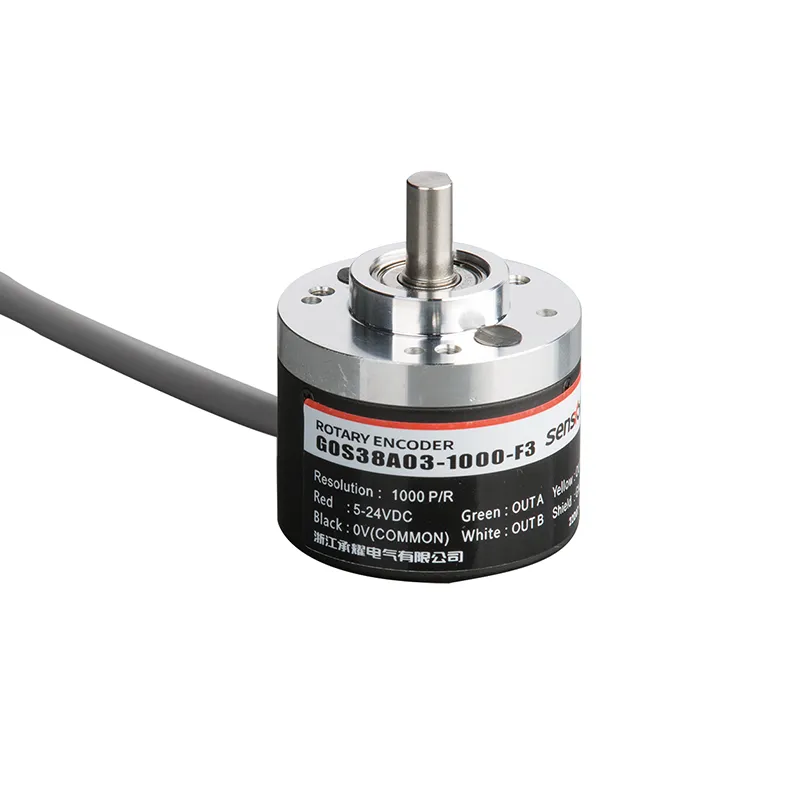
Industrial Applications of Absolute Encoder Systems
How to Choose the Right Absolute Encoder
Installation and Maintenance Tips
Future Trends in Encoder Technology
Frequently Asked Questions
Conclusion
What Is an Absolute Encoder?
An absolute encoder is a position sensing device that provides a unique digital value for every shaft position. Unlike incremental encoders, an absolute encoder retains position information even after power loss, making it ideal for applications that require continuous accuracy and reliability.
Manufacturers across automation, robotics, packaging, and material handling industries rely on this technology to improve machine performance and reduce downtime.
How an Absolute Encoder Works
An absolute encoder converts rotational movement into a digital output signal. Each position corresponds to a unique code, allowing control systems to determine the exact shaft location instantly.
Because position data is available immediately after startup, there is no need for homing procedures in many applications. This saves time and improves operational efficiency.
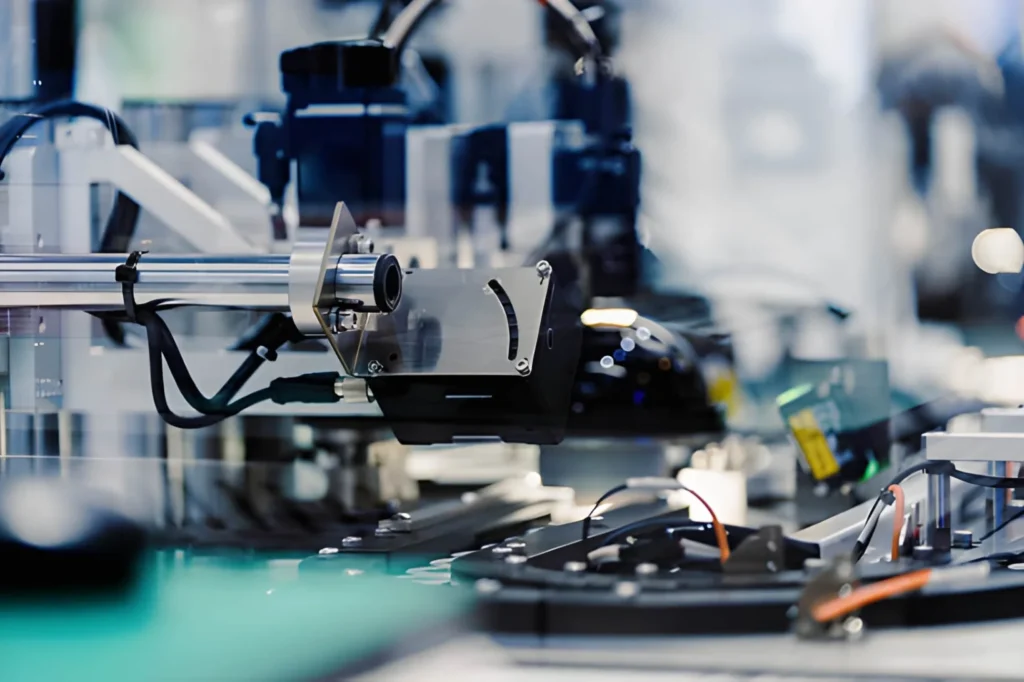
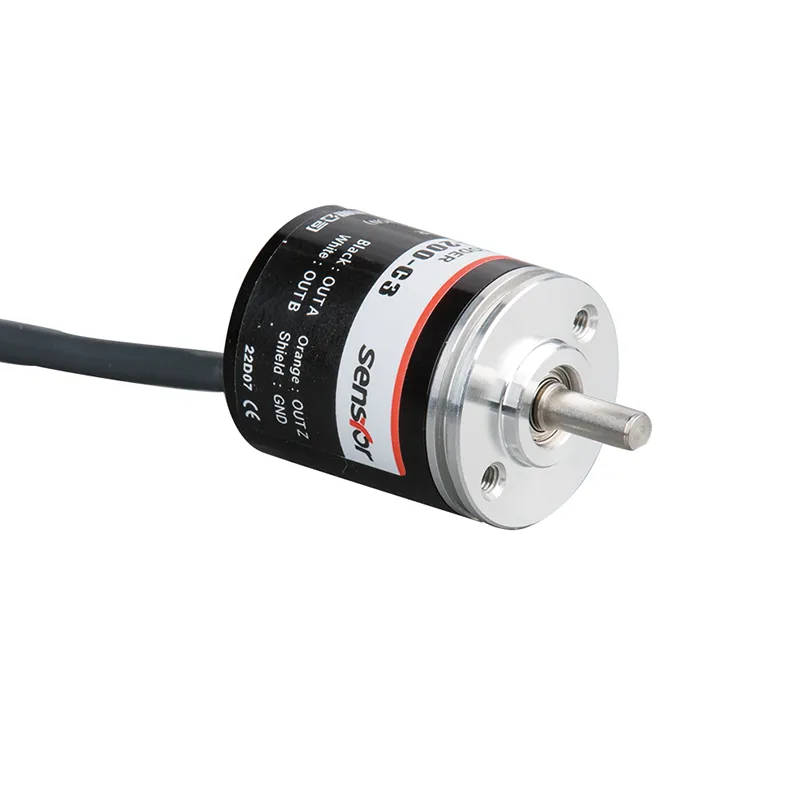
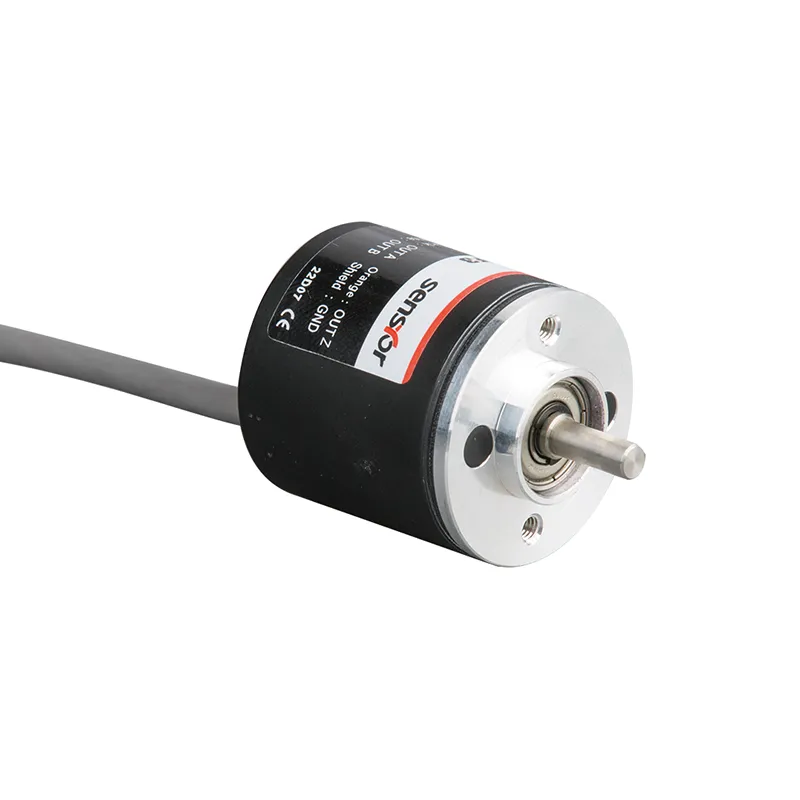
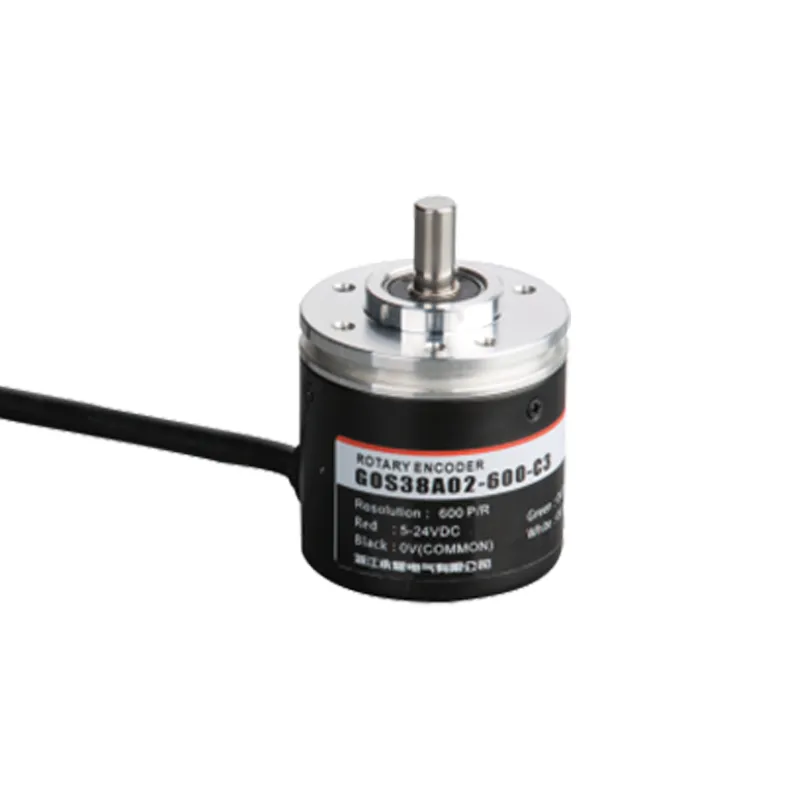
Absolute encoder providing precise position feedback in an automated production line.
Types of Absolute Encoder Technology
Single-Turn Absolute Encoder
A single-turn model measures position within one complete revolution.
Typical applications include:
Servo motors
Conveyor systems
Packaging equipment
Multi-Turn Absolute Encoder
A multi-turn encoder tracks multiple revolutions and maintains position data over extended motion ranges.
Common uses include:
Elevators
Cranes
Automated storage systems
Key Features of an Absolute Encoder
Modern encoder solutions offer several advanced capabilities:
High Position Accuracy
Precise position feedback helps improve machine control and product quality.
Power-Loss Position Retention
Position information remains available even after shutdowns.
Industrial Durability
Many models are designed to withstand:
Dust
Moisture
Shock
Vibration
Flexible Communication Interfaces
Available protocols include:
SSI
CANopen
EtherCAT
Modbus
PROFINET
Benefits of Using an Absolute Encoder
Improved Productivity
Accurate positioning reduces errors and increases production efficiency.
Reduced Downtime
Machines can resume operation immediately after power restoration.
Enhanced Safety
Reliable position information helps prevent unexpected machine movement.
Lower Maintenance Costs
Long service life minimizes replacement frequency and maintenance requirements.
Industrial Applications of Absolute Encoder Systems
Absolute encoder technology is widely used across many industries.
Manufacturing Automation
Production lines use encoder feedback to maintain precise motion control.
Robotics
Robotic arms require accurate positioning to perform complex tasks.
Renewable Energy
Wind turbines use encoder systems for blade positioning and monitoring.
Material Handling
Automated warehouses depend on accurate position feedback for efficient operation.
These authoritative resources provide valuable insights into encoder technology and industrial motion control.
Future Trends in Encoder Technology
The next generation of encoder solutions is expected to include:
Smart diagnostics
Predictive maintenance
Industrial IoT connectivity
Enhanced cybersecurity
Compact high-resolution designs
These innovations will help manufacturers achieve greater efficiency and reliability.
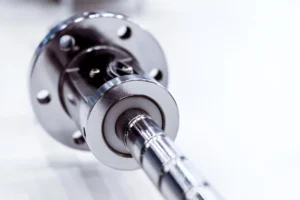
Industrial absolute encoder designed for demanding motion control environments.
Frequently Asked Questions
What is the difference between an absolute encoder and an incremental encoder?
An absolute encoder provides a unique position value at all times, while incremental models only track relative movement.
Can an absolute encoder retain position after power loss?
Yes. This is one of its primary advantages.
Where are absolute encoders commonly used?
They are widely used in robotics, packaging, automation, material handling, and renewable energy systems.
How accurate is an absolute encoder?
Accuracy depends on resolution and design, but modern models provide extremely precise position feedback.
What communication protocols are available?
Common options include SSI, EtherCAT, CANopen, PROFINET, and Modbus.
How long does an absolute encoder last?
With proper installation and maintenance, industrial models often provide many years of reliable operation.
Conclusion
An absolute encoder is a critical component for modern automation systems. Its ability to provide precise position information without requiring re-homing makes it a preferred choice for demanding industrial applications.
By selecting the right encoder solution and following best installation practices, businesses can improve productivity, reduce downtime, and achieve higher operational efficiency. For industrial-grade solutions, visit SensyorCoder’s product catalog at https://sensyorcoder.net/products/.
Table of Contents Introduction to Incremental Rotary Encoder Incremental rotary encoder technology is widely used in modern industrial automation systems for accurate motion control and speed feedback. An incremental rotary encoder converts rotational movement into pulse signals that can be processed by controllers and PLC systems. The incremental rotary encoder is commonly found in CNC […]
Table of Contents Introduction to 38mm slim rotary encoder 10000ppr Modern automation systems require higher accuracy, smaller installation space, and faster response speed. The 38mm slim rotary encoder 10000ppr is designed to meet these growing industrial demands by providing precise rotational measurement in a compact housing. With a diameter of only 38mm and a resolution […]
A rotary encoder for servo motor system applications provides feedback about rotational movement so a servo drive or controller can monitor information such as position, speed, and direction. Rotary encoders are widely considered in industrial motion-control applications involving servo motors, robotics, CNC equipment, packaging machines, textile machinery, conveyors, and automated production systems. A servo motor […]
We use cookies to enhance your browsing experience, serve personalised ads or content, and analyse our traffic. By clicking "Accept All", you consent to our use of cookies.