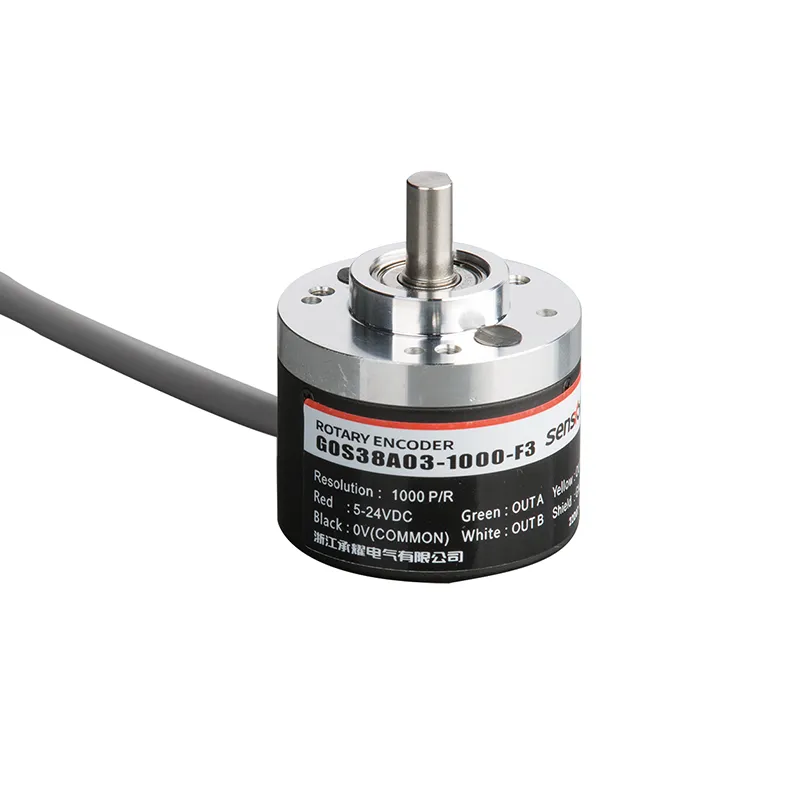
An industrial encoder is one of the most important sensing devices used in modern automation systems. It converts mechanical movement into electrical signals, allowing machines to accurately measure position, speed, direction, and displacement.
From manufacturing plants and robotics to packaging equipment and renewable energy systems, the industrial encoder plays a critical role in ensuring operational precision and efficiency.
As Industry 4.0 continues to transform manufacturing, demand for reliable industrial encoder solutions continues to increase across global industries.
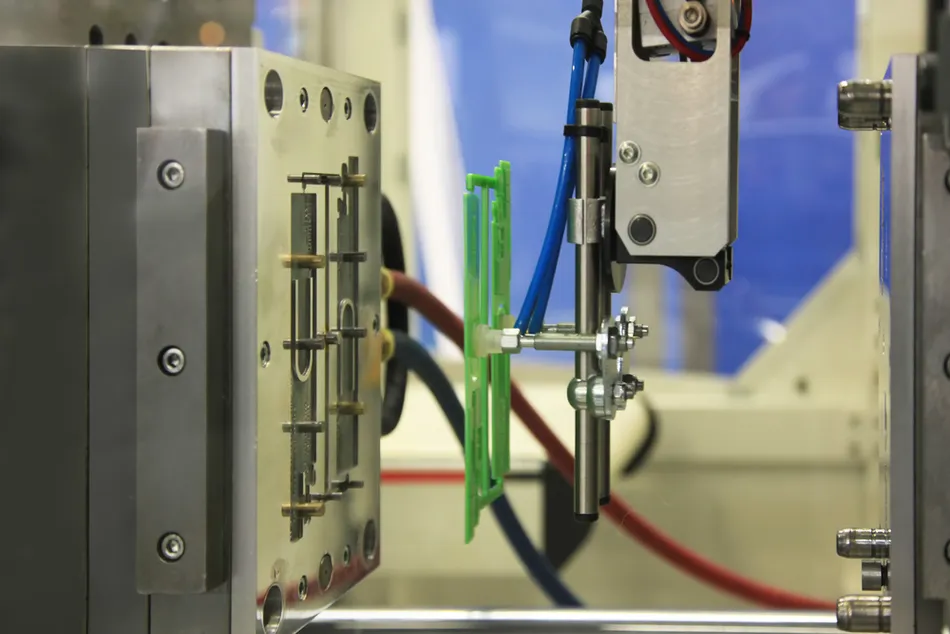
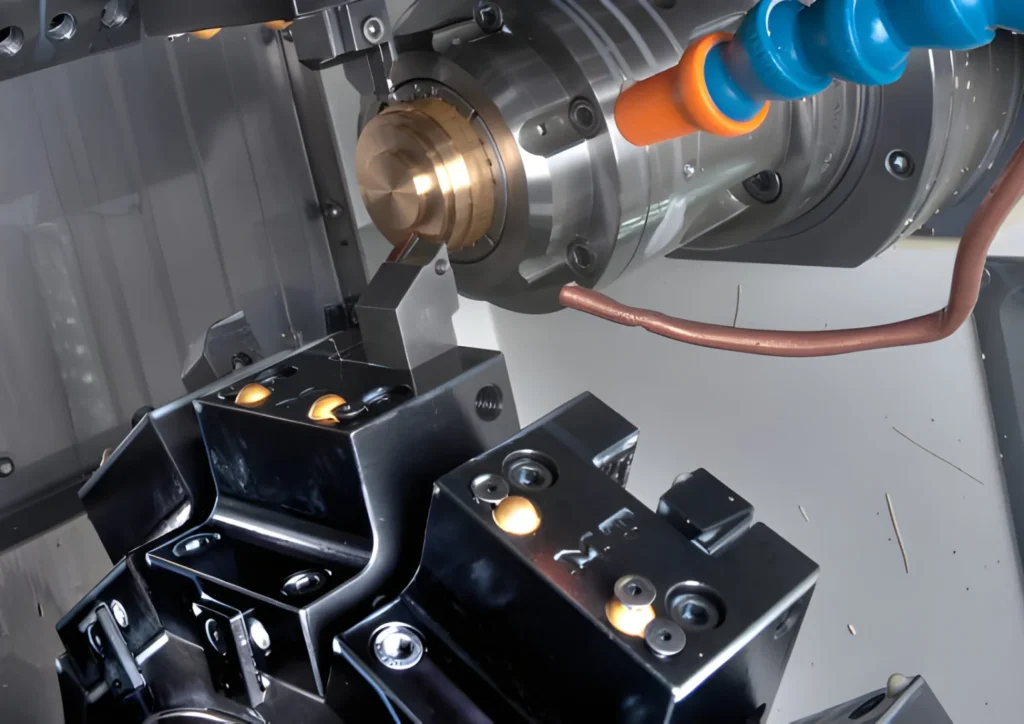
Industrial encoder providing accurate position and speed feedback in automated manufacturing equipment.
What Is an Industrial Encoder?
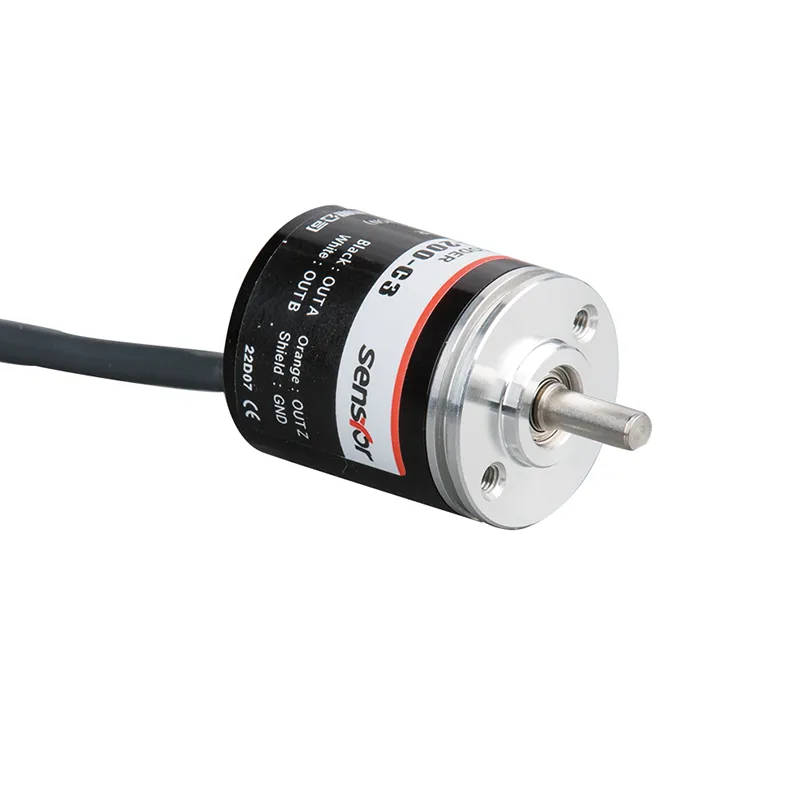
An industrial encoder is an electromechanical device that generates feedback signals based on rotary or linear movement.
These signals are transmitted to controllers such as PLCs, motion controllers, and industrial computers, enabling real-time monitoring and precise machine control.
Key functions include:
Position detection
Speed measurement
Direction sensing
Motion synchronization
Process automation
Industrial environments require durable sensors, making the industrial encoder an essential component in modern production systems.
Types of Industrial Encoder
Incremental Industrial Encoder
An incremental industrial encoder generates pulses during shaft rotation.
Benefits include:
Cost-effective solution
High-speed performance
Easy integration
Suitable for motor control applications
Common applications include conveyor systems, packaging machinery, and automated assembly lines.
Absolute Industrial Encoder
An absolute industrial encoder provides a unique position value for every shaft location.
Advantages include:
Position retention after power loss
Higher accuracy
Reduced system restart time
Enhanced reliability
These devices are commonly used in robotics, cranes, and precision manufacturing equipment.
Optical Industrial Encoder
Optical technology offers extremely high resolution and accuracy.
Applications include:
CNC machines
Semiconductor manufacturing
Laboratory automation
Precision inspection equipment
Magnetic Industrial Encoder
Magnetic industrial encoder designs perform exceptionally well in harsh environments.
Benefits include:
Dust resistance
Oil resistance
Shock resistance
Vibration tolerance
They are frequently used in mining, heavy equipment, and outdoor machinery.
Key Features of Industrial Encoder Systems
High Accuracy Industrial Encoder Performance
A quality industrial encoder delivers precise feedback required for advanced motion control applications.
Key performance factors include:
Resolution
Repeatability
Response speed
Signal stability
Industrial Encoder Durability
Industrial environments expose equipment to:
Dust
Moisture
Chemicals
Temperature fluctuations
Mechanical vibration
Modern industrial encoder solutions often feature IP65, IP67, or IP69K protection ratings.
Industrial Encoder Communication Interfaces
Today’s industrial systems support multiple communication protocols:
SSI
CANopen
EtherCAT
Modbus
PROFINET
Choosing the correct interface ensures seamless integration with existing automation systems.
Industrial Encoder Applications
Industrial Encoder in Manufacturing
Manufacturing facilities use industrial encoder technology to control:
Conveyor systems
Robotic arms
CNC machinery
Packaging equipment
Accurate feedback improves product quality and production efficiency.
Industrial Encoder in Robotics
Robotic systems rely on industrial encoder sensors for:
Joint positioning
Speed regulation
Path control
Motion synchronization
Without accurate encoder feedback, robotic precision would be significantly reduced.
Industrial Encoder in Renewable Energy
Wind turbines and solar tracking systems utilize industrial encoder devices to optimize energy generation.
Benefits include:
Improved efficiency
Better positioning accuracy
Reduced maintenance costs
Industrial Encoder in Material Handling
Warehouse automation increasingly depends on industrial encoder solutions for:
Automated guided vehicles (AGVs)
Lift systems
Sorting equipment
Storage retrieval systems
Benefits of Using Industrial Encoder Technology
Organizations benefit from industrial encoder implementation through:
Benefit
Impact
Higher Accuracy
Improved product quality
Reduced Downtime
Increased productivity
Better Automation
Enhanced operational efficiency
Longer Service Life
Lower maintenance costs
Real-Time Feedback
Faster decision-making
How to Select the Right Industrial Encoder
Choosing the appropriate industrial encoder requires consideration of:
Environmental Conditions
Evaluate:
Temperature range
Humidity levels
Dust exposure
Vibration intensity
Resolution Requirements
Determine the level of precision required for the application.
Mounting Configuration
Options include:
Solid shaft
Hollow shaft
Through-bore shaft
Communication Protocol
Ensure compatibility with existing automation infrastructure.
Industrial Encoder Maintenance Best Practices
To maximize lifespan:
Inspect mounting components regularly
Verify electrical connections
Monitor signal quality
Protect against contamination
Follow manufacturer maintenance guidelines
Proper maintenance helps ensure reliable industrial encoder performance for years.
Industrial Encoder Solutions from SensyorCoder
Businesses seeking reliable encoder technology can explore the comprehensive product portfolio available at:
These authoritative resources help engineers understand encoder selection, implementation, and performance optimization.
Frequently Asked Questions About Industrial Encoder
What does an industrial encoder do?
An industrial encoder converts mechanical movement into electronic signals for position, speed, and motion control applications.
What is the difference between incremental and absolute industrial encoder models?
Incremental encoders generate pulse outputs, while absolute encoders provide a unique position value even after power interruptions.
Where are industrial encoder devices commonly used?
Industrial encoder systems are widely used in manufacturing, robotics, packaging, renewable energy, and material handling industries.
How long does an industrial encoder last?
Service life depends on operating conditions, installation quality, and maintenance practices, but high-quality models often operate reliably for many years.
How do I choose the correct industrial encoder?
Consider environmental conditions, resolution requirements, mounting style, communication interface, and application-specific needs.
Conclusion
The industrial encoder remains a foundational technology for modern automation and motion control systems. Whether deployed in manufacturing, robotics, renewable energy, or logistics operations, a high-quality industrial encoder improves precision, efficiency, and long-term reliability.
For businesses looking for dependable encoder solutions, explore the complete range of products available at:
With the right industrial encoder solution, organizations can achieve greater productivity, improved machine performance, and stronger operational competitiveness.
Table of Contents What is Encoder for CNC Machine An encoder for CNC machine is a precision feedback device that converts mechanical motion into electrical signals for CNC control systems. It measures position, speed, and direction of machine components such as spindle motors, servo motors, and axis drives. Modern CNC systems rely heavily on encoder […]
Table of Contents Introduction China encoder supplier companies have become important partners in the global automation industry. A professional China encoder supplier provides high-quality rotary encoders, motion feedback devices, and industrial automation solutions for manufacturing, robotics, CNC machinery, and packaging systems. Today, businesses worldwide choose a reliable China encoder supplier because of competitive pricing, advanced […]
In the fast-paced world of industrial automation and precision engineering, one key component often determines the accuracy of motion systems — the incremental optical encoder. Whether you’re designing factory robots, upgrading conveyor systems, or maintaining CNC machinery, encoders are essential for translating mechanical motion into reliable digital feedback. But what exactly is an incremental optical encoder, […]
We use cookies to enhance your browsing experience, serve personalised ads or content, and analyse our traffic. By clicking "Accept All", you consent to our use of cookies.