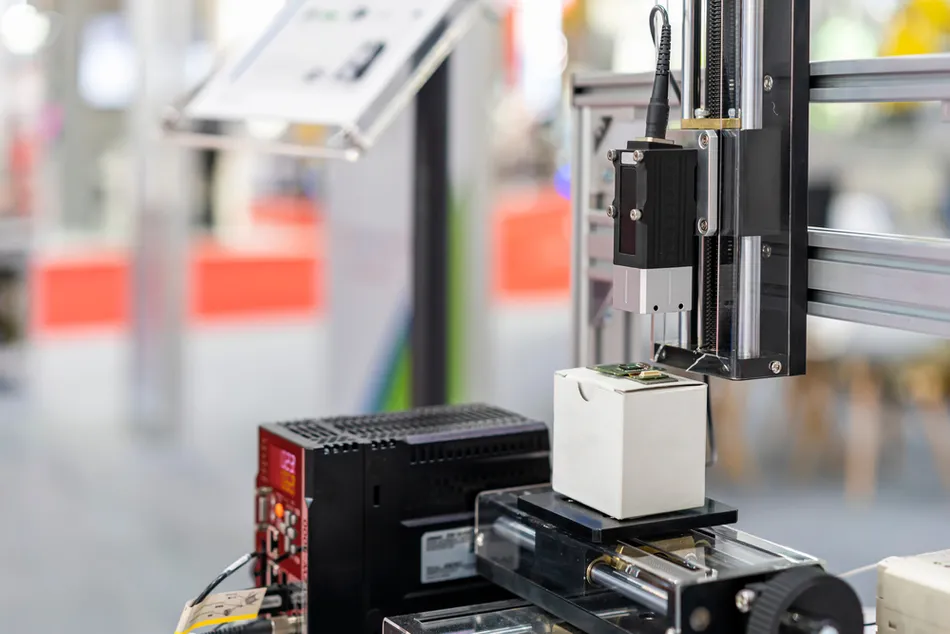
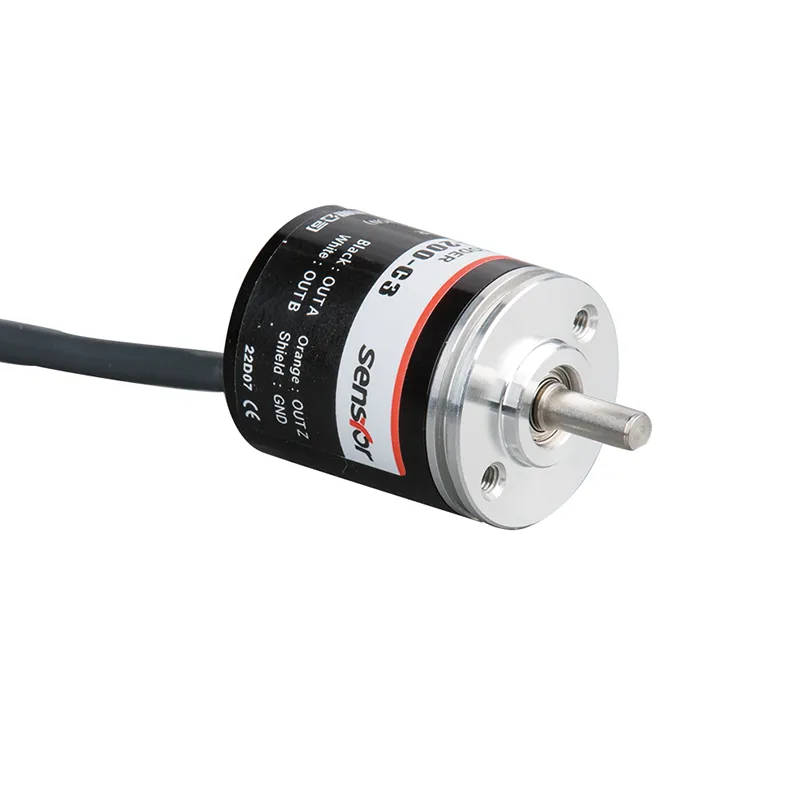
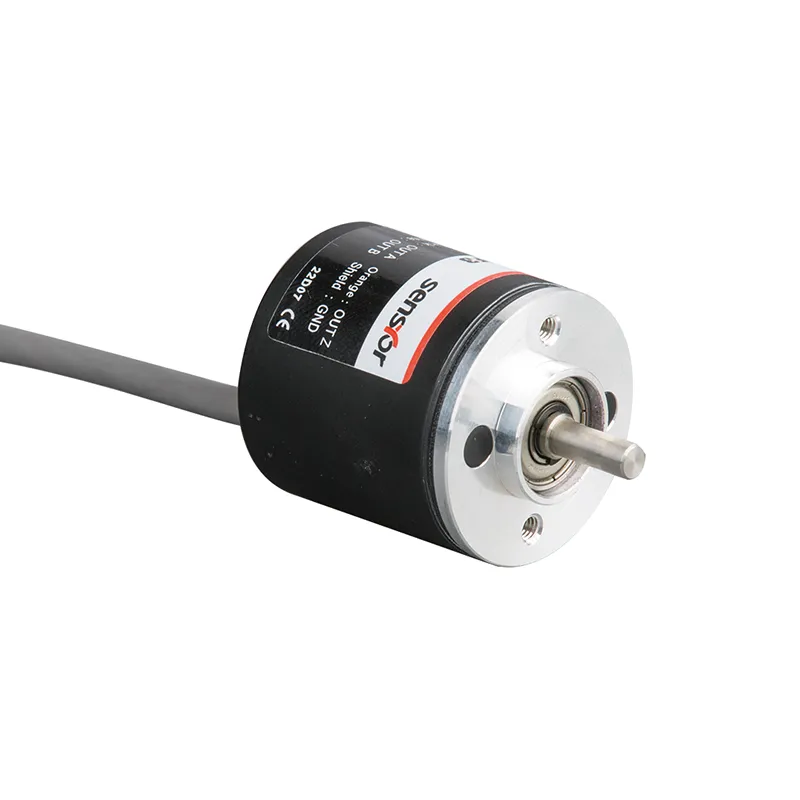
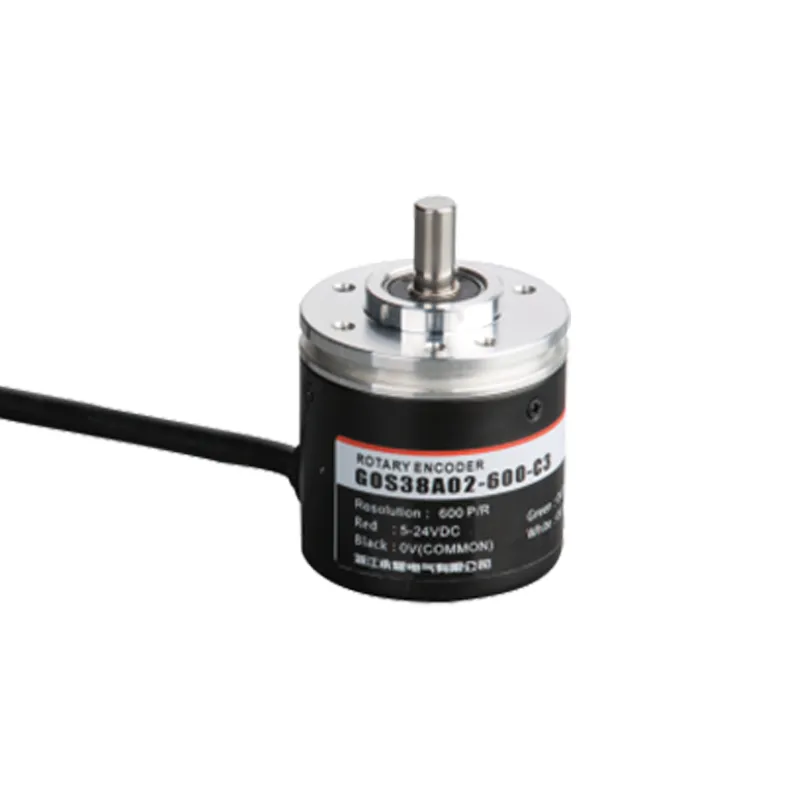
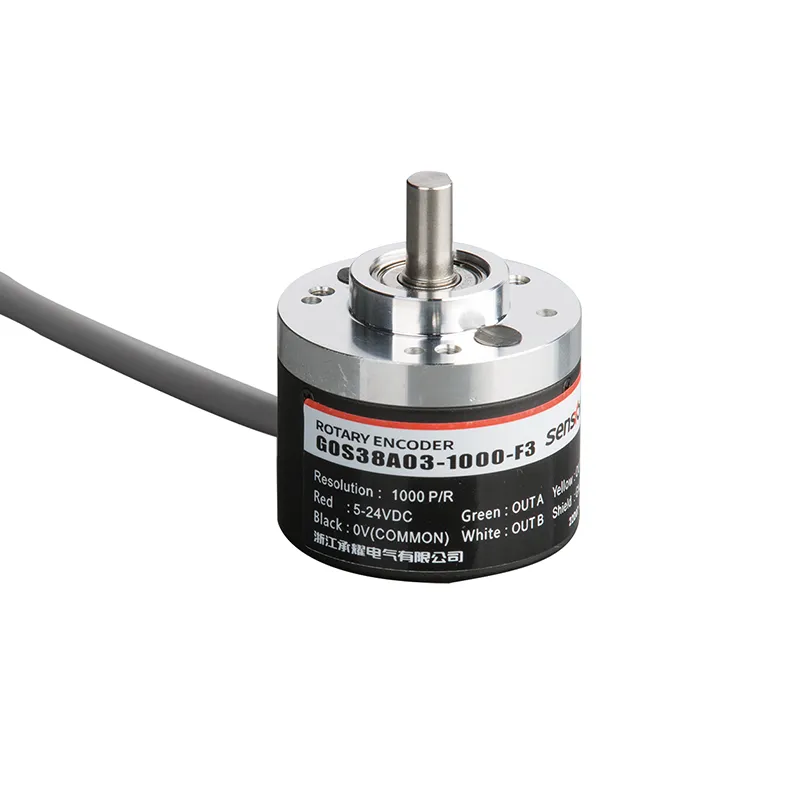
Through-hole encoder technology is widely used in industrial automation systems that require accurate motion feedback and easy shaft installation. A through-hole encoder is designed with a hollow center, allowing the motor shaft to pass directly through the encoder body. This structure makes the through-hole encoder ideal for compact industrial machinery and high-performance automation equipment.
Compared with traditional shaft encoders, the through-hole encoder offers easier mounting, improved flexibility, and reliable performance in demanding environments. Many industries rely on the through-hole encoder for precise speed monitoring, positioning, and motion control.
Through-hole encoder mounted on motor shaft in industrial automation equipment
What is a Through-Hole Encoder
A through-hole encoder is a rotary feedback device that converts mechanical motion into electrical signals. The hollow shaft design of the through-hole encoder allows direct installation onto rotating shafts without requiring additional shaft couplings.
The through-hole encoder is commonly used in servo motors, conveyor systems, robotics, and packaging machinery. Because the through-hole encoder reduces installation complexity, it helps improve system reliability and saves maintenance time.
Key Features of Through-Hole Encoder
High Precision Through-Hole Encoder Performance
A through-hole encoder provides accurate position and speed feedback for industrial systems.
Compact Through-Hole Encoder Design
The compact structure of a through-hole encoder makes it suitable for space-limited applications.
Durable Through-Hole Encoder Construction
Most through-hole encoder models are designed to resist vibration, dust, and industrial shock.
Flexible Through-Hole Encoder Installation
The hollow shaft design simplifies installation and improves mechanical compatibility.
Types of Through-Hole Encoder
Incremental Through-Hole Encoder
An incremental through-hole encoder generates pulse signals to monitor rotational speed and direction.
High-Speed Through-Hole Encoder Systems
High-speed through-hole encoder systems are widely used in CNC and robotics applications.
Absolute Through-Hole Encoder
An absolute through-hole encoder provides exact position data even after power interruption.
Applications of Through-Hole Encoder
Through-Hole Encoder in Servo Motors
A through-hole encoder is commonly integrated with servo motor systems for accurate motion feedback.
Through-Hole Encoder in Robotics
Robotic arms use through-hole encoder technology to improve movement precision.
Through-Hole Encoder in Conveyor Systems
The through-hole encoder helps synchronize conveyor speed and positioning.
Through-Hole Encoder in Packaging Machinery
Packaging systems rely on through-hole encoder feedback for accurate automation control.
Through-hole encoder delivering accurate feedback in servo-driven automation systems
Benefits of Through-Hole Encoder
Using a through-hole encoder provides several advantages:
Easy shaft installation
High-precision signal output
Compact industrial design
Reduced maintenance requirements
Stable long-term operation
Improved automation efficiency
A through-hole encoder is ideal for industrial systems requiring reliable motion control and flexible installation.
These authoritative resources improve E-E-A-T signals and technical credibility.
Through-Hole Encoder in Smart Manufacturing
Modern smart factories increasingly use through-hole encoder systems to improve automation accuracy and machine efficiency. The through-hole encoder supports precise motion control and real-time monitoring in Industry 4.0 environments.
As industrial automation continues to evolve, the demand for high-performance through-hole encoder solutions will continue to grow.
FAQs About Through-Hole Encoder
What is a through-hole encoder used for?
A through-hole encoder is used for speed, direction, and position feedback in industrial automation systems.
What is the advantage of a through-hole encoder?
The hollow shaft design allows easier installation and flexible motor integration.
Is a through-hole encoder suitable for servo motors?
Yes, a through-hole encoder is widely used in servo motor systems.
A through-hole encoder is an essential component in modern automation systems. With its compact hollow shaft design, reliable performance, and precise feedback capability, the through-hole encoder is widely used across robotics, CNC machinery, servo systems, and conveyor automation.
Choosing the right through-hole encoder improves efficiency, reduces maintenance, and enhances industrial productivity.
Table of Contents What is an Encoder for Robotics An encoder for robotics is a device that converts mechanical motion into electrical signals, enabling precise monitoring of position, speed, and direction. Robotics systems rely heavily on encoder feedback to perform accurate movements in automation, assembly, inspection, and material handling tasks. Encoders can be incremental or […]
📊 Comprehensive Outline for “high resolution encoder” Heading Level Topic H1 High Resolution Encoder: 17 Powerful Insights You Must Know for Precision Control H2 Introduction to High Resolution Encoder H3 What is a High Resolution Encoder? H3 Why High Resolution Matters H2 Working Principle of High Resolution Encoder H3 Basic Operation Mechanism H4 Signal Generation […]
Introduction to 50mm Encoder A 50mm encoder is an essential device used in industrial automation systems to measure position, speed, rotation, and movement with high accuracy. Industries rely on this compact yet powerful component to improve machine control, production efficiency, and operational reliability. Whether used in robotics, CNC machinery, conveyor systems, or motor control, a […]
We use cookies to enhance your browsing experience, serve personalised ads or content, and analyse our traffic. By clicking "Accept All", you consent to our use of cookies.