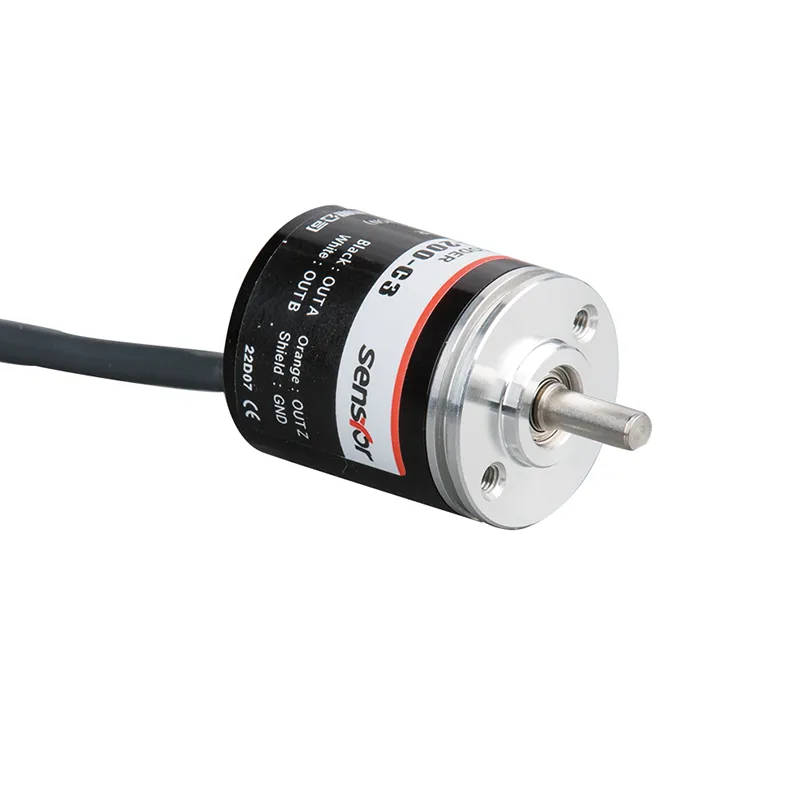
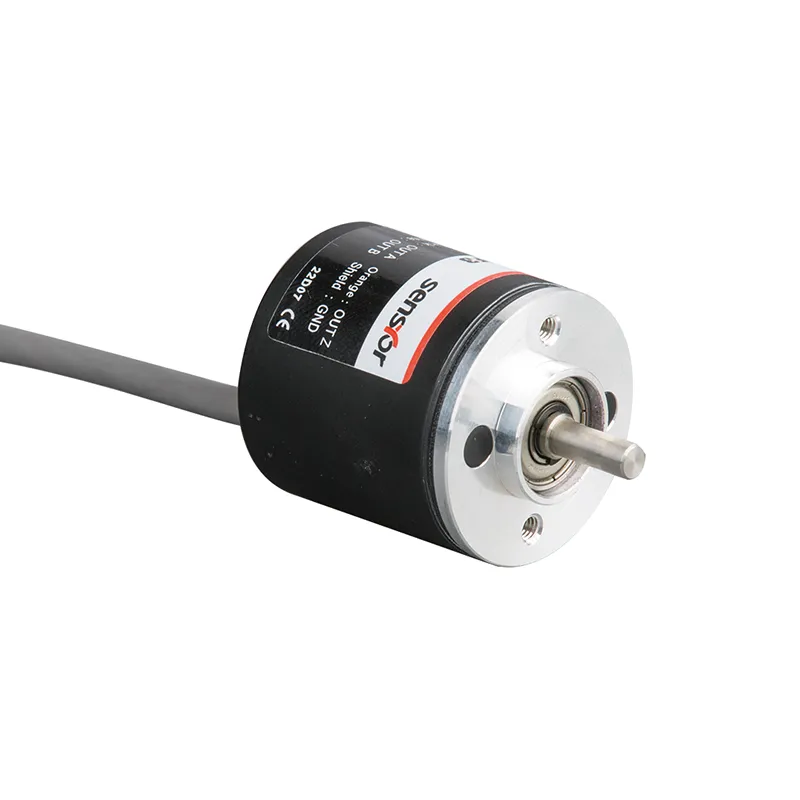
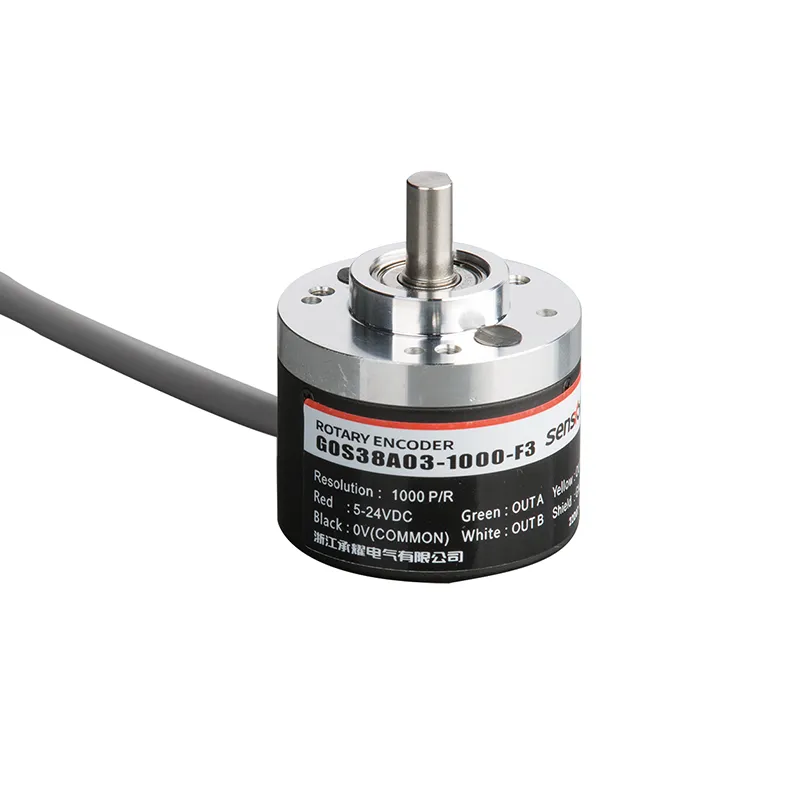
Hollow shaft encoder technology is widely used in industrial automation systems where precise motion control and compact installation are essential. A hollow shaft encoder is designed with a center bore that allows direct mounting onto a motor shaft or rotating equipment without additional coupling components.
Compared with traditional shaft encoders, a hollow shaft encoder simplifies installation while improving alignment accuracy and reducing mechanical wear. Because of these advantages, the hollow shaft encoder has become a preferred solution in robotics, conveyor systems, CNC machinery, and servo motor applications.
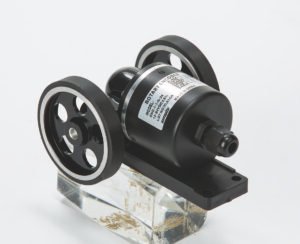
Hollow shaft encoder mounted directly on industrial motor shaft for precision motion control
What Is a Hollow Shaft Encoder
A hollow shaft encoder is a rotary feedback device that converts rotational movement into electrical signals. Unlike solid shaft designs, the hollow shaft encoder includes an open center bore that fits directly over a rotating shaft.
The compact structure of a hollow shaft encoder reduces installation space requirements and minimizes mechanical complexity. A hollow shaft encoder is commonly used where high-speed rotation and accurate positioning are required.
Key Features of Hollow Shaft Encoder
The hollow shaft encoder offers several important advantages for industrial systems.
High Precision Hollow Shaft Encoder Feedback
A hollow shaft encoder provides accurate speed and position data for automation systems.
Compact Hollow Shaft Encoder Design
The compact structure of a hollow shaft encoder helps save installation space.
Durable Hollow Shaft Encoder Construction
A hollow shaft encoder performs reliably in harsh industrial environments with vibration and dust exposure.
Flexible Hollow Shaft Encoder Mounting
The direct mounting capability of a hollow shaft encoder simplifies assembly and maintenance.
Types of Hollow Shaft Encoder
Incremental Hollow Shaft Encoder
An incremental hollow shaft encoder generates pulse signals to monitor motion and speed.
High-Speed Hollow Shaft Encoder Systems
High-speed hollow shaft encoder models are suitable for CNC machinery and servo systems.
Absolute Hollow Shaft Encoder
An absolute hollow shaft encoder provides exact position information even after power loss.
Applications of Hollow Shaft Encoder
The hollow shaft encoder is widely used in industrial automation applications.
Hollow Shaft Encoder in Robotics
A hollow shaft encoder improves robotic arm positioning and motion synchronization.
Hollow Shaft Encoder in Conveyor Systems
A hollow shaft encoder ensures accurate speed control in conveyor automation.
Hollow Shaft Encoder in CNC Machines
Precision machining systems use a hollow shaft encoder for accurate axis positioning.
Hollow Shaft Encoder in Servo Motors
Servo motor systems depend on a hollow shaft encoder for stable feedback control.
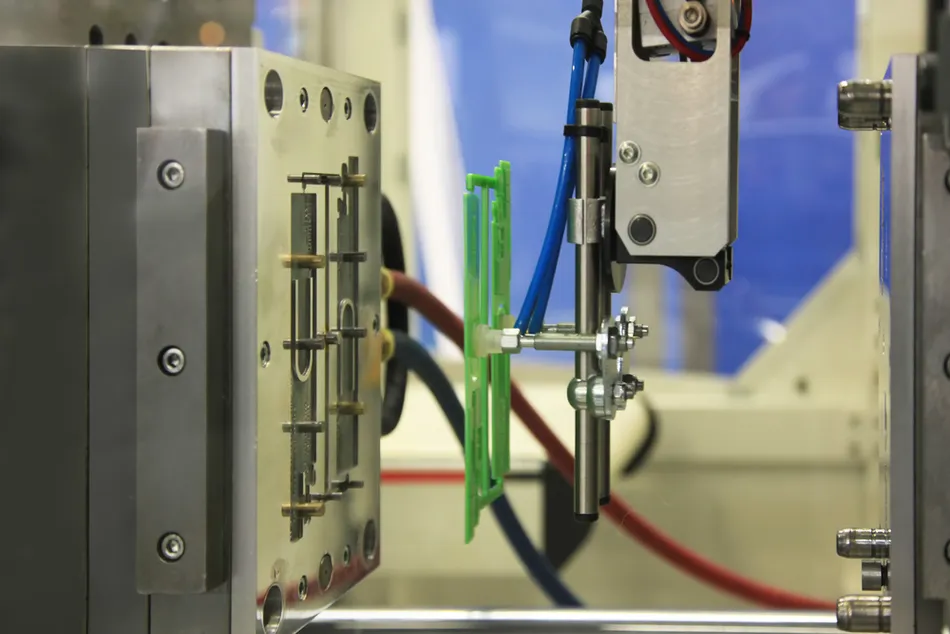
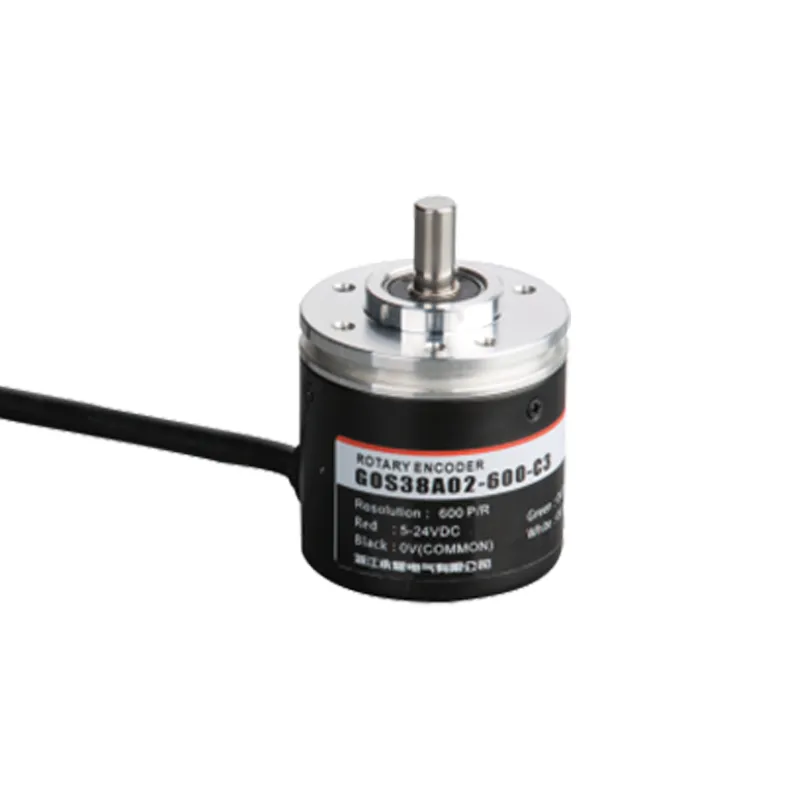
Hollow shaft encoder delivering stable motion feedback in CNC automation systems
Benefits of Hollow Shaft Encoder
Using a hollow shaft encoder provides several operational benefits:
Reduced installation complexity
High positioning accuracy
Compact and lightweight structure
Lower maintenance requirements
Stable signal output in industrial environments
A hollow shaft encoder helps improve efficiency and long-term reliability in automated systems.
How to Choose a Hollow Shaft Encoder
Selecting the right hollow shaft encoder depends on several factors:
Hollow Shaft Encoder Resolution Requirements
Choose a hollow shaft encoder with suitable pulse resolution for your application.
Hollow Shaft Encoder Environmental Protection
Industrial systems may require a hollow shaft encoder with IP65 or IP67 protection ratings.
Hollow Shaft Encoder Shaft Compatibility
Ensure the hollow shaft encoder bore diameter matches the motor shaft size.
Modern Industry 4.0 systems increasingly rely on the hollow shaft encoder for intelligent motion control and predictive maintenance. A hollow shaft encoder helps automation equipment maintain synchronization, improve productivity, and reduce operational downtime.
As smart factories continue evolving, the demand for advanced hollow shaft encoder solutions will continue to increase.
FAQs About Hollow Shaft Encoder
What is a hollow shaft encoder used for?
A hollow shaft encoder is used for measuring rotational speed, direction, and position in industrial automation systems.
Why choose a hollow shaft encoder?
A hollow shaft encoder simplifies installation and improves alignment accuracy.
Where is hollow shaft encoder commonly used?
A hollow shaft encoder is widely used in robotics, CNC machinery, conveyors, and servo systems.
Can a hollow shaft encoder work in harsh environments?
Yes, many hollow shaft encoder models are designed with industrial protection ratings for dust and vibration resistance.
A hollow shaft encoder is an essential component in modern industrial automation systems. With compact installation, accurate motion feedback, and durable construction, the hollow shaft encoder improves machine performance and operational reliability across many industries.
Table of Contents Introduction to High Precision Encoder High precision encoder technology is essential in modern industrial automation systems. A high precision encoder provides extremely accurate motion feedback, helping machines maintain precise speed, position, and direction control. Industries such as robotics, CNC machining, medical equipment, and semiconductor manufacturing rely on a high precision encoder to […]
Introduction to 5000ppr Encoder A 5000ppr encoder is a high-resolution rotary feedback device designed to provide accurate position, speed, and motion information in industrial applications. With 5000 pulses generated per revolution, this type of encoder delivers excellent measurement precision for machines requiring detailed motion control. Modern automation systems depend heavily on accurate feedback signals. Whether […]
Introduction to Industrial Encoder Technology An industrial encoder is one of the most important sensing devices used in modern automation systems. It converts mechanical movement into electrical signals, allowing machines to accurately measure position, speed, direction, and displacement. From manufacturing plants and robotics to packaging equipment and renewable energy systems, the industrial encoder plays a […]
We use cookies to enhance your browsing experience, serve personalised ads or content, and analyse our traffic. By clicking "Accept All", you consent to our use of cookies.