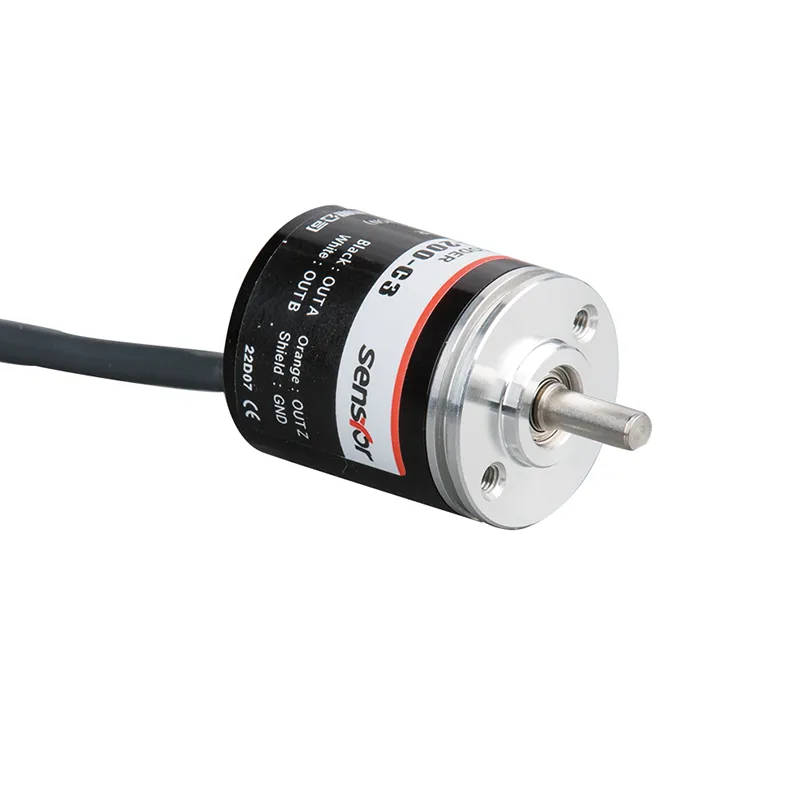
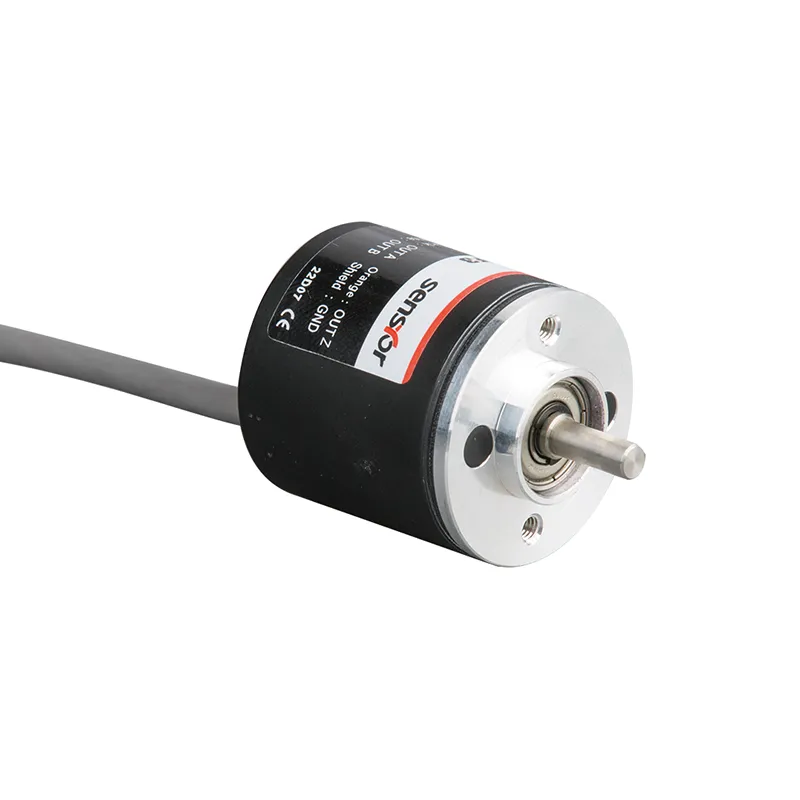
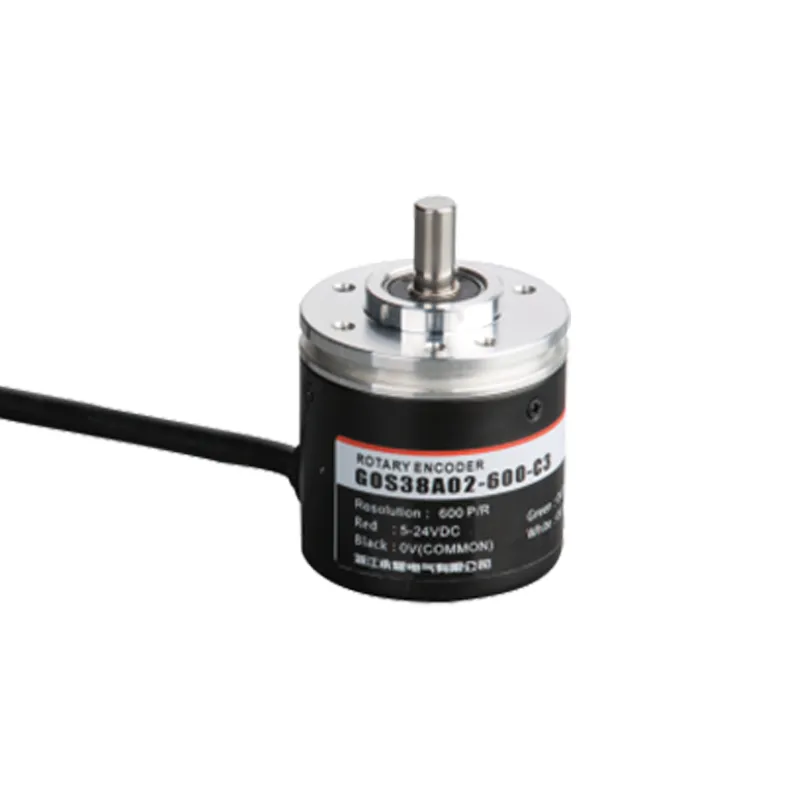
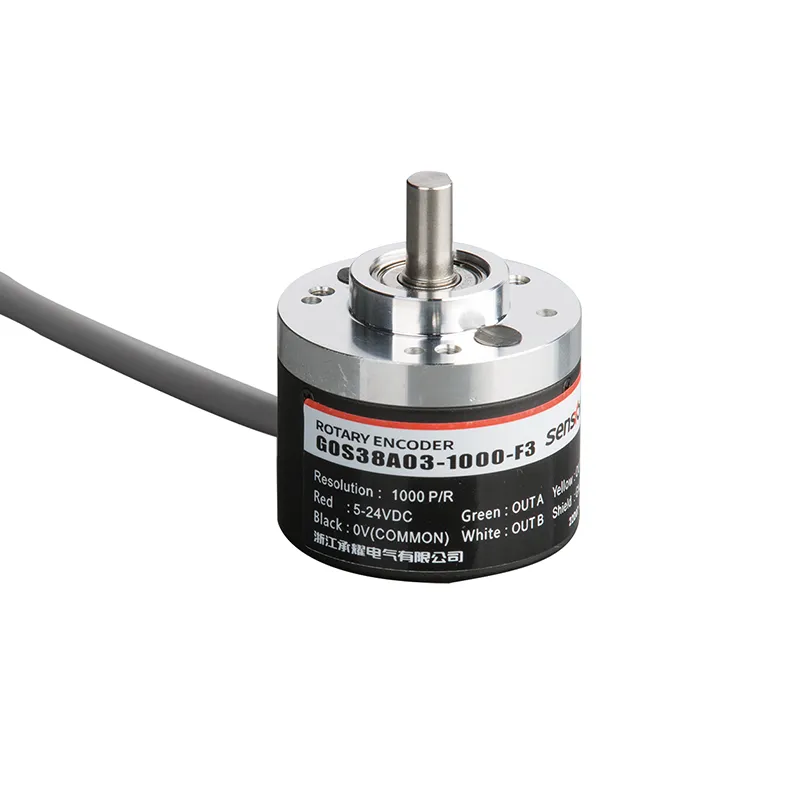
An encoder for servo system is one of the most important components in modern motion control technology. It provides real-time feedback regarding position, speed, and direction, allowing servo motors to operate with exceptional precision. Without an encoder for servo system, accurate positioning and synchronized motion would be difficult to achieve in industrial automation environments.
As industries continue to adopt smart manufacturing and Industry 4.0 technologies, the demand for reliable encoder for servo system solutions continues to grow. From robotics and CNC machinery to packaging equipment and semiconductor manufacturing, these devices play a critical role in ensuring operational efficiency.
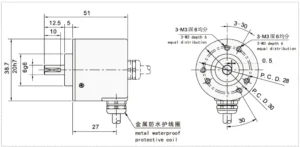
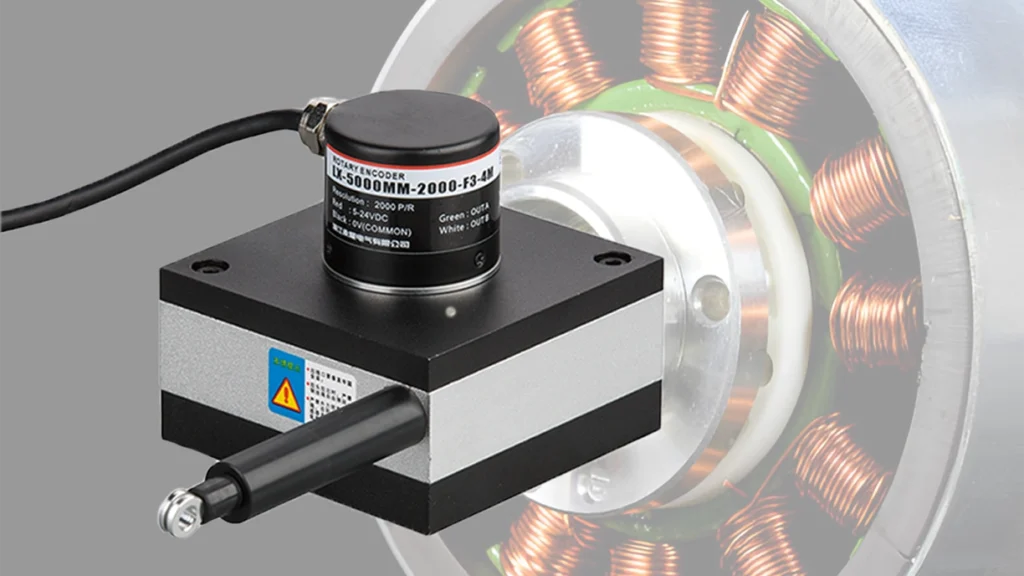
encoder for servo system installed on industrial automation motor
What Is an Encoder for Servo System?
An encoder for servo system is a sensing device that converts mechanical motion into electrical signals. These signals are transmitted to a servo drive or controller, which continuously monitors motor performance and makes adjustments to maintain accuracy.
The primary function of an encoder for servo system is to provide feedback that helps the control system determine:
Shaft position
Rotational speed
Direction of movement
Acceleration and deceleration rates
This feedback loop enables highly accurate motion control, which is essential in applications requiring precision and repeatability.
How an Encoder for Servo System Works
An encoder for servo system works by generating signals as the motor shaft rotates. The servo controller interprets these signals and compares actual motor movement with commanded movement.
The process typically involves:
Motion command issued by the controller
Servo motor begins rotation
Encoder for servo system detects shaft movement
Feedback signal transmitted to controller
Controller adjusts motor output if necessary
This closed-loop feedback mechanism allows servo systems to maintain exceptional accuracy even under varying loads.
Key Features of Encoder for Servo System
High Resolution Encoder for Servo System
A high-resolution encoder for servo system can generate thousands of pulses per revolution, enabling extremely accurate positioning.
Reliable Encoder for Servo System Feedback
Reliable feedback is essential for maintaining stable motor performance in demanding industrial environments.
Compact Encoder for Servo System Design
Many modern encoder for servo system products feature compact designs suitable for installation in limited spaces.
Durable Encoder for Servo System Construction
Industrial-grade housings protect encoder for servo system components from dust, moisture, vibration, and temperature fluctuations.
Types of Encoder for Servo System
Incremental Encoder for Servo System
An incremental encoder for servo system generates pulse outputs corresponding to motor movement. These devices are commonly used in applications requiring speed and relative position monitoring.
Benefits include:
Cost-effective implementation
High-speed operation
Easy integration
Absolute Encoder for Servo System
An absolute encoder for servo system provides a unique position value at every shaft location.
Advantages include:
Position retention after power loss
Improved system safety
Faster startup procedures
Single-Turn Encoder for Servo System
Measures position within one revolution of the shaft.
Multi-Turn Encoder for Servo System
Tracks position across multiple revolutions, making it suitable for complex motion-control systems.
Applications of Encoder for Servo System
Encoder for Servo System in Robotics
Robotic systems rely on encoder for servo system technology to achieve precise movement and repeatable positioning.
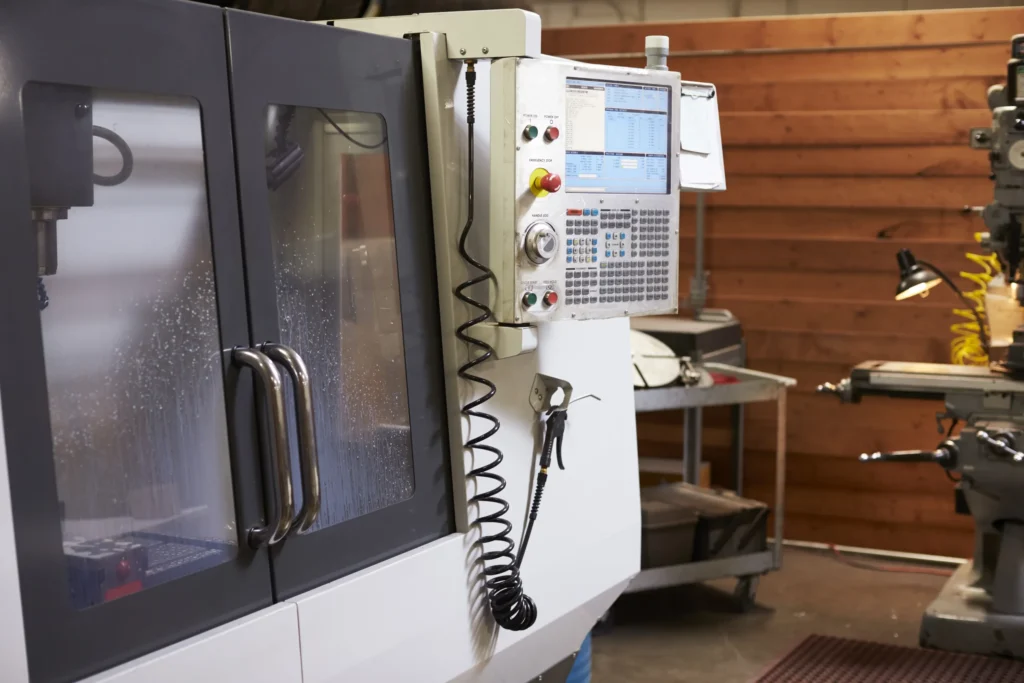
Encoder for Servo System in CNC Machines
CNC equipment requires accurate feedback to ensure high-quality machining operations.
Encoder for Servo System in Packaging Equipment
Packaging machines use encoder for servo system devices to synchronize conveyor movement and product handling.
Encoder for Servo System in Semiconductor Manufacturing
Semiconductor production environments demand ultra-precise motion control that only advanced feedback systems can provide.
Encoder for Servo System in Automated Warehouses
Modern logistics systems depend on encoder for servo system technology to improve efficiency and positioning accuracy.
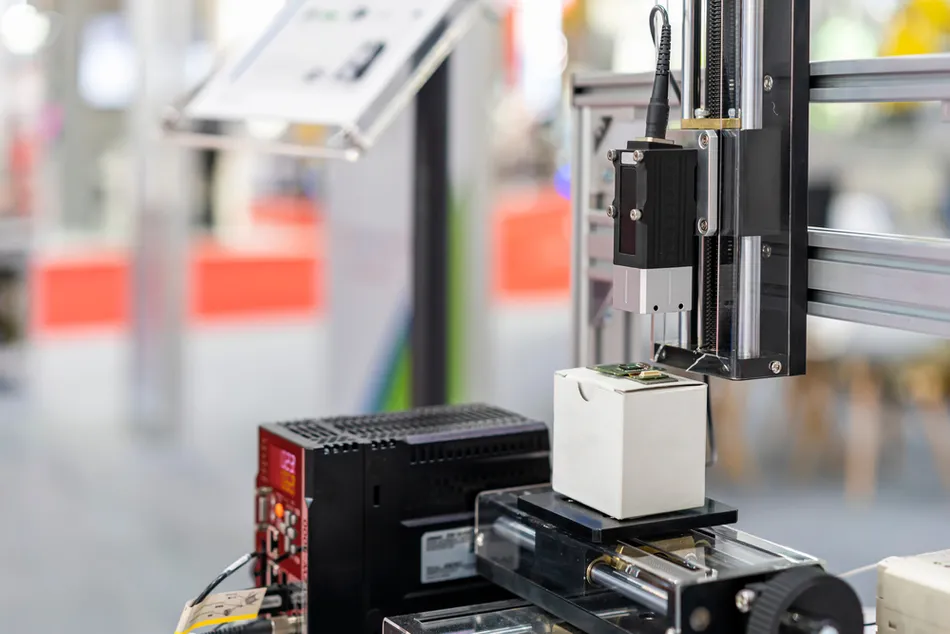
encoder for servo system used in precision robotic motion control
Benefits of Using Encoder for Servo System
Improved Positioning Accuracy
An encoder for servo system continuously monitors movement, ensuring accurate positioning.
Enhanced Productivity
Manufacturing operations benefit from faster cycle times and reduced errors.
Reduced Downtime
Reliable encoder for servo system feedback helps identify performance issues before failures occur.
Better Energy Efficiency
Accurate feedback enables motors to operate more efficiently.
Increased Equipment Lifespan
Proper motion control reduces mechanical stress and wear.
Encoder for Servo System vs Resolver
Feature
Encoder for Servo System
Resolver
Accuracy
High
Moderate
Resolution
Very High
Lower
Cost
Moderate
Higher
Installation
Easier
More Complex
Digital Output
Yes
No
While both technologies provide feedback, an encoder for servo system often offers superior resolution and easier integration.
How to Select the Best Encoder for Servo System
Determine Resolution Requirements
Higher-resolution encoder for servo system solutions provide better positioning accuracy.
Evaluate Environmental Conditions
Consider temperature, humidity, dust, and vibration levels.
Verify Communication Interfaces
Common interfaces include:
SSI
BiSS-C
CANopen
EtherCAT
PROFINET
Review Mounting Requirements
Ensure compatibility with your servo motor configuration.
Encoder for Servo System Installation Best Practices
To maximize performance:
Align shafts accurately
Avoid excessive radial loads
Use appropriate shielding for cables
Verify electrical grounding
Follow manufacturer specifications
Explore Professional Encoder Solutions
For industrial-grade encoder products and motion control solutions, visit:
An encoder for servo system is a critical component in modern automation and precision motion control. By providing accurate real-time feedback, it enables servo motors to achieve superior performance, efficiency, and reliability. Whether used in robotics, CNC machinery, packaging equipment, or advanced manufacturing systems, selecting the right encoder for servo system can significantly improve operational outcomes.
For professional encoder products and technical solutions, visit https://sensyorcoder.net/products/ and discover options designed to meet the demands of today’s industrial environments.
📊 Comprehensive Outline for “24V encoder” Heading Level Topic H1 24V Encoder: 15 Smart Ways to Boost Industrial Accuracy H2 Introduction to 24V Encoder H3 What is a 24V Encoder H3 Why Voltage Matters in Encoders H2 How a 24V Encoder Works H3 Signal Output and Power Supply H3 Electrical Characteristics H2 Types of 24V […]
Table of Contents Introduction to Through-Hole Encoder Through-hole encoder technology is widely used in industrial automation systems that require accurate motion feedback and easy shaft installation. A through-hole encoder is designed with a hollow center, allowing the motor shaft to pass directly through the encoder body. This structure makes the through-hole encoder ideal for compact […]
Table of Contents Introduction Omron encoder replacement solutions are widely used in industrial automation systems where accurate motion control and reliable feedback are essential. An effective Omron encoder replacement helps maintain machine performance while reducing downtime and replacement costs. Many manufacturers choose an Omron encoder replacement when upgrading older automation systems or replacing discontinued encoder […]
We use cookies to enhance your browsing experience, serve personalised ads or content, and analyse our traffic. By clicking "Accept All", you consent to our use of cookies.