A rotary encoder is one of the most important components in modern automation and motion control systems. This device converts rotational movement into electrical signals, enabling machines to monitor speed, direction, and position with exceptional precision.
Today, manufacturers across industries rely on advanced encoder technology to improve productivity, reduce downtime, and ensure accurate machine performance. Whether used in robotics, packaging equipment, conveyor systems, or CNC machinery, a reliable rotary encoder provides critical feedback that keeps operations running smoothly.
For businesses seeking high-performance industrial sensing solutions, SensyorCoder offers a comprehensive range of products:
A rotary encoder is an electromechanical sensor that measures rotational movement and converts it into digital or analog signals.
Unlike traditional measuring devices, modern industrial encoder solutions provide real-time feedback that can be processed by PLCs, controllers, and automation systems.
The primary functions include:
Position measurement
Speed monitoring
Direction detection
Motion control feedback
Process automation
By continuously tracking shaft movement, an encoder system helps industrial equipment operate with greater accuracy and efficiency.
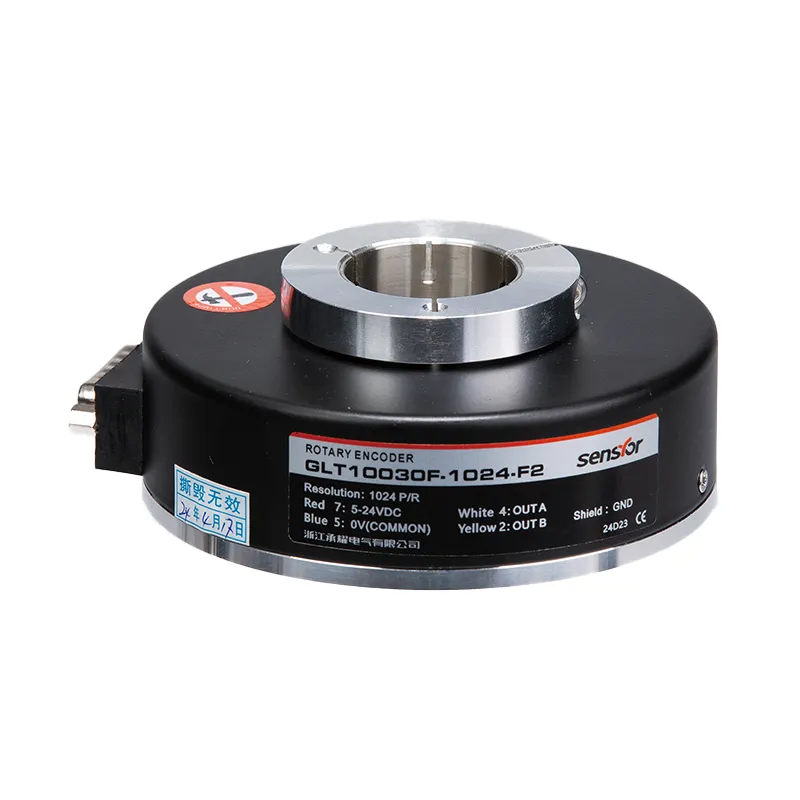
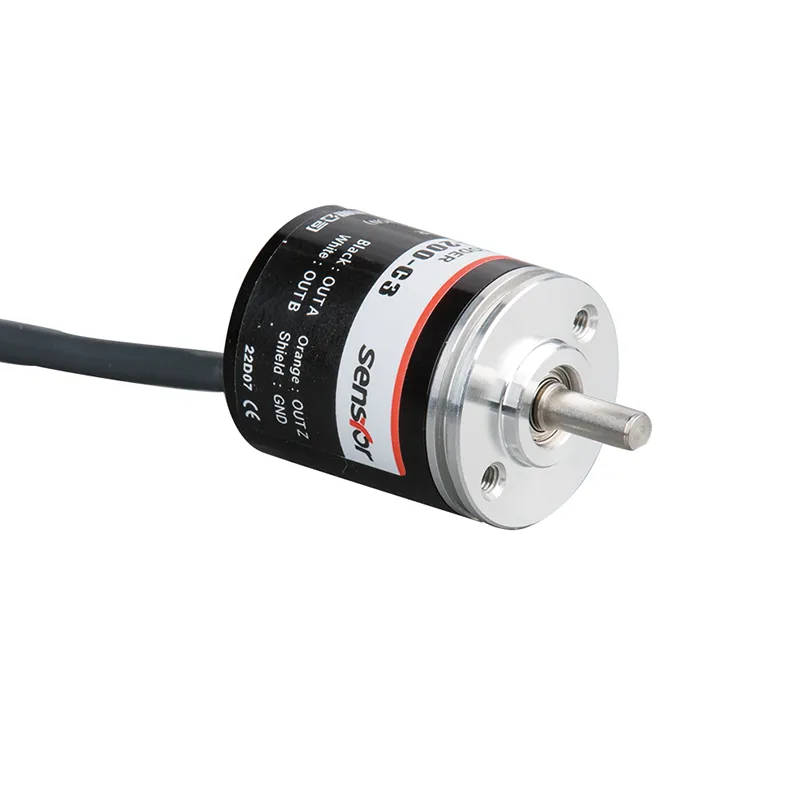
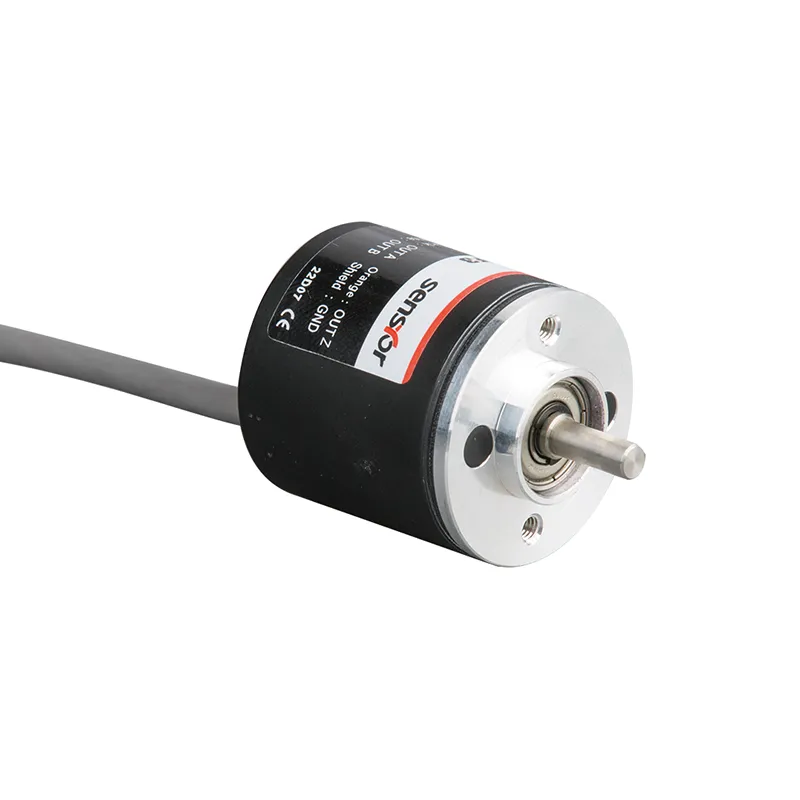
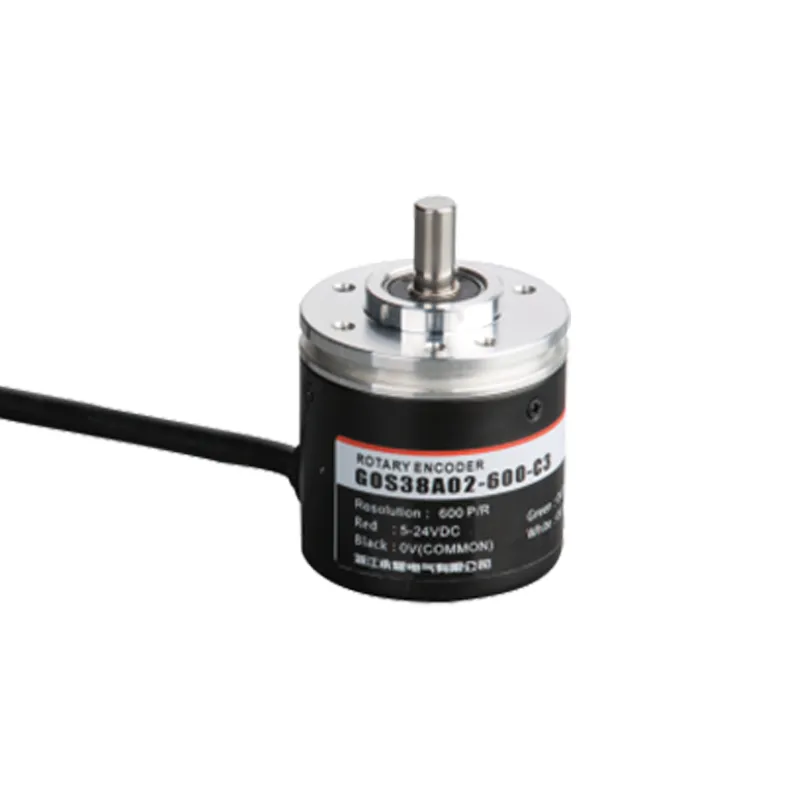
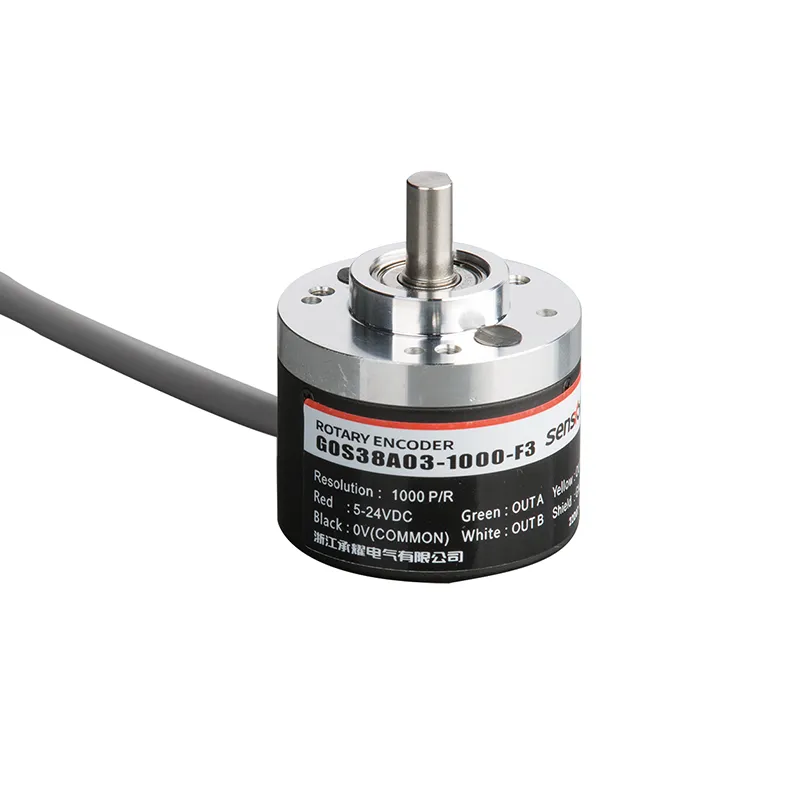
Industrial rotary encoder used for precise motion feedback
How a Rotary Encoder Works
The operating principle of a rotary encoder is straightforward.
When a shaft rotates, internal sensing elements detect movement and generate output signals. These signals are then interpreted by a controller to determine precise motion parameters.
Depending on the application, a motion feedback device can measure:
Rotational speed
Angular position
Travel distance
Direction of movement
This capability makes encoder technology indispensable in automated manufacturing environments.
Types of Rotary Encoder
Incremental Rotary Encoder
An incremental encoder generates a series of pulses as the shaft rotates.
Key advantages include:
Cost-effective operation
High-speed performance
Easy installation
Reliable signal output
These devices are commonly used in conveyors, packaging machinery, and motor control systems.
Absolute Rotary Encoder
An absolute encoder assigns a unique position value to every shaft location.
Benefits include:
Position retention after power loss
Enhanced safety
Superior positioning accuracy
Reduced recalibration requirements
These sensors are widely used in robotics, elevators, cranes, and advanced automation equipment.
Key Features of Rotary Encoder Systems
High Precision Measurement
A modern rotary position sensor delivers highly accurate position and speed information for demanding industrial applications.
Durable Construction
Industrial-grade models are designed to withstand vibration, dust, moisture, and temperature fluctuations.
Multiple Communication Interfaces
Many encoder systems support:
SSI
CANopen
EtherCAT
Modbus
Profibus
Incremental pulse output
Long Service Life
A quality automation encoder can provide years of reliable performance with minimal maintenance.
Rotary Encoder Applications Across Industries
Manufacturing Automation
Production facilities use encoder systems to improve positioning accuracy and process consistency.
Robotics
Robotic arms depend on position feedback sensors for smooth and precise movement.
Packaging Equipment
Packaging machinery uses motion sensing technology to synchronize operations and maximize efficiency.
Renewable Energy
Wind turbines utilize advanced sensing devices to monitor blade position and rotational speed.
Material Handling
Conveyor systems, cranes, and warehouse automation equipment rely on industrial encoder technology for accurate movement tracking.
Benefits of Using a Rotary Encoder
Improved Productivity
Accurate feedback helps machines operate efficiently and reduces production errors.
Better Motion Control
A reliable shaft encoder enables precise positioning and smoother machine operation.
Reduced Downtime
Modern encoder systems are engineered for durability and dependable performance.
Enhanced Product Quality
Accurate motion tracking improves consistency and manufacturing precision.
Lower Maintenance Costs
Industrial sensing devices require minimal maintenance when properly installed.
Improved Safety
Real-time feedback helps prevent positioning errors and mechanical failures.
Greater Automation Efficiency
Automation systems perform more effectively when supported by accurate motion data.
How to Choose the Right Rotary Encoder
Selecting the ideal rotary encoder depends on several important factors.
Environmental Conditions
Consider:
Temperature range
Humidity levels
Dust exposure
Vibration intensity
Resolution Requirements
Higher-resolution models provide more precise position information.
Mounting Style
Available options include:
Solid shaft
Hollow shaft
Through-bore shaft
Communication Protocol
Choose an interface compatible with your existing control architecture.
Installation and Maintenance Best Practices
To maximize performance and lifespan:
Ensure proper shaft alignment
Secure mounting hardware
Inspect electrical connections regularly
Protect the sensor from contamination
Follow manufacturer recommendations
Routine maintenance helps ensure long-term reliability and optimal operation.
Industrial Encoder Solutions from SensyorCoder
Organizations seeking dependable encoder products can explore the extensive product range available from SensyorCoder.
A rotary encoder plays a critical role in modern automation by providing accurate position, speed, and motion feedback. From manufacturing and robotics to renewable energy and logistics, encoder technology helps organizations improve efficiency, accuracy, and operational reliability.
By choosing the right industrial sensing solution and implementing proper maintenance practices, businesses can maximize performance while minimizing downtime. For high-quality industrial encoder products and technical support, visit:
Table of Contents PLC Encoder Introduction PLC encoder is a critical component in modern industrial automation systems. A PLC encoder provides real-time position, speed, and direction feedback directly to programmable logic controllers (PLC systems). The PLC encoder ensures that machines operate with high precision, stability, and efficiency. In industries such as robotics, CNC machining, packaging, […]
Table of Contents Introduction encoder for printing machinery is a critical component used to ensure precision, synchronization, and consistent output in modern printing systems. The encoder for printing machinery helps monitor speed, position, and direction, allowing printing equipment to maintain alignment and avoid errors. In high-speed printing environments, even a small misalignment can cause defects. […]
📊 Comprehensive Outline for “hollow shaft encoder” Heading Level Topic Subtopics H1 Hollow Shaft Encoder: 7 Powerful Insights You Must Know for Precision Motion Control Introduction H2 What is a Hollow Shaft Encoder? Definition, Basic Concept H3 How It Differs from Solid Shaft Encoders Structural Differences H4 Core Working Principle of Hollow Shaft Encoder Signal […]
We use cookies to enhance your browsing experience, serve personalised ads or content, and analyse our traffic. By clicking "Accept All", you consent to our use of cookies.