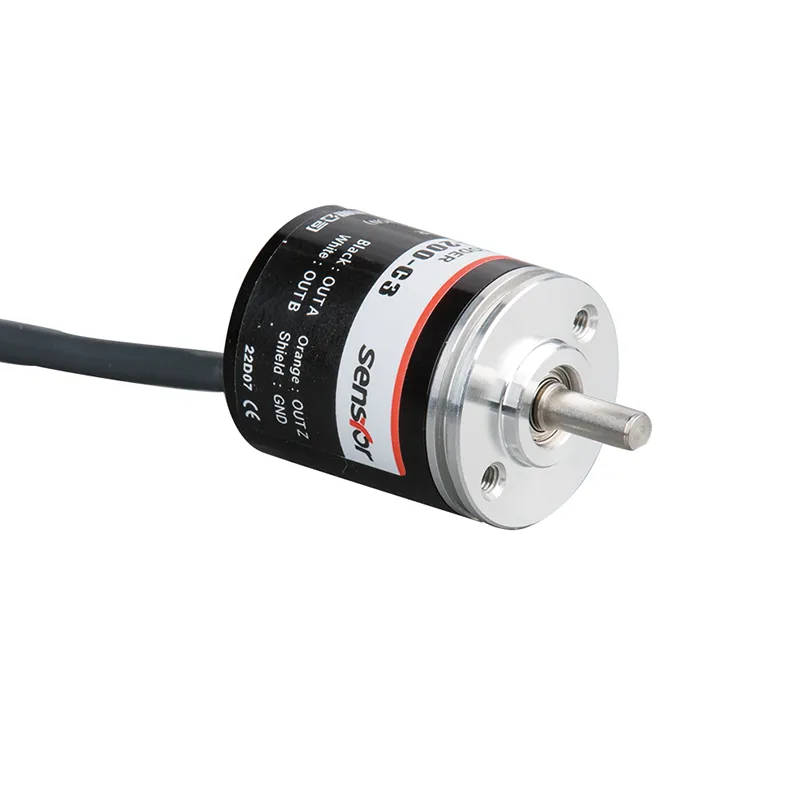
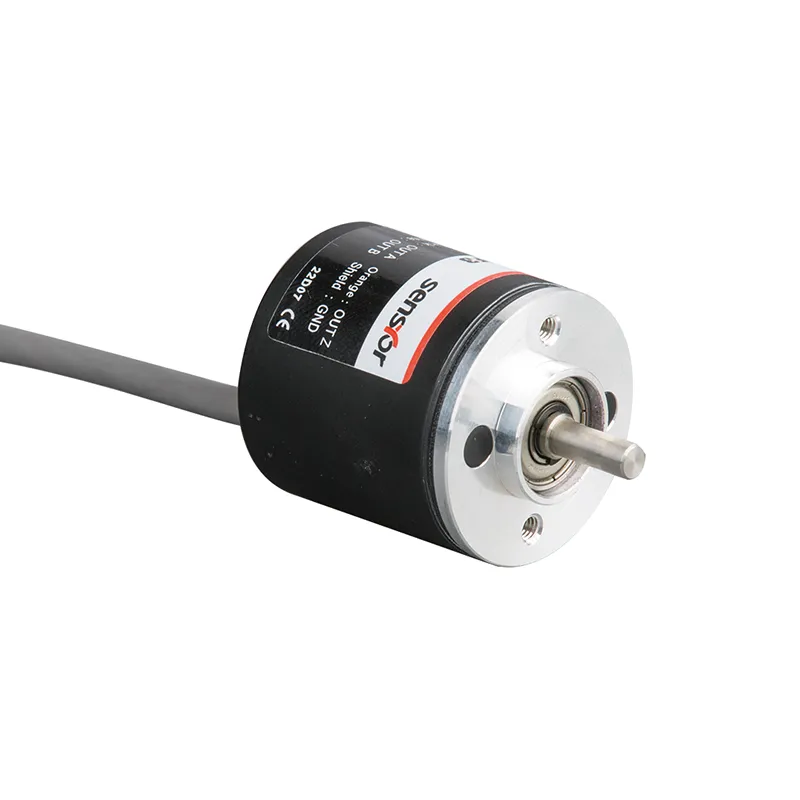
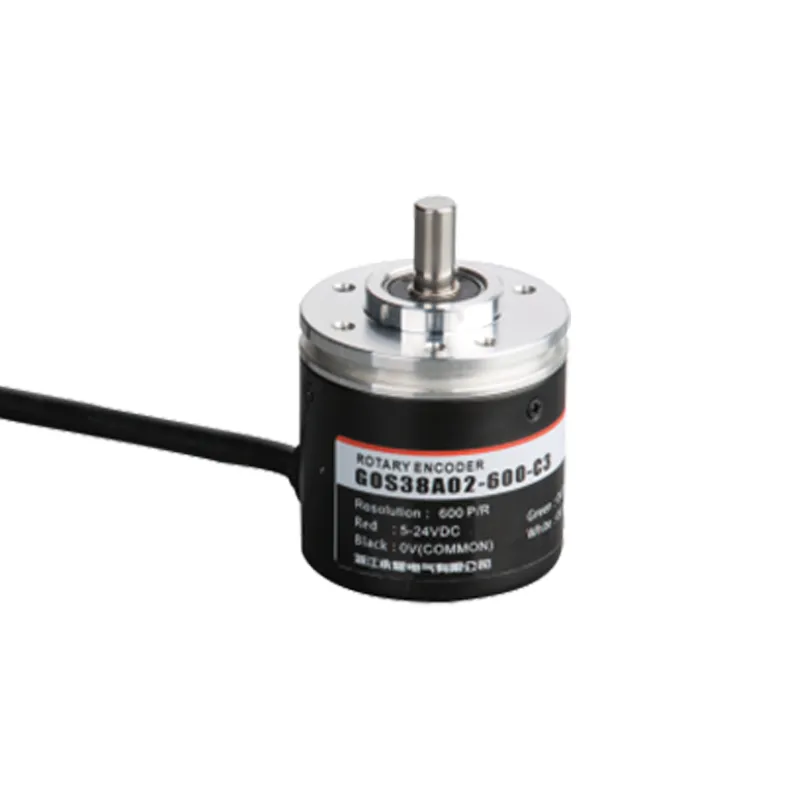
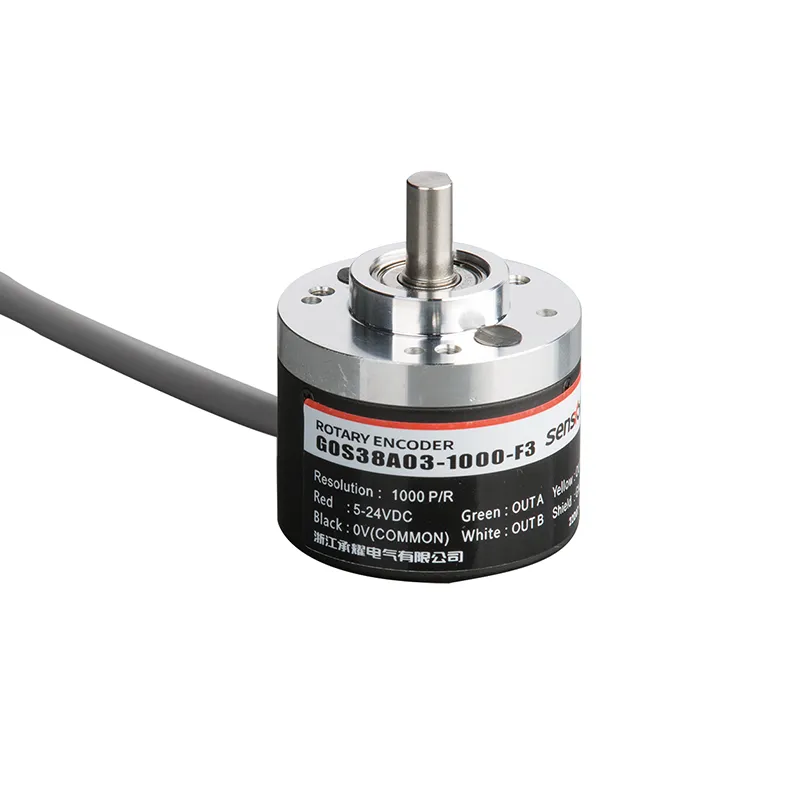
A long-distance encoder provides reliable position and speed feedback over extended cable distances in industrial automation systems.
What Is a Long-Distance Encoder?
A industrial encoder is a rotary or linear feedback device designed to transmit accurate position, speed, or displacement data over long cable distances without significant signal degradation. These encoders are widely used in industrial automation, heavy machinery, cranes, mining equipment, wind turbines, and large conveyor systems where sensors are located far from controllers.
Unlike standard encoders, a industrial encoder is optimized for stable communication over extended wiring, often using differential signal outputs such as RS-422, HTL, SSI, CANopen, or Ethernet-based industrial protocols to reduce electromagnetic interference (EMI) and maintain reliable data transmission.
Using a industrial encoder improves system reliability, minimizes downtime, and ensures precise motion control even in electrically noisy environments.
How Does a Long-Distance Encoder Work?
A rotary encoder detects rotational or linear movement and converts it into electrical signals that are transmitted to a programmable logic controller (PLC), servo drive, or motion controller.
To maintain signal integrity across long cable runs, these encoders typically incorporate:
Differential signal transmission
High-noise immunity
Shielded cable compatibility
Industrial communication protocols
Error detection and correction features
These technologies allow accurate position feedback over distances that may exceed several hundred meters, depending on the communication interface.
Types of Long-Distance Encoder
Incremental Long-Distance Encoder
Incremental encoders generate pulse signals corresponding to shaft movement. They are commonly used for speed measurement, direction detection, and motion synchronization.
Advantages include:
Cost-effective
High-speed response
Easy integration
Excellent for servo applications
Absolute Long-Distance Encoder
Absolute encoders provide a unique digital position value for every shaft angle, allowing the system to retain position information after power loss.
These encoders are ideal for:
CNC machinery
Robotics
Steel production
Automated warehouses
Wind power equipment
Magnetic Long-Distance Encoder
Magnetic technology provides superior resistance to:
Dust
Oil
Water
Vibration
Shock
They are often selected for outdoor or heavy-duty industrial environments.
Key Features of a Long-Distance Encoder
High Signal Reliability
Differential outputs significantly reduce electrical noise during long-distance transmission.
Excellent EMI Resistance
Industrial factories often contain motors, inverters, and welding equipment that generate electromagnetic interference. A rotary encoder maintains stable communication despite these conditions.
High Resolution
Modern encoders can provide thousands of pulses per revolution (PPR) or high-bit absolute resolution for precise positioning.
Rugged Construction
Industrial models feature:
Aluminum or stainless-steel housing
IP65 to IP67 protection
Shock resistance
Vibration resistance
Wide Temperature Range
Many models operate reliably from -40°C to +85°C, making them suitable for demanding industrial environments.
Benefits of Using a Long-Distance Encoder
Installing a position encoder offers several operational advantages.
Improved Motion Accuracy
Accurate feedback enhances machine positioning and synchronization.
Reduced Signal Loss
Long cable installations benefit from stable communication with minimal degradation.
Increased Productivity
Reliable feedback minimizes machine downtime and improves production efficiency.
Easy Integration
Most industrial controllers support standard encoder interfaces, simplifying system upgrades.
Lower Maintenance Costs
Durable construction reduces maintenance requirements and extends service life.
Applications of Long-Distance Encoder
A position encoder is commonly used in:
Industrial automation
Conveyor systems
Packaging machinery
Steel mills
Paper manufacturing
Wind turbines
Marine equipment
Mining machinery
Port cranes
Material handling systems
Textile machinery
Robotics
Its ability to maintain precise position feedback over extended cable lengths makes it indispensable in large-scale automation projects.
How to Choose the Right Long-Distance Encoder
Selecting the right position encoder depends on several technical considerations.
Communication Interface
Choose interfaces such as:
SSI
RS-422
HTL
CANopen
EtherCAT
PROFINET
based on your control system.
Resolution
Higher resolution provides greater positioning accuracy but may require higher controller processing capability.
Environmental Protection
Select an IP rating suitable for your operating environment.
Mounting Style
Available options include:
Solid shaft
Hollow shaft
Through-bore
Flange mounting
Cable Length Requirements
Verify the maximum supported transmission distance and use recommended shielded cables.
Recommended Long-Distance Encoder Solutions
If you are searching for reliable industrial encoder products, explore SensyorCoder’s encoder solutions:
Their product portfolio includes industrial rotary encoders designed for demanding automation environments, offering excellent durability, high precision, and reliable long-distance signal transmission.
For additional product categories, you can also internally link to your encoder product pages, application pages, technical support, and company profile to strengthen your website’s internal linking structure.
Industry Standards and Additional Resources
For best practices and technical standards related to industrial automation and encoders, consider these authoritative resources:
These DoFollow references provide valuable information on industrial communication protocols, automation standards, and motion control technologies.
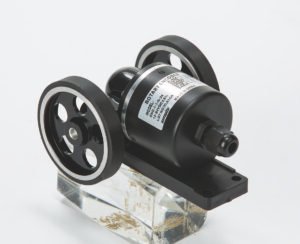
Industrial motion feedback device designed for harsh environments and high-precision motion control.
Frequently Asked Questions
What is a long-distance encoder?
A motion feedback device is an industrial sensor designed to transmit accurate position or speed data over extended cable distances while minimizing signal interference.
How far can a long-distance encoder transmit signals?
Transmission distance depends on the output interface, cable quality, and environmental conditions. Differential outputs generally support much longer distances than single-ended signals.
What industries use long-distance encoders?
Industries including manufacturing, mining, logistics, steel production, wind energy, and heavy equipment rely on motion feedback devices for precise motion feedback.
Can long-distance encoders operate in harsh environments?
Yes. Many models feature IP65–IP67 protection, shock resistance, vibration resistance, and wide operating temperature ranges.
Which output interface is best?
The best interface depends on your application. SSI, RS-422, EtherCAT, CANopen, and PROFINET are common choices for industrial automation.
Conclusion
A motion feedback device is an essential component for modern industrial automation systems that require reliable position feedback over extended cable distances. Its advanced communication capabilities, robust construction, and high precision make it suitable for demanding applications ranging from manufacturing and logistics to heavy industry and renewable energy.
By selecting the appropriate encoder based on communication protocol, resolution, environmental protection, and installation requirements, businesses can improve productivity, reduce downtime, and ensure long-term operational reliability. For high-quality industrial encoder solutions, visit https://sensyorcoder.net/products/ to explore products designed for precision, durability, and performance.
When working with motion control systems, you’ve probably encountered the term “PPR” in the specifications of an incremental rotary encoders. But what exactly does PPR mean? And why does it matter so much in applications like CNC machines, robotics, automation, and servo motors? In this post, we’ll dive deep into PPR (Pulses Per Revolution), explore how […]
📑 Comprehensive Outline of Incremental Encoder Heading Level Topic H1 Incremental Encoder: 7 Powerful Insights to Master Precision Motion Control H2 Introduction to Incremental Encoder H3 What is an Incremental Encoder? H3 Importance in Modern Automation H2 How an Incremental Encoder Works H3 Basic Working Principle H4 Signal Generation Explained H4 Pulse Counting Mechanism H2 […]
Table of Contents Custom Encoder Introduction Custom encoder solutions are designed to meet specific motion control requirements that standard encoder products cannot fully satisfy. A custom encoder can be engineered with unique shaft dimensions, housing designs, electrical interfaces, resolutions, and environmental protection ratings to ensure seamless integration into specialized equipment. Manufacturers in automation, robotics, medical […]
We use cookies to enhance your browsing experience, serve personalised ads or content, and analyse our traffic. By clicking "Accept All", you consent to our use of cookies.